Library
Browse and search books
5 novels found
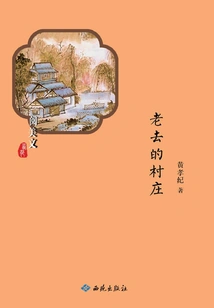
Old Village
Literature老去的村庄
Huang Xiaoji
The grass is green, frogs are croaking, everything is coming back to life, the spring sun is getting warmer, and the large deep-water ponds in front of the village are being drained one after another. During the year, these deep-water ponds are used several times during the New Year and festivals to catch fish and improve the cooking pots and rice bowls of the villagers. However, this time, the dry pond was different from usual. All the water that could be drained was released, and all the fish that could be caught were caught. In the words of the villagers, it is called the bottom of the dry pond, so that the pond can be emptied to sow rice seedlings. The bottom of the pond is also like the bottom of a huge pot. The water in the pond is gradually drying up. Fish, big and small, swim along the current and gather in this last pool of muddy water. They collide, flutter, struggle and gasp. There were fewer and fewer fish in the pool, and the men, women, and children on the shore, rolling up their clothes and trousers, became more and more restless. Suddenly there was a commotion, and they jumped into the pond like a group of black sparrows, huffing and puffing, and threw themselves on the bottom of the pond. People were shouting, shouting, laughing, each one hunched over, touching the muddy water with his hands, paddling his feet in the muddy water, the muddy water was sloshing, and his body and face were covered with splashes of mud and water stains. Scenes like this often continue until dark, until the last boy, covered in mud, catches the last little fish that is dazed and with a white belly on the muddy water. He stands in the muddy water and watches for a long time, and then reluctantly lands ashore amid the harsh shouts of his parents.
The grass is green, frogs are croaking, everything is coming back to life, the spring sun is getting warmer, and the large deep-water ponds in front of the village are being drained one after another. During the year, these deep-water ponds are used several times during the New Year and festivals to catch fish and improve the cooking pots and rice bowls of the villagers. However, this time, the dry pond was different from usual. All the water that could be drained was released, and all the fish that could be caught were caught. In the words of the villagers, it is called the bottom of the dry pond, so that the pond can be emptied to sow rice seedlings. The bottom of the pond is also like the bottom of a huge pot. The water in the pond is gradually drying up. Fish, big and small, swim along the current and gather in this last pool of muddy water. They collide, flutter, struggle and gasp. There were fewer and fewer fish in the pool, and the men, women, and children on the shore, rolling up their clothes and trousers, became more and more restless. Suddenly there was a commotion, and they jumped into the pond like a group of black sparrows, huffing and puffing, and threw themselves on the bottom of the pond. People were shouting, shouting, laughing, each one hunched over, touching the muddy water with his hands, paddling his feet in the muddy water, the muddy water was sloshing, and his body and face were covered with splashes of mud and water stains. Scenes like this often continue until dark, until the last boy, covered in mud, catches the last little fish that is dazed and with a white belly on the muddy water. He stands in the muddy water and watches for a long time, and then reluctantly lands ashore amid the harsh shouts of his parents.
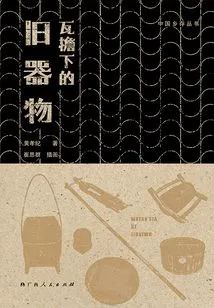
Old Utensils under the Eaves
Literature瓦檐下的旧器物
Huang Xiaoji
This book is the first book in the "China Rural Heritage Series" created by Guangxi People's Publishing House. In the book, the author provides a comprehensive, systematic, delicate and affectionate description of the daily old utensils in southern China's rural areas from the 1960s to the 1990s. It three-dimensionally displays the southern farming years experienced by several generations. It is a unique history of southern rural life and a biography of Chinese rural culture. Unlike other writers who write about the countryside in the way of "experience life", this book is about the land where the author was born and raised. The writing style is simple but invisibly touching in its plainness.
This book is the first book in the "China Rural Heritage Series" created by Guangxi People's Publishing House. In the book, the author provides a comprehensive, systematic, delicate and affectionate description of the daily old utensils in southern China's rural areas from the 1960s to the 1990s. It three-dimensionally displays the southern farming years experienced by several generations. It is a unique history of southern rural life and a biography of Chinese rural culture. Unlike other writers who write about the countryside in the way of "experience life", this book is about the land where the author was born and raised. The writing style is simple but invisibly touching in its plainness.
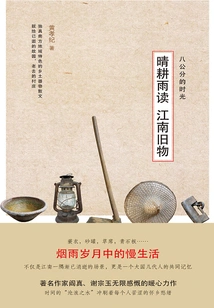
晴耕雨读 江南旧物
Huang Xiaoji
China has thousands of years of traditional farming civilization, and generations of farmers have created countless daily utensils. With the advent of the industrialization era, hundreds of millions of farmers have left the countryside and settled in cities. The brick-and-black countryside and traditional farming life have gradually declined. Those old utensils that were once familiar and necessary and steeped in farming civilization have either disappeared or are disappearing. They can only become eternal pain and nostalgia in the hearts of countless people. This book writes about the daily old utensils of Baccent Village in the mountainous countryside of southern Hunan from the 1970s to the 1990s. From it, you can feel the life scenes of those distant farming years in the south.
China has thousands of years of traditional farming civilization, and generations of farmers have created countless daily utensils. With the advent of the industrialization era, hundreds of millions of farmers have left the countryside and settled in cities. The brick-and-black countryside and traditional farming life have gradually declined. Those old utensils that were once familiar and necessary and steeped in farming civilization have either disappeared or are disappearing. They can only become eternal pain and nostalgia in the hearts of countless people. This book writes about the daily old utensils of Baccent Village in the mountainous countryside of southern Hunan from the 1970s to the 1990s. From it, you can feel the life scenes of those distant farming years in the south.
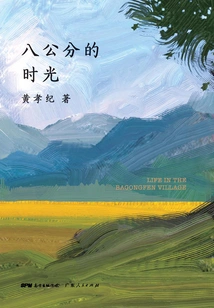
Eight Centimeters of Time
Literature八公分的时光
Huang Xiaoji
This book is a collection of essays on rural plants in a series of rural essays based on the author's birthplace of Bacmeng Village in Yongxing County, Chenzhou, Hunan Province, and with "Eightcm of Time" as the general outline. The book contains a total of 76 plant essays, which are divided into five series according to the particularity of the natural growth and distribution areas of local plants: river bank, hillside, houseside, field, and garden soil. By telling the stories behind the plants, it presents the changes in the plant ecological environment in a specific southern rural area since the 1970s, as well as thoughts on the relationship between people and plants, and people and the ecological environment.
This book is a collection of essays on rural plants in a series of rural essays based on the author's birthplace of Bacmeng Village in Yongxing County, Chenzhou, Hunan Province, and with "Eightcm of Time" as the general outline. The book contains a total of 76 plant essays, which are divided into five series according to the particularity of the natural growth and distribution areas of local plants: river bank, hillside, houseside, field, and garden soil. By telling the stories behind the plants, it presents the changes in the plant ecological environment in a specific southern rural area since the 1970s, as well as thoughts on the relationship between people and plants, and people and the ecological environment.
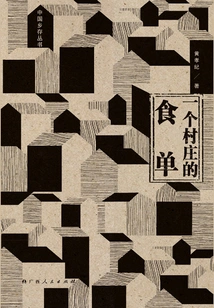
A Village's Meal List
Literature一个村庄的食单
Huang Xiaoji
"A Village's Food List" is the second volume of the "Chinese Rural Preservation Series" and a companion volume to "Old Utensils Under the Eaves". In this book, Huang Xiaoji, a well-known local prose writer, uses exquisite writing to describe more than 70 kinds of southern rural food in a delicate and vivid way, truly recreating a southern countryside on the tip of the tongue and the smoky years of a southern village. It is a biography of the food of southern farming villagers. The writing style of the whole book is friendly and gentle, and the stories are told eloquently. It maintains the attachment and longing for hometown of several generations of rural people in southern China, and embodies the deep nostalgia of several generations. The author's writing based on his birthplace of Bacmeng Village has formed a series of influences. His works are not only well received by readers, but have also been selected for many times on the Sina Good Book List, Baidao Good Book List, Chinese Good Book List, "Beijing News" Good Book List, and "China Reading News" Good Book List. Authoritative good book lists include the book list, the "China Press, Publication, Radio and Television" good book list, the Searchlight Book Critics Award 2019 Good Book Recommendation List·Top Ten Prose Collections of the Year, and the China Central Radio and Television Station's Voice of the Elderly's 2019 "Top Ten Reading Recommended Books".
"A Village's Food List" is the second volume of the "Chinese Rural Preservation Series" and a companion volume to "Old Utensils Under the Eaves". In this book, Huang Xiaoji, a well-known local prose writer, uses exquisite writing to describe more than 70 kinds of southern rural food in a delicate and vivid way, truly recreating a southern countryside on the tip of the tongue and the smoky years of a southern village. It is a biography of the food of southern farming villagers. The writing style of the whole book is friendly and gentle, and the stories are told eloquently. It maintains the attachment and longing for hometown of several generations of rural people in southern China, and embodies the deep nostalgia of several generations. The author's writing based on his birthplace of Bacmeng Village has formed a series of influences. His works are not only well received by readers, but have also been selected for many times on the Sina Good Book List, Baidao Good Book List, Chinese Good Book List, "Beijing News" Good Book List, and "China Reading News" Good Book List. Authoritative good book lists include the book list, the "China Press, Publication, Radio and Television" good book list, the Searchlight Book Critics Award 2019 Good Book Recommendation List·Top Ten Prose Collections of the Year, and the China Central Radio and Television Station's Voice of the Elderly's 2019 "Top Ten Reading Recommended Books".