Library
Browse and search books
5 novels found
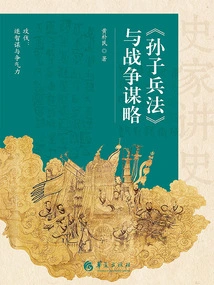
《孙子兵法》与战争谋略(史家讲史)
Huang Pumin
This book is an ancient military work written by Mr. Huang Pumin through his interpretation of the military classic "The Art of War" by Sun Tzu and his analysis and study of the practical experience of warfare in the pre-Qin and Han dynasties. By analyzing many war case stories in ancient China, the author makes a panoramic outline of the general trends, major contexts, and major turning points from Pre-Qin to the unification of Qin and Han Dynasties from the military strategic level, such as "Zhou Gong's Eastern Expedition and the Conflict between Eastern and Western Tribes" and "Spring and Autumn Period" The causes and causes of major events such as the evolution of the geography and strategic pattern of the military forces of various countries, "the Annihilation Conference", "the Wuyue War and the strategic relationship between the countries in the late Spring and Autumn Period", "the geostrategic situation and its evolution during the Warring States Period", "the strategic command of the unification war in the Qin and Han Dynasties" are all involved. At the same time, it communicates with ancient and modern times, both at home and abroad, and at the historical level, it systematically analyzes the changes in the spiritual outlook of Chinese culture from "martial arts" to "advocating literature"; at the horizontal level of world civilization, through comparative studies of the purposes and principles of Chinese and Western military science, it puts forward important thinking that the "similarities" outweigh the "differences" between the two sides.
This book is an ancient military work written by Mr. Huang Pumin through his interpretation of the military classic "The Art of War" by Sun Tzu and his analysis and study of the practical experience of warfare in the pre-Qin and Han dynasties. By analyzing many war case stories in ancient China, the author makes a panoramic outline of the general trends, major contexts, and major turning points from Pre-Qin to the unification of Qin and Han Dynasties from the military strategic level, such as "Zhou Gong's Eastern Expedition and the Conflict between Eastern and Western Tribes" and "Spring and Autumn Period" The causes and causes of major events such as the evolution of the geography and strategic pattern of the military forces of various countries, "the Annihilation Conference", "the Wuyue War and the strategic relationship between the countries in the late Spring and Autumn Period", "the geostrategic situation and its evolution during the Warring States Period", "the strategic command of the unification war in the Qin and Han Dynasties" are all involved. At the same time, it communicates with ancient and modern times, both at home and abroad, and at the historical level, it systematically analyzes the changes in the spiritual outlook of Chinese culture from "martial arts" to "advocating literature"; at the horizontal level of world civilization, through comparative studies of the purposes and principles of Chinese and Western military science, it puts forward important thinking that the "similarities" outweigh the "differences" between the two sides.
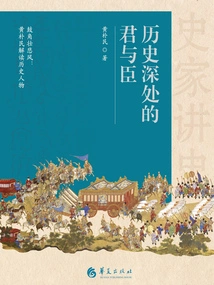
历史深处的君与臣
Huang Pumin
This book contains a total of forty-six articles by Mr. Huang Pumin interpreting historical figures. Some of the articles have been published in major newspapers and magazines at different times, and some are new works by the author. Each historical figure in the collection is a separate article. When compiled, the articles are divided into six sections according to the theme: the wisdom of sages, the wisdom of national scholars, the many faces of kings and tyrants, the mirror of history, the separation of talents and the fate of heroes. It includes well-known historical figures, such as sages such as Laozi and Confucius, scholars such as Han Xin and Zhuge Liang, emperors such as the Spring and Autumn Overlords and Mingjuns, civil servants such as Deng Yu and Yang Hu, and generals such as Yue Fei and Ge Shuhan. In interpreting historical figures, the author not only starts from the aspects that are well-known to people, but also pays special attention to revealing other aspects of historical figures that are not noticed by people. For example, when discussing Dong Zhongshu, a great Confucian of the Han Dynasty, the author does not focus on Dong Zhongshu's contribution to establishing the orthodox status of Confucianism. Instead, he focuses on the "unity of man and nature" proposed by him, which was intended to limit the power of the monarch under the false theocratic power. In a feudal society, this was purely whimsical. When talking about Yue Fei's death, in addition to mentioning the reasons for the political struggle of "main war" and "maintaining peace", it also pointed out that Yue Fei's character of impartial deliberation and speaking out for justice; the fact that he had a large number of troops and was powerful in the world, and was suspected by Emperor Gaozong of being "disloyal"; the talent-stifling mechanism of the monarchy's centralized autocratic politics... These were all "accomplices" that led to Yue Fei's unjust death. The author uses popular and vivid language to give modern interpretations of various classic figures, summarizes their successes and failures, reveals their inspirations, and provides a reference material and approach for all today's readers who are interested in history and have a complex with heroes. By reading this book, more people can be inspired to pay attention to the evolution of history and the fate of those influential figures in history, and then understand and recognize historical figures from different angles and positions.
This book contains a total of forty-six articles by Mr. Huang Pumin interpreting historical figures. Some of the articles have been published in major newspapers and magazines at different times, and some are new works by the author. Each historical figure in the collection is a separate article. When compiled, the articles are divided into six sections according to the theme: the wisdom of sages, the wisdom of national scholars, the many faces of kings and tyrants, the mirror of history, the separation of talents and the fate of heroes. It includes well-known historical figures, such as sages such as Laozi and Confucius, scholars such as Han Xin and Zhuge Liang, emperors such as the Spring and Autumn Overlords and Mingjuns, civil servants such as Deng Yu and Yang Hu, and generals such as Yue Fei and Ge Shuhan. In interpreting historical figures, the author not only starts from the aspects that are well-known to people, but also pays special attention to revealing other aspects of historical figures that are not noticed by people. For example, when discussing Dong Zhongshu, a great Confucian of the Han Dynasty, the author does not focus on Dong Zhongshu's contribution to establishing the orthodox status of Confucianism. Instead, he focuses on the "unity of man and nature" proposed by him, which was intended to limit the power of the monarch under the false theocratic power. In a feudal society, this was purely whimsical. When talking about Yue Fei's death, in addition to mentioning the reasons for the political struggle of "main war" and "maintaining peace", it also pointed out that Yue Fei's character of impartial deliberation and speaking out for justice; the fact that he had a large number of troops and was powerful in the world, and was suspected by Emperor Gaozong of being "disloyal"; the talent-stifling mechanism of the monarchy's centralized autocratic politics... These were all "accomplices" that led to Yue Fei's unjust death. The author uses popular and vivid language to give modern interpretations of various classic figures, summarizes their successes and failures, reveals their inspirations, and provides a reference material and approach for all today's readers who are interested in history and have a complex with heroes. By reading this book, more people can be inspired to pay attention to the evolution of history and the fate of those influential figures in history, and then understand and recognize historical figures from different angles and positions.
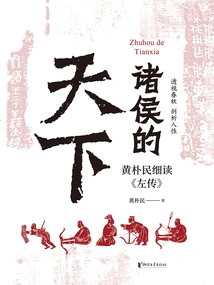
诸侯的天下:黄朴民细读《左传》
Huang Pumin
In the Spring and Autumn Period, the royal family was declining, and heroes were vying for hegemony. The strong survived and the weak perished. In troubled times, how could Duke Huan of Qi and Duke Wen of Jin achieve prestige and hegemony? Why did Hua Du and Nangong Wan commit regicide and kill people? The long-circulated story of the "Zhao Orphans" has long been popular, but is it true to history? The famous scholar Huang Pumin, with thirty years of academic experience, returned to the text of "Zuo Zhuan", reviewed historical materials and anecdotes, and carefully read the history of the Spring and Autumn Period in the subtleties of human nature, taking readers back to the era when "rituals and music were conquered from the princes".
In the Spring and Autumn Period, the royal family was declining, and heroes were vying for hegemony. The strong survived and the weak perished. In troubled times, how could Duke Huan of Qi and Duke Wen of Jin achieve prestige and hegemony? Why did Hua Du and Nangong Wan commit regicide and kill people? The long-circulated story of the "Zhao Orphans" has long been popular, but is it true to history? The famous scholar Huang Pumin, with thirty years of academic experience, returned to the text of "Zuo Zhuan", reviewed historical materials and anecdotes, and carefully read the history of the Spring and Autumn Period in the subtleties of human nature, taking readers back to the era when "rituals and music were conquered from the princes".
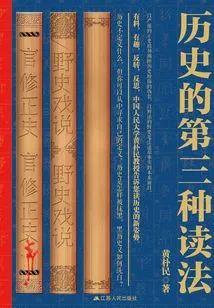
历史的第三种读法
Huang Pumin
"The Third Way of Reading History" is a collection of historical essays by Professor Huang Pumin, a famous Chinese scholar, expert in ancient intellectual history and military history. "The Third Way of Reading History" has twenty-nine chapters and more than 100,000 words. "The Third Reading of History" is different from the historical academic research work of "Yangchun Baixue" and the historical drama and romance of "Lower Riba Man". Instead, it adopts the "Third Reading" that combines academic and popular nature to reflect on the merits and demerits of important figures in history. From the struggle for hegemony in the Spring and Autumn Period, to the machinations of emperors, to the honor and disgrace of heroes, to the changes in ideology and culture. "The Third Way of Reading History" is based on profound academic accumulation and written in the form of lively and vivid essays. It not only has a macro grasp of historical laws and strategic trends, but also microscopic examinations of historical details and characters. It does not joke or subvert, but has unique insights and is refreshing.
"The Third Way of Reading History" is a collection of historical essays by Professor Huang Pumin, a famous Chinese scholar, expert in ancient intellectual history and military history. "The Third Way of Reading History" has twenty-nine chapters and more than 100,000 words. "The Third Reading of History" is different from the historical academic research work of "Yangchun Baixue" and the historical drama and romance of "Lower Riba Man". Instead, it adopts the "Third Reading" that combines academic and popular nature to reflect on the merits and demerits of important figures in history. From the struggle for hegemony in the Spring and Autumn Period, to the machinations of emperors, to the honor and disgrace of heroes, to the changes in ideology and culture. "The Third Way of Reading History" is based on profound academic accumulation and written in the form of lively and vivid essays. It not only has a macro grasp of historical laws and strategic trends, but also microscopic examinations of historical details and characters. It does not joke or subvert, but has unique insights and is refreshing.
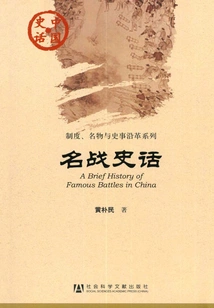
Famous War History
History名战史话
Huang Pumin
There were frequent wars in ancient China, and there were countless famous battles. Therefore, the difficulty of writing lies not in complexity but in simplicity. The layout of the whole book and the selection of cases are the best test of the author's ability. Huang has been studying the history of ancient warfare and military thought for many years, and his chapter layout is quite ingenious. This manuscript roughly takes time as its warp and war examples as its latitude, and roughly divides the wars since the end of primitive society into the wars of the ancient times (Xia, Shang and Western Zhou), the annexation and hegemony wars of the Spring and Autumn Period and the Warring States, and the wars of dynastic unification, etc. It is described in minutes. Another two chapters are used to combine ancient Chinese military thought (especially Sun Tzu's thought) to describe the wonderful battles in ancient times, and at the same time show the rich and profound military thought of ancient China. The layout of the chapter is reasonable, and the selection of battle examples is generally appropriate.
There were frequent wars in ancient China, and there were countless famous battles. Therefore, the difficulty of writing lies not in complexity but in simplicity. The layout of the whole book and the selection of cases are the best test of the author's ability. Huang has been studying the history of ancient warfare and military thought for many years, and his chapter layout is quite ingenious. This manuscript roughly takes time as its warp and war examples as its latitude, and roughly divides the wars since the end of primitive society into the wars of the ancient times (Xia, Shang and Western Zhou), the annexation and hegemony wars of the Spring and Autumn Period and the Warring States, and the wars of dynastic unification, etc. It is described in minutes. Another two chapters are used to combine ancient Chinese military thought (especially Sun Tzu's thought) to describe the wonderful battles in ancient times, and at the same time show the rich and profound military thought of ancient China. The layout of the chapter is reasonable, and the selection of battle examples is generally appropriate.