Library
Browse and search books
2 novels found
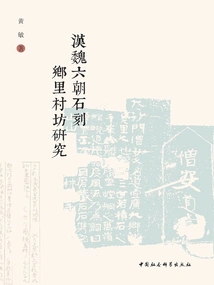
汉魏六朝石刻乡里村坊研究
Huang Min
The stone carvings of the past dynasties are abundant in number and of various types, and the time of publication, place of excavation, and time of excavation are clear, which makes it possible to trace the villages and villages containing information such as place of birth, burial place, and death place in the stone carvings. The book "Research on Stone Carvings in Townships and Villages of the Han, Wei and Six Dynasties" selects stone carving documents of the Han, Wei and Six Dynasties to collect and organize relevant information on villages and villages; examines and analyzes geographical locations, examines counties, counties and villages, and supplements the city and villages in the capital; traces the historical evolution of ancient place names to show the characteristics of towns and villages Inheritance and evolution; explore the rationale for the naming of villages and towns, present the appearance of villages and towns in the Han, Wei and Six Dynasties; seek the lifestyle and ideological concepts of ancient people, explore religious culture, ethnic integration and exchanges, migration of expatriates, and family prefectures, etc., To promote the study of ancient Chinese culture.
The stone carvings of the past dynasties are abundant in number and of various types, and the time of publication, place of excavation, and time of excavation are clear, which makes it possible to trace the villages and villages containing information such as place of birth, burial place, and death place in the stone carvings. The book "Research on Stone Carvings in Townships and Villages of the Han, Wei and Six Dynasties" selects stone carving documents of the Han, Wei and Six Dynasties to collect and organize relevant information on villages and villages; examines and analyzes geographical locations, examines counties, counties and villages, and supplements the city and villages in the capital; traces the historical evolution of ancient place names to show the characteristics of towns and villages Inheritance and evolution; explore the rationale for the naming of villages and towns, present the appearance of villages and towns in the Han, Wei and Six Dynasties; seek the lifestyle and ideological concepts of ancient people, explore religious culture, ethnic integration and exchanges, migration of expatriates, and family prefectures, etc., To promote the study of ancient Chinese culture.
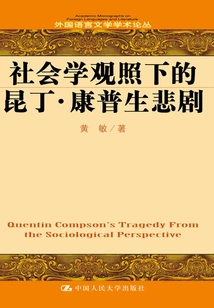
社会学观照下的昆丁·康普生悲剧
Huang Min
This book studies Quentin Compson, a character portrayed in Faulkner's novels, and explores the ideological concepts and behavioral patterns of "well-educated", "white", and "young men". Vertically, it uses a sociological observation perspective to analyze the causes of Quentin's tragedy. It not only summarizes the social environmental factors in which he is located, but also pays attention to the latter's psychological effect on people, thus pointing out that Quentin's tragedy is not caused by a certain factor - such as his sister's marriage - alone. Horizontally, by comparing Quentin with several other characters: Rosa, Ike, Chick, and Lucius, we interpret the changes in Faulkner's creative thinking in the early, middle, and late periods, and at the same time explain the reasons for the weakening of the tragic color in Faulkner's middle and late creations.
This book studies Quentin Compson, a character portrayed in Faulkner's novels, and explores the ideological concepts and behavioral patterns of "well-educated", "white", and "young men". Vertically, it uses a sociological observation perspective to analyze the causes of Quentin's tragedy. It not only summarizes the social environmental factors in which he is located, but also pays attention to the latter's psychological effect on people, thus pointing out that Quentin's tragedy is not caused by a certain factor - such as his sister's marriage - alone. Horizontally, by comparing Quentin with several other characters: Rosa, Ike, Chick, and Lucius, we interpret the changes in Faulkner's creative thinking in the early, middle, and late periods, and at the same time explain the reasons for the weakening of the tragic color in Faulkner's middle and late creations.