Library
Browse and search books
5 novels found
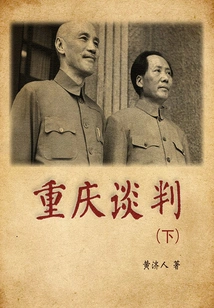
Chongqing Negotiations (part 2)
General Fiction重庆谈判(下)
Huang Jiren
On June 6, 1944, the Allied forces opened the second battlefield in Europe and launched the Normandy landing in "Operation Overlord", destroying the German "Atlantic Barrier" in one fell swoop. Therefore, Roosevelt turned his attention to Asia, focusing on China. This novel has a grand and novel conception. It places the 43 days of Chongqing negotiations between Mao Zedong and Chiang Kai-shek in the international environment. Various contradictions are complicated, the plot is designed to be relaxed, the scene description is intense, the atmosphere is rich, and the language is concise and concise. It created a touching artistic image of Mao Zedong who was both great and ordinary. Other historical figures, such as Zhou Enlai, Wang Ruofei, Stalin, Churchill, Roosevelt, Hurley, Stilwell, Guo Moruo, Zhang Lan, Liu Yazi, etc. Are all lifelike. This is a magnificent historical picture that is highly readable.
On June 6, 1944, the Allied forces opened the second battlefield in Europe and launched the Normandy landing in "Operation Overlord", destroying the German "Atlantic Barrier" in one fell swoop. Therefore, Roosevelt turned his attention to Asia, focusing on China. This novel has a grand and novel conception. It places the 43 days of Chongqing negotiations between Mao Zedong and Chiang Kai-shek in the international environment. Various contradictions are complicated, the plot is designed to be relaxed, the scene description is intense, the atmosphere is rich, and the language is concise and concise. It created a touching artistic image of Mao Zedong who was both great and ordinary. Other historical figures, such as Zhou Enlai, Wang Ruofei, Stalin, Churchill, Roosevelt, Hurley, Stilwell, Guo Moruo, Zhang Lan, Liu Yazi, etc. Are all lifelike. This is a magnificent historical picture that is highly readable.
Migration of Destiny
Literature命运的迁徙
Huang Jiren
The book is a long documentary work on the theme of the resettlement project during the construction of the Three Gorges Project. The author conducted in-depth interviews in 11 provinces and cities, and used rich, detailed and vivid examples to show people how the world-class problem of immigration relocation has been well solved in China. He praised the concern of the party and the government for the production and life of the immigrants, praised the immigration cadres for conscientiously implementing the party's immigration policy and solving the problems of immigrants. He also introduced the immigrants' struggle to become self-reliant, start a second business, and change their destiny. The works are mixed with narratives and discussions, with delicate descriptions, fluent language and a strong sense of reality.
The book is a long documentary work on the theme of the resettlement project during the construction of the Three Gorges Project. The author conducted in-depth interviews in 11 provinces and cities, and used rich, detailed and vivid examples to show people how the world-class problem of immigration relocation has been well solved in China. He praised the concern of the party and the government for the production and life of the immigrants, praised the immigration cadres for conscientiously implementing the party's immigration policy and solving the problems of immigrants. He also introduced the immigrants' struggle to become self-reliant, start a second business, and change their destiny. The works are mixed with narratives and discussions, with delicate descriptions, fluent language and a strong sense of reality.
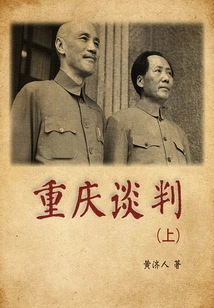
Chongqing Negotiations (part 1)
General Fiction重庆谈判(上)
Huang Jiren
On June 6, 1944, the Allied forces opened the second battlefield in Europe and launched the Normandy landing in "Operation Overlord", destroying the German "Atlantic Barrier" in one fell swoop. Therefore, Roosevelt turned his attention to Asia, focusing on China. This novel has a grand and novel conception. It places the 43 days of Chongqing negotiations between Mao Zedong and Chiang Kai-shek in the international environment. Various contradictions are complicated, the plot is designed to be relaxed, the scene description is intense, the atmosphere is rich, and the language is concise and concise. It created a touching artistic image of Mao Zedong who was both great and ordinary. Other historical figures, such as Zhou Enlai, Wang Ruofei, Stalin, Churchill, Roosevelt, Hurley, Stilwell, Guo Moruo, Zhang Lan, Liu Yazi, etc. Are all lifelike. This is a magnificent historical picture that is highly readable.
On June 6, 1944, the Allied forces opened the second battlefield in Europe and launched the Normandy landing in "Operation Overlord", destroying the German "Atlantic Barrier" in one fell swoop. Therefore, Roosevelt turned his attention to Asia, focusing on China. This novel has a grand and novel conception. It places the 43 days of Chongqing negotiations between Mao Zedong and Chiang Kai-shek in the international environment. Various contradictions are complicated, the plot is designed to be relaxed, the scene description is intense, the atmosphere is rich, and the language is concise and concise. It created a touching artistic image of Mao Zedong who was both great and ordinary. Other historical figures, such as Zhou Enlai, Wang Ruofei, Stalin, Churchill, Roosevelt, Hurley, Stilwell, Guo Moruo, Zhang Lan, Liu Yazi, etc. Are all lifelike. This is a magnificent historical picture that is highly readable.
Collapse
General Fiction崩溃
Huang Jiren
"Collapse" reveals the reasons for the collapse of the Kuomintang on the battlefield - first of all, its internal collapse. Through many little-known descriptions of the Kuomintang's military activities during the War of Resistance Against Japan and the War of Liberation, it provides an artistic observation and historical representation of the backbone of the Kuomintang's rule, from the intrigues within the military's top brass to the inevitable fate of disintegration.
"Collapse" reveals the reasons for the collapse of the Kuomintang on the battlefield - first of all, its internal collapse. Through many little-known descriptions of the Kuomintang's military activities during the War of Resistance Against Japan and the War of Liberation, it provides an artistic observation and historical representation of the backbone of the Kuomintang's rule, from the intrigues within the military's top brass to the inevitable fate of disintegration.
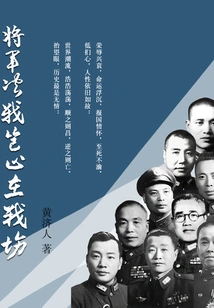
将军决战岂止在战场(完全本)
Huang Jiren
Thirty years ago, Huang Ji became famous at home and abroad in the documentary literature "Generals' decisive battles are not just on the battlefield". A new chapter is released. Following the previous part, it tells the complicated story of Du Yuming, Song Xilian, Huang Wei, Wang Yaowu, Shen Zui, Wen Qiang and other generals who were defeated by the Kuomintang in prison. After the transformation of Dan's thoughts, the newly added lower part continues the story of their nearly half-century life after they were pardoned and suffered the impact of the "Cultural Revolution" and experienced the baptism of reform and opening up until the death of the last "war criminal" in the new millennium. The complete book (including the upper and lower parts) can be called a complete history of "reformation" and a true history of human nature. The first part was published thirty years ago and caused a sensation at home and abroad. It was praised as "participating in the chorus of ideological emancipation." Thirty years later, the second part was written, giving a complete answer to history and a complete interpretation of human nature.
Thirty years ago, Huang Ji became famous at home and abroad in the documentary literature "Generals' decisive battles are not just on the battlefield". A new chapter is released. Following the previous part, it tells the complicated story of Du Yuming, Song Xilian, Huang Wei, Wang Yaowu, Shen Zui, Wen Qiang and other generals who were defeated by the Kuomintang in prison. After the transformation of Dan's thoughts, the newly added lower part continues the story of their nearly half-century life after they were pardoned and suffered the impact of the "Cultural Revolution" and experienced the baptism of reform and opening up until the death of the last "war criminal" in the new millennium. The complete book (including the upper and lower parts) can be called a complete history of "reformation" and a true history of human nature. The first part was published thirty years ago and caused a sensation at home and abroad. It was praised as "participating in the chorus of ideological emancipation." Thirty years later, the second part was written, giving a complete answer to history and a complete interpretation of human nature.