Library
Browse and search books
2 novels found
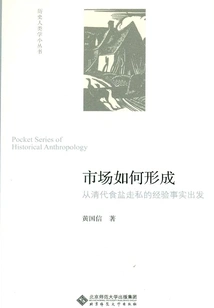
How the Market Was Formed: Starting from the Empirical Facts of Salt Smuggling in the Qing Dynasty
History市场如何形成:从清代食盐走私的经验事实出发
Huang Guoxin
In economics, as a social science, all empirical facts, especially living people and events, are abstracted and turned into disembodied facts or even figures, leaving a large number of topics that need to be implemented and enriched in historical scenes. History deals with living people and events. This book attempts to dialogue with classical economics and new institutional economics through vivid people and events, and deeply discusses the specific behaviors and activities of people required for the market to move from abstract logical formation to concrete operation, such as how to obtain market information, how groups or organizations operate, how potential markets can be developed into actual markets under the price mechanism, how to reduce transaction costs, and other factors, thereby substantially enriching and adjusting some conclusions of economic market formation theory.
In economics, as a social science, all empirical facts, especially living people and events, are abstracted and turned into disembodied facts or even figures, leaving a large number of topics that need to be implemented and enriched in historical scenes. History deals with living people and events. This book attempts to dialogue with classical economics and new institutional economics through vivid people and events, and deeply discusses the specific behaviors and activities of people required for the market to move from abstract logical formation to concrete operation, such as how to obtain market information, how groups or organizations operate, how potential markets can be developed into actual markets under the price mechanism, how to reduce transaction costs, and other factors, thereby substantially enriching and adjusting some conclusions of economic market formation theory.
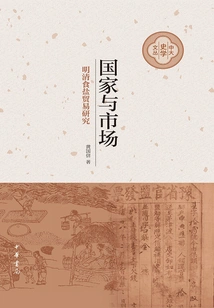
国家与市场:明清食盐贸易研究(中大史学文丛 )
Huang Guoxin
In the traditional Chinese period, property rights entities were dispersed. In this context, the dynasty salt trade reflected a high degree of market dependence on the one hand, and strong administrative control on the other. This can be regarded as one of the important entry points for understanding the traditional Chinese economy. This book, with approximately 258,000 words, is included in the "Sun Yat-sen University Historiography Series". The author is Professor Huang Guoxin from the Department of History, Sun Yat-sen University. The book is divided into six chapters. It deeply studies the salt trade issues in the Ming and Qing Dynasties from the perspectives of salt monopoly, national finance, salt smuggling, and official salt trade. On the basis of previous research, it focuses on the regional research perspective and the significance of salt trade in the dynasty's fiscal revenue. It examines the relationship between the market, society, and administrative operating mechanisms during the Ming and Qing Dynasties. It is expected to help the academic community understand the characteristics of the traditional Chinese economy.
In the traditional Chinese period, property rights entities were dispersed. In this context, the dynasty salt trade reflected a high degree of market dependence on the one hand, and strong administrative control on the other. This can be regarded as one of the important entry points for understanding the traditional Chinese economy. This book, with approximately 258,000 words, is included in the "Sun Yat-sen University Historiography Series". The author is Professor Huang Guoxin from the Department of History, Sun Yat-sen University. The book is divided into six chapters. It deeply studies the salt trade issues in the Ming and Qing Dynasties from the perspectives of salt monopoly, national finance, salt smuggling, and official salt trade. On the basis of previous research, it focuses on the regional research perspective and the significance of salt trade in the dynasty's fiscal revenue. It examines the relationship between the market, society, and administrative operating mechanisms during the Ming and Qing Dynasties. It is expected to help the academic community understand the characteristics of the traditional Chinese economy.