Library
Browse and search books
2 novels found
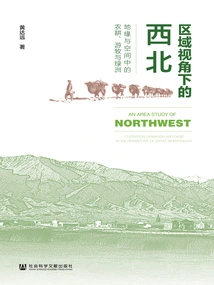
The Northwest from a Regional Perspective: Farming, Nomadism and Oasis in Geography and Space
History区域视角下的西北:地缘与空间中的农耕、游牧与绿洲
Huang Dayuan
The writing of Chinese history has been deeply influenced by the maritime historical perspective, which has caused the "weight" of Chinese historical narratives to shift. The "impact-response" theory of East-West relations based on the opening of trade ports since the mid-19th century has become popular. It was not until Lattimore's study of China's "inland frontiers in Asia" restored the "continental historical perspective" centered on North-South relations that the "transition zone" was taken seriously as the center of Chinese history. This book takes northwest China as an example, taking the interaction of farming, nomadism and oasis from a geographical and spatial perspective as an entry point. From a "long-term" perspective, "Northwest" not only has not "stagnated", but has undergone "dramatic changes" on a "regional" spatial scale. The formation of the "Great Wall-Tianshan Corridor" provides a new perspective for understanding "China".
The writing of Chinese history has been deeply influenced by the maritime historical perspective, which has caused the "weight" of Chinese historical narratives to shift. The "impact-response" theory of East-West relations based on the opening of trade ports since the mid-19th century has become popular. It was not until Lattimore's study of China's "inland frontiers in Asia" restored the "continental historical perspective" centered on North-South relations that the "transition zone" was taken seriously as the center of Chinese history. This book takes northwest China as an example, taking the interaction of farming, nomadism and oasis from a geographical and spatial perspective as an entry point. From a "long-term" perspective, "Northwest" not only has not "stagnated", but has undergone "dramatic changes" on a "regional" spatial scale. The formation of the "Great Wall-Tianshan Corridor" provides a new perspective for understanding "China".
欧亚时空中的中国与世界
Huang Dayuan
Currently, re-understanding the relationship between ancient China and the outside world has become an issue of great concern to academic circles. This book focuses on the description and analysis of the overall historical interaction of the region, transcending the traditional Chinese and foreign "two points plus one line (traffic route)" historical view of the Silk Road, and instead thinking about how ancient China expanded its historical influence through the overall regional network. Using the analytical framework of multi-regional interaction and symbiosis such as farming, oases, nomadism, forests, and snow-covered plateaus, we break away from the traditional Europe-centered narrative system of world history. This book also reflects on the problems in the regional division and knowledge construction of the Eurasian world by the Russian Orientalist tradition in the 18th and 19th centuries from the perspective of conceptual history, and proposes a Eurasian spatial shift in understanding the relationship between Chinese history and world history from the perspective of Chinese subjectivity.
Currently, re-understanding the relationship between ancient China and the outside world has become an issue of great concern to academic circles. This book focuses on the description and analysis of the overall historical interaction of the region, transcending the traditional Chinese and foreign "two points plus one line (traffic route)" historical view of the Silk Road, and instead thinking about how ancient China expanded its historical influence through the overall regional network. Using the analytical framework of multi-regional interaction and symbiosis such as farming, oases, nomadism, forests, and snow-covered plateaus, we break away from the traditional Europe-centered narrative system of world history. This book also reflects on the problems in the regional division and knowledge construction of the Eurasian world by the Russian Orientalist tradition in the 18th and 19th centuries from the perspective of conceptual history, and proposes a Eurasian spatial shift in understanding the relationship between Chinese history and world history from the perspective of Chinese subjectivity.