Library
Browse and search books
2 novels found
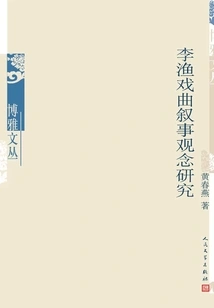
李渔戏曲叙事观念研究
Huang Chunyan
Li Yu is a typical and unique "text" of Jiangnan urban culture in the late Ming and early Qing dynasties. The fine appreciation between daily life and artistic aesthetics, the blend of elegance and vulgarity, enabled Li Yu to form his own opera narrative theory that integrates literature, music, performance and reception in the activities of writing lyrics, music and performing and teaching. This book deeply discusses important aspects such as Li Yu's leisurely mood and the interest of Jiangnan cities, the narrative structure strategy of Li Yu's operas and the cultural customs of Jiangnan cities, the narrative implications of Li Yu's interesting operas and the cultural psychology of Jiangnan cities. It is of great enlightenment for readers to comprehensively and carefully grasp Li Yu and his operas.
Li Yu is a typical and unique "text" of Jiangnan urban culture in the late Ming and early Qing dynasties. The fine appreciation between daily life and artistic aesthetics, the blend of elegance and vulgarity, enabled Li Yu to form his own opera narrative theory that integrates literature, music, performance and reception in the activities of writing lyrics, music and performing and teaching. This book deeply discusses important aspects such as Li Yu's leisurely mood and the interest of Jiangnan cities, the narrative structure strategy of Li Yu's operas and the cultural customs of Jiangnan cities, the narrative implications of Li Yu's interesting operas and the cultural psychology of Jiangnan cities. It is of great enlightenment for readers to comprehensively and carefully grasp Li Yu and his operas.
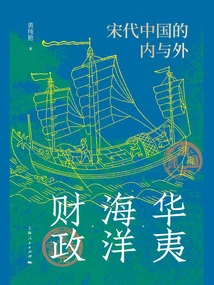
华夷·海洋·财政:宋代中国的内与外
Huang Chunyan
This book collects more than 30 papers and public lectures published by the author in the past four years, divided into five parts: "Hua Yi and Outside", "Ocean Civilization", "Financial Governance", "Dynamic Review" and "Notes and Essays". "Huayi and outside" involves the border form and boundary consciousness of the Song Dynasty, the concept of Huayi in the Song Dynasty, the unity of civilization from the perspective of the multi-regime structure of the Song Dynasty, the spread of Song Dynasty civilization to East Asian countries, etc.; "Marine civilization" includes the policy orientation of ancient China's overseas trade, the Song Dynasty's understanding of sea-land relations and its new changes, the domestic effects of the Song Dynasty's maritime policy, and maritime civilization in ancient Chinese civilization, etc.; "Financial governance" involves the Song Dynasty The institutional logic of the evolution of taxes and servitude during the dynasty, the reform of the financial power distribution system in Wang Anshi's reform, Wu Qian's use of fiscal systems in the governance of Qingyuan Mansion, the distribution of financial power and local governance in the Southern Song Dynasty, etc.; "Dynamic Review" and "Notes and Essays" include the author's main methods and review of the research on the financial history of the Song Dynasty, a review of the research on the economic history of the Southern Song Dynasty in the past 40 years, and the course notes of "Research Theory and Methods of Chinese Economic History", etc. It has certain academic value.
This book collects more than 30 papers and public lectures published by the author in the past four years, divided into five parts: "Hua Yi and Outside", "Ocean Civilization", "Financial Governance", "Dynamic Review" and "Notes and Essays". "Huayi and outside" involves the border form and boundary consciousness of the Song Dynasty, the concept of Huayi in the Song Dynasty, the unity of civilization from the perspective of the multi-regime structure of the Song Dynasty, the spread of Song Dynasty civilization to East Asian countries, etc.; "Marine civilization" includes the policy orientation of ancient China's overseas trade, the Song Dynasty's understanding of sea-land relations and its new changes, the domestic effects of the Song Dynasty's maritime policy, and maritime civilization in ancient Chinese civilization, etc.; "Financial governance" involves the Song Dynasty The institutional logic of the evolution of taxes and servitude during the dynasty, the reform of the financial power distribution system in Wang Anshi's reform, Wu Qian's use of fiscal systems in the governance of Qingyuan Mansion, the distribution of financial power and local governance in the Southern Song Dynasty, etc.; "Dynamic Review" and "Notes and Essays" include the author's main methods and review of the research on the financial history of the Song Dynasty, a review of the research on the economic history of the Southern Song Dynasty in the past 40 years, and the course notes of "Research Theory and Methods of Chinese Economic History", etc. It has certain academic value.