Library
Browse and search books
8 novels found
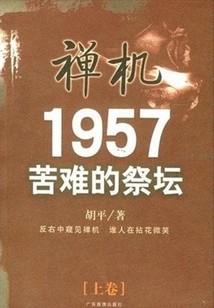
Zen 1957: the Altar of Suffering
Literature禅机1957:苦难的祭坛
Hu Ping
This book will involve at least two generations of intellectuals, and I want to try my best to write this drama in a panoramic manner. From the prelude to the end, we will see that their joys, sorrows, sorrows, life and death, ups and downs, are just reincarnations on the destiny meridian. There are no good guys and bad guys in the general sense, nor are there any real lucky ones or prosperous ones. There are only ruins that have been scorched by smoke and fire, covered with broken walls, and in these ruins, the sprouts of personality are gradually watered by the blood and tears of reason...
This book will involve at least two generations of intellectuals, and I want to try my best to write this drama in a panoramic manner. From the prelude to the end, we will see that their joys, sorrows, sorrows, life and death, ups and downs, are just reincarnations on the destiny meridian. There are no good guys and bad guys in the general sense, nor are there any real lucky ones or prosperous ones. There are only ruins that have been scorched by smoke and fire, covered with broken walls, and in these ruins, the sprouts of personality are gradually watered by the blood and tears of reason...
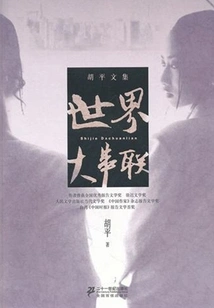
World Series
Literature世界大串联
Hu Ping
The final recipients of a country's closed or open national policy are always ordinary people. Compared with the preferences of big figures who are often embraced by history, in fact, the love-hate songs, reunions and separations of little people can better convey the so-called magnificent and irreversible historical process of China's reform and opening up. The book is divided into four parts. The ones that reflect the trend of going abroad in the early stage of reform and opening up and the life experience of these new immigrants in the United States are "World Series" and "Immigration to the United States"; the ones that describe the marriage and family scenery of restless middle-aged men and women in the 1980s are "Autumn Variations" and "Your Secret is Not a Secret." The author's focus has shifted from focusing on history, politics, and culture in the past to ordinary people and things in contemporary economic life. The writing remains calm, objective, and sharp, truly touching the pulse of the times, and providing inspiring warnings.
The final recipients of a country's closed or open national policy are always ordinary people. Compared with the preferences of big figures who are often embraced by history, in fact, the love-hate songs, reunions and separations of little people can better convey the so-called magnificent and irreversible historical process of China's reform and opening up. The book is divided into four parts. The ones that reflect the trend of going abroad in the early stage of reform and opening up and the life experience of these new immigrants in the United States are "World Series" and "Immigration to the United States"; the ones that describe the marriage and family scenery of restless middle-aged men and women in the 1980s are "Autumn Variations" and "Your Secret is Not a Secret." The author's focus has shifted from focusing on history, politics, and culture in the past to ordinary people and things in contemporary economic life. The writing remains calm, objective, and sharp, truly touching the pulse of the times, and providing inspiring warnings.
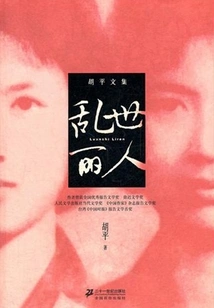
Beauty in Troubled Times
Literature乱世丽人
Hu Ping
"Beauty in Troubled Times" is the fifth volume of "Collected Works of Hu Ping". "Beauty in Troubled Times" tells the story: There are countless rumors about Lin Liguo's "choosing a concubine". What is the truth? What happened in the secret room of Beidaihe on the night before Lin Biao was defeated by Wendur Khan? Zhang Ning, you may know her name, but you may not know her story and the stories she knows. A beautiful Chinese woman, an Albanian international student, a fateful encounter, a lingering love, followed by a ridiculous crime, a reeducation through labor notice, and an irreversible life tragedy... Beauty, dying for the times? Peng Dehuai's sister-in-law, Luo Longji's confidant, a famous reporter from Xinmin Daily, a right-wing pioneer from Wenhui Daily, a friend secretly protected by Zhou Enlai, but was regarded as a thorn in Mao Zedong's side... Pu Xixiu, what did she do for China?
"Beauty in Troubled Times" is the fifth volume of "Collected Works of Hu Ping". "Beauty in Troubled Times" tells the story: There are countless rumors about Lin Liguo's "choosing a concubine". What is the truth? What happened in the secret room of Beidaihe on the night before Lin Biao was defeated by Wendur Khan? Zhang Ning, you may know her name, but you may not know her story and the stories she knows. A beautiful Chinese woman, an Albanian international student, a fateful encounter, a lingering love, followed by a ridiculous crime, a reeducation through labor notice, and an irreversible life tragedy... Beauty, dying for the times? Peng Dehuai's sister-in-law, Luo Longji's confidant, a famous reporter from Xinmin Daily, a right-wing pioneer from Wenhui Daily, a friend secretly protected by Zhou Enlai, but was regarded as a thorn in Mao Zedong's side... Pu Xixiu, what did she do for China?
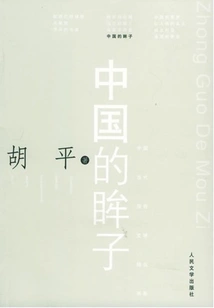
China's Eyes
Literature中国的眸子
Hu Ping
At the beginning of a new era, no matter in terms of situation or state of mind, our generation is the most complex and unique group of people on the land of China. While singing hymns for the rebirth of the motherland and nation, we are also singing elegy for our own youth that was buried with us in that era. To recall the nightmare past, our generation has to have twice as much courage as others; to move towards the dawn of the future, our generation has to work several times more hard than others. Mao Zedong's two sentences are really correct. The several works included in this book are definitely very different from the shallow chanting to oneself, the slightest glimmer of water in a glass, and the works with a certain decorative nature and only animal nature that readers have seen too many times. In addition to fate, it is also because of the Chinese social reality since the 1900s, and the fact that there are always historical secrets wrapped in colorful myths in this reality, so I often have a strong impulse to capture them and interpret them.
At the beginning of a new era, no matter in terms of situation or state of mind, our generation is the most complex and unique group of people on the land of China. While singing hymns for the rebirth of the motherland and nation, we are also singing elegy for our own youth that was buried with us in that era. To recall the nightmare past, our generation has to have twice as much courage as others; to move towards the dawn of the future, our generation has to work several times more hard than others. Mao Zedong's two sentences are really correct. The several works included in this book are definitely very different from the shallow chanting to oneself, the slightest glimmer of water in a glass, and the works with a certain decorative nature and only animal nature that readers have seen too many times. In addition to fate, it is also because of the Chinese social reality since the 1900s, and the fact that there are always historical secrets wrapped in colorful myths in this reality, so I often have a strong impulse to capture them and interpret them.
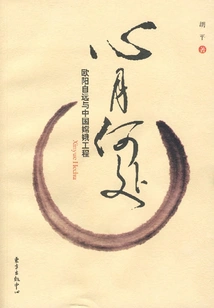
心月何处:欧阳自远与中国嫦娥工程
Hu Ping
This book is documentary literature that comprehensively describes this glorious process. The book is divided into twenty chapters, including "Carrying a Pot of Moonlight on the Road", "Prelude: 1958", "Meteorite, a Wordless Heavenly Book", "Seemingly Light Sighs", "The Moon, the Hero on the End of the Road". Starting from the background of several major powers in the world competing to enter space, the author uses a wide-open pattern, surging passion, and a far-reaching vision to extol the performance of the relevant scientific and technological personnel in their continuous pursuit and struggle in the cause of space exploration for the sake of the future of mankind and the dignity of the motherland. The book shows a lofty sense of social responsibility and a sacred sense of historical mission; the book also touches on the mental journey of a nation that has been trudging through the process of modernization and modernization. The glory and dreams, struggle and pursuit shown in it are also touching. This is the essence of this book's thinking and the value of this book.
This book is documentary literature that comprehensively describes this glorious process. The book is divided into twenty chapters, including "Carrying a Pot of Moonlight on the Road", "Prelude: 1958", "Meteorite, a Wordless Heavenly Book", "Seemingly Light Sighs", "The Moon, the Hero on the End of the Road". Starting from the background of several major powers in the world competing to enter space, the author uses a wide-open pattern, surging passion, and a far-reaching vision to extol the performance of the relevant scientific and technological personnel in their continuous pursuit and struggle in the cause of space exploration for the sake of the future of mankind and the dignity of the motherland. The book shows a lofty sense of social responsibility and a sacred sense of historical mission; the book also touches on the mental journey of a nation that has been trudging through the process of modernization and modernization. The glory and dreams, struggle and pursuit shown in it are also touching. This is the essence of this book's thinking and the value of this book.
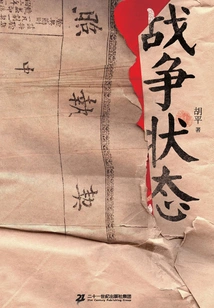
State of War
Literature战争状态
Hu Ping
For the Chinese, "class struggle" was a word that was even more important than eating from the first half of the 20th century to the decades of reform and opening up. The so-called "class struggle" was triggered by composition and origin, with the "five types of elements" and "the children of the five black types" as the primary targets of struggle. Therefore, the "state of war" became the real norm in people's daily lives at that era. And the lives of those various elements who were labeled as political began decades of purgatory-like suffering... This book uses a large amount of detailed information and interviews with relevant parties to reproduce the nightmarish madness and various deformed political ecology that made people shudder during the "class struggle" years. In the current era, the importance of facing up to history is even more highlighted.
For the Chinese, "class struggle" was a word that was even more important than eating from the first half of the 20th century to the decades of reform and opening up. The so-called "class struggle" was triggered by composition and origin, with the "five types of elements" and "the children of the five black types" as the primary targets of struggle. Therefore, the "state of war" became the real norm in people's daily lives at that era. And the lives of those various elements who were labeled as political began decades of purgatory-like suffering... This book uses a large amount of detailed information and interviews with relevant parties to reproduce the nightmarish madness and various deformed political ecology that made people shudder during the "class struggle" years. In the current era, the importance of facing up to history is even more highlighted.
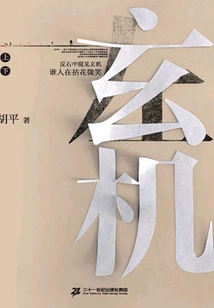
Mystery (full Collection)
Literature玄机(全集)
Hu Ping
1957 - this special year that Chinese intellectuals entered into many hardships. An anti-rightist movement put them into a painful situation that lasted for decades. Their fate was ravaged by this movement, and their lives were ups and downs in the stormy sea! The year 1957 became the beginning of an irreversible nightmare, with mysteries lurking in the fog... The author attempts to explain the anti-rightist movement from another angle through a personal review of this period and a review of many representative people and events. He wants to explore what this land, which is steeped in the production methods, psychological methods and autocratic dynasties of the East, has towards intellectuals, especially thinkers. This book is not so much about writing the fate of intellectuals as it is about writing the fate of the entire nation and ourselves. Only by touching those historical wounds can we grasp the pulse of China today and in the future.
1957 - this special year that Chinese intellectuals entered into many hardships. An anti-rightist movement put them into a painful situation that lasted for decades. Their fate was ravaged by this movement, and their lives were ups and downs in the stormy sea! The year 1957 became the beginning of an irreversible nightmare, with mysteries lurking in the fog... The author attempts to explain the anti-rightist movement from another angle through a personal review of this period and a review of many representative people and events. He wants to explore what this land, which is steeped in the production methods, psychological methods and autocratic dynasties of the East, has towards intellectuals, especially thinkers. This book is not so much about writing the fate of intellectuals as it is about writing the fate of the entire nation and ourselves. Only by touching those historical wounds can we grasp the pulse of China today and in the future.
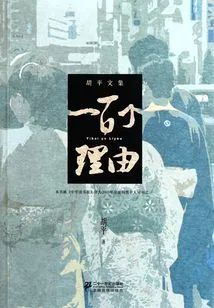
One Hundred Reasons
History一百个理由
Hu Ping
In today's world environment, for China, facing Japan, which is always elusive and lies like a turtle in the Pacific Ocean, it needs to be vigilant, condemned, and peacefully coexisting. In "One Hundred Reasons", the author cited abundant examples to illustrate that China has one hundred reasons to condemn Japan and one hundred reasons to live in peace with Japan. If China wants to sweep away the humiliation and decadence of modern times and move towards a comprehensive national rejuvenation, it must pass the psychological threshold of Japan; to a large extent, this threshold will test whether China can become a mature modern country. At the same time, if Japan wants to eliminate loneliness and ambiguity and grow into a global power, it cannot bypass the moral threshold of China; in a sense, this threshold has become a touchstone for judging whether Japan can be recast as a country with political integrity. Therefore, these 100 reasons are given to China and Japan.
In today's world environment, for China, facing Japan, which is always elusive and lies like a turtle in the Pacific Ocean, it needs to be vigilant, condemned, and peacefully coexisting. In "One Hundred Reasons", the author cited abundant examples to illustrate that China has one hundred reasons to condemn Japan and one hundred reasons to live in peace with Japan. If China wants to sweep away the humiliation and decadence of modern times and move towards a comprehensive national rejuvenation, it must pass the psychological threshold of Japan; to a large extent, this threshold will test whether China can become a mature modern country. At the same time, if Japan wants to eliminate loneliness and ambiguity and grow into a global power, it cannot bypass the moral threshold of China; in a sense, this threshold has become a touchstone for judging whether Japan can be recast as a country with political integrity. Therefore, these 100 reasons are given to China and Japan.