Library
Browse and search books
3 novels found
Palace of Eternal Life
General Fiction长生殿
Hong Sheng
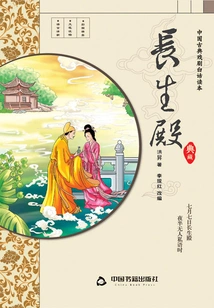
The main content includes: the palace is sealed, Yang Guozhong takes power, the spring is short of people, the sisters compete for favor, the disputes arise, the concubine is expelled, the hair is cut to express love, the concubine is summoned again, the ominous omen, hearing fairy music in a dream, composing neon clothes music, generals and ministers are at odds, the divine flute secretly learns neon clothes music, no one knows it is the lychee, the first performance of neon clothes, An Lushan's ambition, etc.
The main content includes: the palace is sealed, Yang Guozhong takes power, the spring is short of people, the sisters compete for favor, the disputes arise, the concubine is expelled, the hair is cut to express love, the concubine is summoned again, the ominous omen, hearing fairy music in a dream, composing neon clothes music, generals and ministers are at odds, the divine flute secretly learns neon clothes music, no one knows it is the lychee, the first performance of neon clothes, An Lushan's ambition, etc.
Palace of Eternal Life
Literature长生殿
Hong Sheng
"The Palace of Eternal Life" is a legendary drama written by Hong Sheng, a playwright in the early Qing Dynasty. It describes the love story between Emperor Ming of the Tang Dynasty and Concubine Yang Guifei, as well as the great disaster brought to the country by the emperor's fatuousness and political corruption during the Tianbao period of the Tang Dynasty. The first half describes the two people's oath of alliance in the Palace of Eternal Life, the An-Shi Rebellion, the Mawei Incident, and the death of Concubine Yang. The second half describes the story of Emperor Ming's longing for Concubine Yang, sending people to search for her soul, and the story of their reunion in the Moon Palace, embodying the ideal of beautiful love. "The Palace of Eternal Life" had a profound impact on the society of the early Qing Dynasty. As an emotional masterpiece, it closely interweaves history and emotion, successfully demonstrates the charm and depth of Kun Opera, and brings a historical world of sorrow and joy to the audience. "The Palace of Eternal Life" not only reveals the prosperity and decline of Tang Dynasty society, but also reflects the lessons of the demise of the Ming Dynasty, reflecting the critical attitude of society at that time towards the monarch's debauchery and harm to the country. At the same time, the portrayal of the characters in the play is also extremely successful. From the royal nobles to the loyal and patriotic people to the villains, they are all vividly portrayed, leaving a deep impression on the audience.
"The Palace of Eternal Life" is a legendary drama written by Hong Sheng, a playwright in the early Qing Dynasty. It describes the love story between Emperor Ming of the Tang Dynasty and Concubine Yang Guifei, as well as the great disaster brought to the country by the emperor's fatuousness and political corruption during the Tianbao period of the Tang Dynasty. The first half describes the two people's oath of alliance in the Palace of Eternal Life, the An-Shi Rebellion, the Mawei Incident, and the death of Concubine Yang. The second half describes the story of Emperor Ming's longing for Concubine Yang, sending people to search for her soul, and the story of their reunion in the Moon Palace, embodying the ideal of beautiful love. "The Palace of Eternal Life" had a profound impact on the society of the early Qing Dynasty. As an emotional masterpiece, it closely interweaves history and emotion, successfully demonstrates the charm and depth of Kun Opera, and brings a historical world of sorrow and joy to the audience. "The Palace of Eternal Life" not only reveals the prosperity and decline of Tang Dynasty society, but also reflects the lessons of the demise of the Ming Dynasty, reflecting the critical attitude of society at that time towards the monarch's debauchery and harm to the country. At the same time, the portrayal of the characters in the play is also extremely successful. From the royal nobles to the loyal and patriotic people to the villains, they are all vividly portrayed, leaving a deep impression on the audience.
长生殿(古典文库)
Hong Sheng
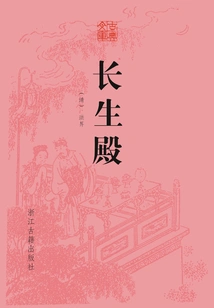
This book is a classic opera masterpiece based on the love story between Tang Ming Emperor Li Longji and his concubine Yang Yuhuan. He has high achievements in art. The first is the organic unity of historical reality and artistic reality. It is described based on historical records; some details are tailored according to the needs of the theme and made artistic fiction. Secondly, the structure is rigorous, compact and dramatic. The whole play has three clues: one is the love development of Li and Yang; one is the intrigue between Yang Guozhong and An Lushan; one is the conflicts between Guo Ziyi and An Lushan, Chen Yuanli and Li Longji, Yang Yuhuan, and Yang Guozhong. The whole play focuses on the love between Li and Yang as the main line, and the other two sub-lines are interspersed with the development of the main line. In addition, because the author is proficient in musical rhythm and has received corrections from opera music expert Xu Lingzhao, the rhythm of the script is very strict.
This book is a classic opera masterpiece based on the love story between Tang Ming Emperor Li Longji and his concubine Yang Yuhuan. He has high achievements in art. The first is the organic unity of historical reality and artistic reality. It is described based on historical records; some details are tailored according to the needs of the theme and made artistic fiction. Secondly, the structure is rigorous, compact and dramatic. The whole play has three clues: one is the love development of Li and Yang; one is the intrigue between Yang Guozhong and An Lushan; one is the conflicts between Guo Ziyi and An Lushan, Chen Yuanli and Li Longji, Yang Yuhuan, and Yang Guozhong. The whole play focuses on the love between Li and Yang as the main line, and the other two sub-lines are interspersed with the development of the main line. In addition, because the author is proficient in musical rhythm and has received corrections from opera music expert Xu Lingzhao, the rhythm of the script is very strict.