Library
Browse and search books
17 novels found
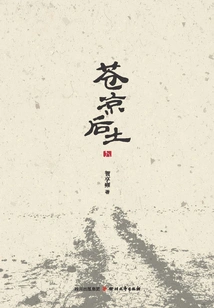
Desolate Back Soil
General Fiction苍凉后土
He Xiangyong
Farmer writer He Xiangyong used his profound life experience and spent several years to write a novel "The Desolate Back Land" with a strong flavor of rural life. The work "The Desolate Land" uses the experiences of the She Zhongming family, a large grain grower, as a clue to show the situation in Sichuan's rural areas in the late 1980s and early 1990s. It expresses the joys and worries of farmers, reflects the existing problems in rural reform, and foreshadows the bright prospects for rural development.
Farmer writer He Xiangyong used his profound life experience and spent several years to write a novel "The Desolate Back Land" with a strong flavor of rural life. The work "The Desolate Land" uses the experiences of the She Zhongming family, a large grain grower, as a clue to show the situation in Sichuan's rural areas in the late 1980s and early 1990s. It expresses the joys and worries of farmers, reflects the existing problems in rural reform, and foreshadows the bright prospects for rural development.
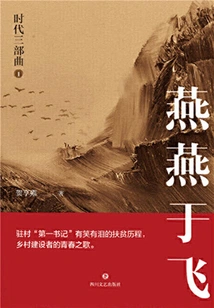
Era Trilogy·yan Yan Yu Fei
General Fiction时代三部曲·燕燕于飞
He Xiangyong
This is the first novel in this series. It mainly writes about Qiao Yan, a young female cadre serving in the county seat who was appointed as the first secretary of Hejiawan Village in Huangshiling Township and went deep into the grassroots to carry out poverty alleviation work. Qiao Yan worked hard to do practical things for the villagers, solved many practical problems faced by the villagers, and won the understanding and trust of some villagers and village cadres. It reflects the role of the "First Secretary" in the fight against poverty. This series of books takes the "poverty alleviation" and "rural revitalization" that are being vigorously carried out in China as the background, and uses the experience of a young female civil servant Qiao Yan from a county-level agency to go to the countryside to serve as the first secretary as the main story line. It comprehensively and profoundly depicts and displays the new changes and new trends that the ongoing poverty alleviation campaign and rural revitalization strategy have brought to China's rural landscape, as well as the evolution of farmers' ideas and concepts. The whole book shows the development direction of China's rural areas. It is an outstanding work of the times that promotes the main theme and positive energy.
This is the first novel in this series. It mainly writes about Qiao Yan, a young female cadre serving in the county seat who was appointed as the first secretary of Hejiawan Village in Huangshiling Township and went deep into the grassroots to carry out poverty alleviation work. Qiao Yan worked hard to do practical things for the villagers, solved many practical problems faced by the villagers, and won the understanding and trust of some villagers and village cadres. It reflects the role of the "First Secretary" in the fight against poverty. This series of books takes the "poverty alleviation" and "rural revitalization" that are being vigorously carried out in China as the background, and uses the experience of a young female civil servant Qiao Yan from a county-level agency to go to the countryside to serve as the first secretary as the main story line. It comprehensively and profoundly depicts and displays the new changes and new trends that the ongoing poverty alleviation campaign and rural revitalization strategy have brought to China's rural landscape, as well as the evolution of farmers' ideas and concepts. The whole book shows the development direction of China's rural areas. It is an outstanding work of the times that promotes the main theme and positive energy.
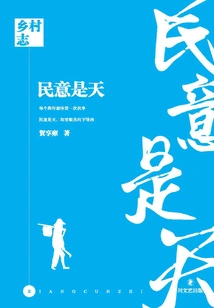
Rural Chronicles·popular Opinion is Heaven
General Fiction乡村志·民意是天
He Xiangyong
Implementing villagers' self-government and developing grassroots democracy is another great creation of Chinese farmers. Promoting democratic elections of village committees is the prerequisite and foundation for the implementation of villagers' autonomy. The novel revolves around He Duanyang, a villager in Hejiawan, who ran for village committee director three times. It reflects the arduous and tortuous journey that China's new rural grassroots democracy has gone through over the past thirty years of reform and opening up in the struggle against thousands of years of unwritten rules of officialdom, clans, house factions, and evil forces. It enthusiastically eulogizes the progress of the times and the growth of a new generation, and reveals The strength of traditional forces and the chronic diseases of the system bluntly reflect the complex relationships between village committees and villagers, village committees and village party branches, village committees and township governments under the current villagers' autonomy. It presents us with a vivid picture of China's rural social politics, society and families during the transition period, and leaves us with a lot of broad space for reflection and questioning.
Implementing villagers' self-government and developing grassroots democracy is another great creation of Chinese farmers. Promoting democratic elections of village committees is the prerequisite and foundation for the implementation of villagers' autonomy. The novel revolves around He Duanyang, a villager in Hejiawan, who ran for village committee director three times. It reflects the arduous and tortuous journey that China's new rural grassroots democracy has gone through over the past thirty years of reform and opening up in the struggle against thousands of years of unwritten rules of officialdom, clans, house factions, and evil forces. It enthusiastically eulogizes the progress of the times and the growth of a new generation, and reveals The strength of traditional forces and the chronic diseases of the system bluntly reflect the complex relationships between village committees and villagers, village committees and village party branches, village committees and township governments under the current villagers' autonomy. It presents us with a vivid picture of China's rural social politics, society and families during the transition period, and leaves us with a lot of broad space for reflection and questioning.
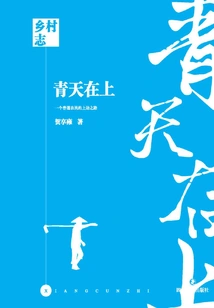
Rural Chronicle·the Sky is Above
General Fiction乡村志·青天在上
He Xiangyong
"Blue Sky Above" is one of the documentary novels in the "Country Chronicles" series, which tells the story of He Shizhong's several petitions. When He Shizhong served as secretary of the Hejiawan Village branch, he not only lent more than 40,000 yuan to the township government. After the state exempted agricultural taxes, the township government and village collectives were unable to repay their debts. Based on the principle of "stepping within the line but not crossing the line," He Shizhong began to evolve from a rights-defending petition to a "profit-seeking" petition, and later became a paranoid "professional petitioner." Just like He Xiangyong's previous rural-themed novels, the content of the novel is true and the details are detailed. The novel tells about petitioning and maintaining stability, which is a hot topic in society at present. The images of farmers and rural grassroots cadres it portrays are real and vivid, and have their own unique value.
"Blue Sky Above" is one of the documentary novels in the "Country Chronicles" series, which tells the story of He Shizhong's several petitions. When He Shizhong served as secretary of the Hejiawan Village branch, he not only lent more than 40,000 yuan to the township government. After the state exempted agricultural taxes, the township government and village collectives were unable to repay their debts. Based on the principle of "stepping within the line but not crossing the line," He Shizhong began to evolve from a rights-defending petition to a "profit-seeking" petition, and later became a paranoid "professional petitioner." Just like He Xiangyong's previous rural-themed novels, the content of the novel is true and the details are detailed. The novel tells about petitioning and maintaining stability, which is a hot topic in society at present. The images of farmers and rural grassroots cadres it portrays are real and vivid, and have their own unique value.
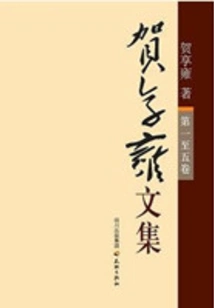
Collected Works of He Xiangyong (volume 1)
General Fiction贺享雍文集(第一卷)
He Xiangyong
This volume contains the author's novel "Hou Tu". Old man She Zhongming is a farmer who has been farming all his life. After the land contract, his family planted more and more fields and became a well-known large farmer. But he never thought about it...
This volume contains the author's novel "Hou Tu". Old man She Zhongming is a farmer who has been farming all his life. After the land contract, his family planted more and more fields and became a well-known large farmer. But he never thought about it...
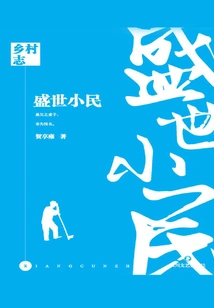
Rural Chronicle·people in the Prosperous Age
General Fiction乡村志·盛世小民
He Xiangyong
"Little People in the Prosperous Age" is a novel, the seventh volume in the Rural Chronicles series. The author tells the story of a farmer's noble fatherly love through He Shiyue, an honest and dutiful villager in Hejiawan, as the protagonist. It was only after He Shiyue gave birth to his son He Song in middle age that he felt that he had a head start in life. In order for his son to get married easily in the future, he renovated several bungalows of his own several times, and finally built a three-story small foreign-style building with the style of the whole village. However, Wu Xian, her future daughter-in-law, who had worked in the city for many years and was already accustomed to city life, was unwilling to return to rural life. After Wu Xian and He Song broke up, the heartbroken He Song asked his father to sell his house in his hometown and buy him a house in the city so that he could find a partner. However, He Shiyue returned to his hometown to sell his house but could not sell it at all. Now no one is willing to buy a house in the countryside. He witnessed a workers' compensation accident and wanted to use this method to raise money to buy a house for his son. Finally, the opportunity came. The boss had a fight with the villagers while demolishing their houses. In order to get the high bounty promised by the boss, He Shiyue, who had been timid and fearful since childhood, rushed forward brandishing an iron rod. Unfortunately, his hands were chopped off by the angry villagers.
"Little People in the Prosperous Age" is a novel, the seventh volume in the Rural Chronicles series. The author tells the story of a farmer's noble fatherly love through He Shiyue, an honest and dutiful villager in Hejiawan, as the protagonist. It was only after He Shiyue gave birth to his son He Song in middle age that he felt that he had a head start in life. In order for his son to get married easily in the future, he renovated several bungalows of his own several times, and finally built a three-story small foreign-style building with the style of the whole village. However, Wu Xian, her future daughter-in-law, who had worked in the city for many years and was already accustomed to city life, was unwilling to return to rural life. After Wu Xian and He Song broke up, the heartbroken He Song asked his father to sell his house in his hometown and buy him a house in the city so that he could find a partner. However, He Shiyue returned to his hometown to sell his house but could not sell it at all. Now no one is willing to buy a house in the countryside. He witnessed a workers' compensation accident and wanted to use this method to raise money to buy a house for his son. Finally, the opportunity came. The boss had a fight with the villagers while demolishing their houses. In order to get the high bounty promised by the boss, He Shiyue, who had been timid and fearful since childhood, rushed forward brandishing an iron rod. Unfortunately, his hands were chopped off by the angry villagers.
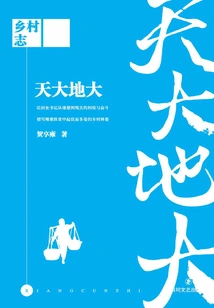
Rural Chronicle·the Sky is Big and the Earth is Big
General Fiction乡村志·天大地大
He Xiangyong
This book tells the story of Qiao Yan, a village cadre who serves as the "secretary" in Hejiawan Village, engaged in targeted poverty alleviation work, doing practical things, and solving practical problems. It also writes about the difficulties that some of her idealized plans encountered in reality. Through Hejiawan Village and its villagers, it also shows the current representative figures in the village and their spirit and life style. It more realistically reflects the specific problems faced by grassroots cadres in poverty alleviation work, and their flexible and intelligent response to complex and ever-changing grassroots work.
This book tells the story of Qiao Yan, a village cadre who serves as the "secretary" in Hejiawan Village, engaged in targeted poverty alleviation work, doing practical things, and solving practical problems. It also writes about the difficulties that some of her idealized plans encountered in reality. Through Hejiawan Village and its villagers, it also shows the current representative figures in the village and their spirit and life style. It more realistically reflects the specific problems faced by grassroots cadres in poverty alleviation work, and their flexible and intelligent response to complex and ever-changing grassroots work.
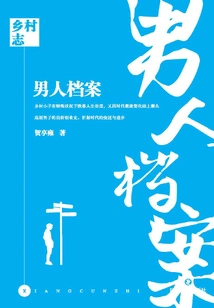
Rural Chronicle·men's Archives
General Fiction乡村志·男人档案
He Xiangyong
"Country Chronicles Men's Files" is a part of the "Countryside Chronicles" series of novels from multiple angles. This book tells the story of He Shiliang who was unjustly sentenced to 10 years in prison during the "Cultural Revolution". After he was released from prison, he seized the opportunity, started a small business, and grew into a successful farmer entrepreneur, while also gaining true love. The novel uses small things to see the big things. It not only reflects the living conditions of China's lower class people in a special era, but also enthusiastically praises the changes in the times and social progress brought about by reform, opening up, and the market economy.
"Country Chronicles Men's Files" is a part of the "Countryside Chronicles" series of novels from multiple angles. This book tells the story of He Shiliang who was unjustly sentenced to 10 years in prison during the "Cultural Revolution". After he was released from prison, he seized the opportunity, started a small business, and grew into a successful farmer entrepreneur, while also gaining true love. The novel uses small things to see the big things. It not only reflects the living conditions of China's lower class people in a special era, but also enthusiastically praises the changes in the times and social progress brought about by reform, opening up, and the market economy.
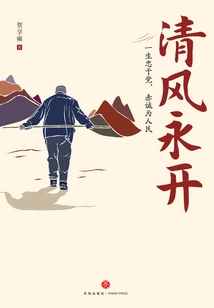
The Breeze Always Blooms
Literature清风永开
He Xiangyong
"The Breeze Ever Blooms" is a documentary literature that reflects the touching deeds and noble moral character of Zhou Yongkai, an outstanding Communist Party member in the country and winner of the "July 1st Medal". The work recalls Zhou Yongkai's original mission of being a communist when he joined the Communist Party of China, and narrates the touching story of Zhou Yongkai's persistence in retiring and taking root in Wanyuan Huahe Mountain for nearly 20 years, protecting the ecological environment and striving for common prosperity. He led the masses to afforestation, protected green waters and mountains, and built a national nature reserve in the local area. He paved a road to wealth for the local people by experimentally planting calyx shells and other Chinese medicinal materials. He actively led the people to build roads and solve the electricity problem, changing the face of local poverty. He donated funds to students, cared about education, and cultivated a new generation... The work fully demonstrated Zhou Yongkai's spiritual quality of being loyal to the party and sincerely serving the people throughout his life, and created a glorious image of a Communist who always follows the party and serves the people.
"The Breeze Ever Blooms" is a documentary literature that reflects the touching deeds and noble moral character of Zhou Yongkai, an outstanding Communist Party member in the country and winner of the "July 1st Medal". The work recalls Zhou Yongkai's original mission of being a communist when he joined the Communist Party of China, and narrates the touching story of Zhou Yongkai's persistence in retiring and taking root in Wanyuan Huahe Mountain for nearly 20 years, protecting the ecological environment and striving for common prosperity. He led the masses to afforestation, protected green waters and mountains, and built a national nature reserve in the local area. He paved a road to wealth for the local people by experimentally planting calyx shells and other Chinese medicinal materials. He actively led the people to build roads and solve the electricity problem, changing the face of local poverty. He donated funds to students, cared about education, and cultivated a new generation... The work fully demonstrated Zhou Yongkai's spiritual quality of being loyal to the party and sincerely serving the people throughout his life, and created a glorious image of a Communist who always follows the party and serves the people.
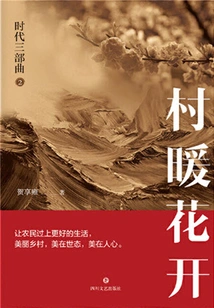
村暖花开(时代三部曲2)
He Xiangyong
This is the second part of the series of novels "The Age Trilogy". It mainly writes about Qiao Yan helping the villagers solve their difficulties, and the village gradually changes. But as she herself got married and had children, problems began to arise in her family relationships. And her life experience gradually surfaced. With the help and support of her family, Qiao Yan finally managed to balance the relationship between family and work. It reflects the practical problems of rural cadres and their career pursuit of getting rid of poverty and becoming well-off. A real and palpable history of contemporary poverty alleviation, a group portrait of secretaries and new rural youths within reach. It tells a subtle and touching story of rural revitalization in a great era and amidst great changes. A rural novel with Sichuan characteristics.
This is the second part of the series of novels "The Age Trilogy". It mainly writes about Qiao Yan helping the villagers solve their difficulties, and the village gradually changes. But as she herself got married and had children, problems began to arise in her family relationships. And her life experience gradually surfaced. With the help and support of her family, Qiao Yan finally managed to balance the relationship between family and work. It reflects the practical problems of rural cadres and their career pursuit of getting rid of poverty and becoming well-off. A real and palpable history of contemporary poverty alleviation, a group portrait of secretaries and new rural youths within reach. It tells a subtle and touching story of rural revitalization in a great era and amidst great changes. A rural novel with Sichuan characteristics.
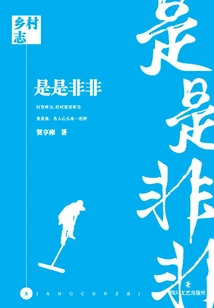
Rural Chronicle·right and Wrong
General Fiction乡村志·是是非非
He Xiangyong
The novel vividly describes the changes and complex conflicts and entanglements in the relationships between townships and villages, villages and people, officials and people, and people and people in contemporary rural China. In particular, it gives a thorough and vivid representation of the interest game between different groups in the countryside during the period of transformation. The stories one after another that are both reasonable and unexpected make people laugh but it is difficult to laugh out loud. The novel also provides a profound and detailed description of current social sensitive issues such as investment promotion, hearings, collusion between government and businessmen, etc. It is a rare and excellent work for observing and understanding contemporary rural China.
The novel vividly describes the changes and complex conflicts and entanglements in the relationships between townships and villages, villages and people, officials and people, and people and people in contemporary rural China. In particular, it gives a thorough and vivid representation of the interest game between different groups in the countryside during the period of transformation. The stories one after another that are both reasonable and unexpected make people laugh but it is difficult to laugh out loud. The novel also provides a profound and detailed description of current social sensitive issues such as investment promotion, hearings, collusion between government and businessmen, etc. It is a rare and excellent work for observing and understanding contemporary rural China.
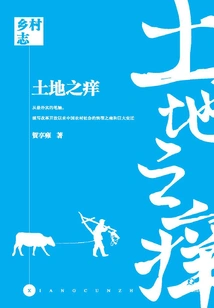
Rural Chronicle·the Itch of the Land
General Fiction乡村志·土地之痒
He Xiangyong
"Rural Chronicles: The Itch of the Land" is a part of the "Rural Chronicles" series, which describes the local issues in rural China. The work tells the story of the three different transformations that the villagers of Hejiawan experienced during the thirty years of reform and opening up, from the "lifeblood" of the source of food and clothing, to the "rib" that is tasteless and disposable, to the "tail" that they want to cut off but is not so easy to cut off, and their struggle in the soil. , As well as tracing back history, expounding the history of rural land relocation in China during the thirty years or more of reform and opening up and the living conditions of Chinese farmers for more than a century, vividly depicting the process of land relocation in China's rural areas since reform and opening up and its impact on the hearts of farmers. The whole book integrates the fantasy of time and the daily life of farmers. It not only pays attention to the macroscopic impact of time on farmers' micro life, but also focuses on the impact of micro life on the macro world. While truly reflecting real life, it also deeply explores folk culture such as customs (festivals), religious beliefs, myths and legends that affect people's behavior.
"Rural Chronicles: The Itch of the Land" is a part of the "Rural Chronicles" series, which describes the local issues in rural China. The work tells the story of the three different transformations that the villagers of Hejiawan experienced during the thirty years of reform and opening up, from the "lifeblood" of the source of food and clothing, to the "rib" that is tasteless and disposable, to the "tail" that they want to cut off but is not so easy to cut off, and their struggle in the soil. , As well as tracing back history, expounding the history of rural land relocation in China during the thirty years or more of reform and opening up and the living conditions of Chinese farmers for more than a century, vividly depicting the process of land relocation in China's rural areas since reform and opening up and its impact on the hearts of farmers. The whole book integrates the fantasy of time and the daily life of farmers. It not only pays attention to the macroscopic impact of time on farmers' micro life, but also focuses on the impact of micro life on the macro world. While truly reflecting real life, it also deeply explores folk culture such as customs (festivals), religious beliefs, myths and legends that affect people's behavior.
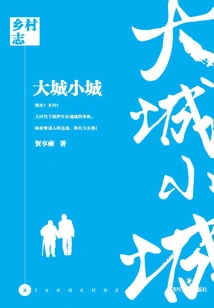
Rural Chronicle·big Town and Small Town
General Fiction乡村志·大城小城
He Xiangyong
This is a full-length novel, a "photo album" that records social changes, and depicts the ups and downs, joys, sorrows, and spring, summer, autumn, and winter of rural people in the process of integrating into the city. The story starts from the Spring Festival to the end of the Spring Festival of the next year. It seems like a circle, but the family has undergone tremendous changes. The beginning of the novel is dramatic. He Shilong's wife Li Chunying reunited her family with her family on her 80th birthday, but she died of a sudden cerebral hemorrhage due to emotional fluctuations. A good thing turned out to be a bad thing, and the story unfolds from this. By the time of the reunion in the second year, all kinds of conflicts between family members were finally resolved by family affection, which was touching.
This is a full-length novel, a "photo album" that records social changes, and depicts the ups and downs, joys, sorrows, and spring, summer, autumn, and winter of rural people in the process of integrating into the city. The story starts from the Spring Festival to the end of the Spring Festival of the next year. It seems like a circle, but the family has undergone tremendous changes. The beginning of the novel is dramatic. He Shilong's wife Li Chunying reunited her family with her family on her 80th birthday, but she died of a sudden cerebral hemorrhage due to emotional fluctuations. A good thing turned out to be a bad thing, and the story unfolds from this. By the time of the reunion in the second year, all kinds of conflicts between family members were finally resolved by family affection, which was touching.
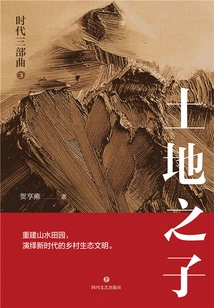
Sons of the Soil (era Trilogy 3)
General Fiction土地之子(时代三部曲3)
He Xiangyong
This is the third part of the series of novels "The Age Trilogy". Qiao Yan, who is mainly written as secretary in Hejiawan, hopes to bring new vitality to Hejiawan and revitalize the countryside by calling on Hejiawan people working outside to return to their hometown to start businesses. In the process, she encountered some obstacles, but she still faced the difficulties and tried every means to solve them, attracting young people to return to the village to start businesses, develop modern agriculture, and make Hejiawan lively and full of hope again. The novel uses simple words to portray the image of the protagonist Qiao Yan very vividly. The image of a secretary who is considerate of Hejiawan, conscientious and dedicated to his duties is vividly displayed on the page. It also reflects the new work direction in the construction of new rural areas and the new working methods of young cadres.
This is the third part of the series of novels "The Age Trilogy". Qiao Yan, who is mainly written as secretary in Hejiawan, hopes to bring new vitality to Hejiawan and revitalize the countryside by calling on Hejiawan people working outside to return to their hometown to start businesses. In the process, she encountered some obstacles, but she still faced the difficulties and tried every means to solve them, attracting young people to return to the village to start businesses, develop modern agriculture, and make Hejiawan lively and full of hope again. The novel uses simple words to portray the image of the protagonist Qiao Yan very vividly. The image of a secretary who is considerate of Hejiawan, conscientious and dedicated to his duties is vividly displayed on the page. It also reflects the new work direction in the construction of new rural areas and the new working methods of young cadres.
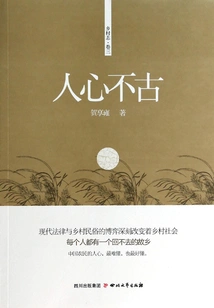
People's Hearts Are Not Ancient
General Fiction人心不古
He Xiangyong
After he retired as the principal of a key county middle school, He Shipu was ceremoniously invited back to his hometown by the director of Fengcun Village in Hejiawan to serve as the leader of the conflict and dispute mediation team. He Shipu is determined to introduce modern legal concepts into the hearts of villagers, so that they can understand and abide by the law and consciously abide by the law and discipline, so as to reduce disputes. But after his sister-in-law committed suicide by drinking pesticide due to domestic violence, he wanted to send her husband, his distant brother, and neighbor He Shiguo to prison in accordance with the law. However, he was blocked by the village's customary law of "live or die", and he ended up being very embarrassed. Then he got into a building dispute involving himself. When He Shiguo built his house, he turned the two-story building into three stories and put a gabled roof on it. This seriously affects the lighting of He Shipu's house. He Shipu took up legal weapons to defend his rights and took He Shiguo to court. Although the lawsuit was won, He Shipu was generally alienated by the villagers and finally had to leave the village...
After he retired as the principal of a key county middle school, He Shipu was ceremoniously invited back to his hometown by the director of Fengcun Village in Hejiawan to serve as the leader of the conflict and dispute mediation team. He Shipu is determined to introduce modern legal concepts into the hearts of villagers, so that they can understand and abide by the law and consciously abide by the law and discipline, so as to reduce disputes. But after his sister-in-law committed suicide by drinking pesticide due to domestic violence, he wanted to send her husband, his distant brother, and neighbor He Shiguo to prison in accordance with the law. However, he was blocked by the village's customary law of "live or die", and he ended up being very embarrassed. Then he got into a building dispute involving himself. When He Shiguo built his house, he turned the two-story building into three stories and put a gabled roof on it. This seriously affects the lighting of He Shipu's house. He Shipu took up legal weapons to defend his rights and took He Shiguo to court. Although the lawsuit was won, He Shipu was generally alienated by the villagers and finally had to leave the village...
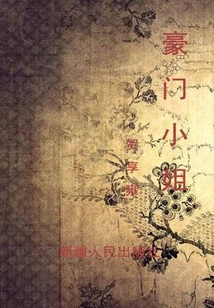
Rich Lady
General Fiction豪门小姐
He Xiangyong
On her wedding day, the third lady of the Yan family put on her trousers layer by layer. Each time she put on the trousers, she tied the waist of the trousers tightly with a strong belt and tied it with a tight knot...
On her wedding day, the third lady of the Yan family put on her trousers layer by layer. Each time she put on the trousers, she tied the waist of the trousers tightly with a strong belt and tied it with a tight knot...
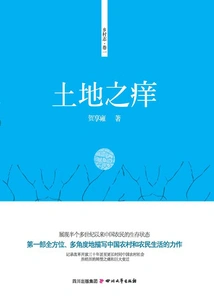
Rural Chronicles: the Itch of the Land
General Fiction乡村志:土地之痒
He Xiangyong
This book takes the village of Hejiawan as the main subject and follows the main line of decades of land reform in rural China. It tells the story of the life-and-death relationship between farmers represented by He Shilong and the land, and shows the earth-shaking changes that have taken place in the countryside during this drastic change. From the traditional small-scale peasant economy to the modern new rural construction, farmers' lives, thoughts, consciousness, and concepts have undergone tremendous changes, which reflects the tortuous course of China's rural land changes.
This book takes the village of Hejiawan as the main subject and follows the main line of decades of land reform in rural China. It tells the story of the life-and-death relationship between farmers represented by He Shilong and the land, and shows the earth-shaking changes that have taken place in the countryside during this drastic change. From the traditional small-scale peasant economy to the modern new rural construction, farmers' lives, thoughts, consciousness, and concepts have undergone tremendous changes, which reflects the tortuous course of China's rural land changes.