Library
Browse and search books
7 novels found
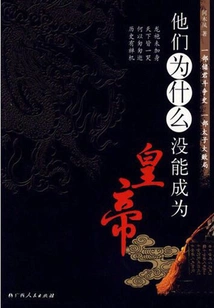
他们为什么没能成为皇帝
He Mufeng
There were some people in Chinese history who could have become emperors, and were very likely to become wise kings in history, but they missed the throne due to various "opportunities." They are the princes who are not wearing dragon robes. The road from the prince to the emperor seems to be close at hand, but it is far away. They could have become an emperor, and probably would have become an excellent emperor, but they fell down on this road of "far? Near?" It can be said that the road to imperial power is actually a road of competition for "mother and son communicate with each other, father and son are at odds with each other, and brothers kill each other."
There were some people in Chinese history who could have become emperors, and were very likely to become wise kings in history, but they missed the throne due to various "opportunities." They are the princes who are not wearing dragon robes. The road from the prince to the emperor seems to be close at hand, but it is far away. They could have become an emperor, and probably would have become an excellent emperor, but they fell down on this road of "far? Near?" It can be said that the road to imperial power is actually a road of competition for "mother and son communicate with each other, father and son are at odds with each other, and brothers kill each other."
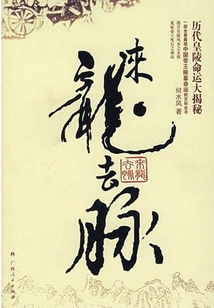
来龙去脉:历代皇陵命运大揭密
He Mufeng
Ancient Chinese imperial mausoleums are a unique product of feudal society. In order to demonstrate the majesty of their imperial power and show their incomparable nobility, emperors of the past dynasties did not hesitate to concentrate a large amount of manpower, material resources, financial resources and the world's most skilled craftsmen to build their own cemeteries, which took as long as forty or fifty years and as little as a few years. As the underground kingdom of the feudal emperor, the imperial mausoleum was built entirely in accordance with the etiquette principle of "things die as things live, and things die as things exist". Its luxury and luxury are self-evident. But precisely because of this, it has become a bait to attract tomb robbers and has become the favorite of tomb robbers throughout the ages.
Ancient Chinese imperial mausoleums are a unique product of feudal society. In order to demonstrate the majesty of their imperial power and show their incomparable nobility, emperors of the past dynasties did not hesitate to concentrate a large amount of manpower, material resources, financial resources and the world's most skilled craftsmen to build their own cemeteries, which took as long as forty or fifty years and as little as a few years. As the underground kingdom of the feudal emperor, the imperial mausoleum was built entirely in accordance with the etiquette principle of "things die as things live, and things die as things exist". Its luxury and luxury are self-evident. But precisely because of this, it has become a bait to attract tomb robbers and has become the favorite of tomb robbers throughout the ages.
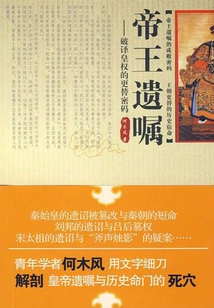
帝王遗嘱:破解皇权的更替密码
He Mufeng
The transfer of imperial power is quite complicated to do, but quite simple to say. This is what we are talking about today, because the imperial era has long passed and no one has the ability to do it again. The edicts selected in this book are all political testaments of very famous emperors in Chinese history. They are those "go masters". Either the founding emperor, the leader of the ZTE, the hero of troubled times, or the emperor of peace. Their reasonable or unreasonable planning of the country behind them directly caused the occurrence of many famous historical events in Chinese history.
The transfer of imperial power is quite complicated to do, but quite simple to say. This is what we are talking about today, because the imperial era has long passed and no one has the ability to do it again. The edicts selected in this book are all political testaments of very famous emperors in Chinese history. They are those "go masters". Either the founding emperor, the leader of the ZTE, the hero of troubled times, or the emperor of peace. Their reasonable or unreasonable planning of the country behind them directly caused the occurrence of many famous historical events in Chinese history.
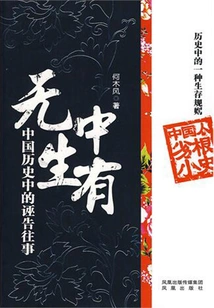
无中生有:中国历史中的诬告往事
He Mufeng
Looking through the Twenty-Four Histories, the faces of false accusations and frame-ups and the bloody reality make people shudder. Needless to say, those villains often rely on making something out of nothing to survive. Even some people who have left a good name in official history also have records of falsely accusing others. Of course, there is no groundless accusation in this world. The reason why the accuser committed this despicable act is. It's because there are benefits hidden in it. Such interests include wealth and glory, and sometimes life and death. This book analyzes the facts and trials of famous false accusation and frame-up cases in history, and explores the thoughts and hearts behind the cases. The ins and outs of each case can be unearthed into a thought-provoking truth or phenomenon. Most of the major cases in Chinese history were cases of false accusations. This book sorts out these cases of false accusations and serves as a window into the world of China. It is of practical significance for Ying Xin to review them.
Looking through the Twenty-Four Histories, the faces of false accusations and frame-ups and the bloody reality make people shudder. Needless to say, those villains often rely on making something out of nothing to survive. Even some people who have left a good name in official history also have records of falsely accusing others. Of course, there is no groundless accusation in this world. The reason why the accuser committed this despicable act is. It's because there are benefits hidden in it. Such interests include wealth and glory, and sometimes life and death. This book analyzes the facts and trials of famous false accusation and frame-up cases in history, and explores the thoughts and hearts behind the cases. The ins and outs of each case can be unearthed into a thought-provoking truth or phenomenon. Most of the major cases in Chinese history were cases of false accusations. This book sorts out these cases of false accusations and serves as a window into the world of China. It is of practical significance for Ying Xin to review them.
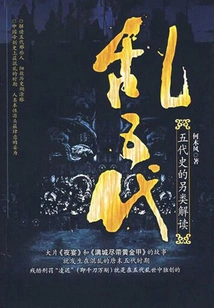
The Chaos of the Five Dynasties: an Alternative Interpretation of the History of the Five Dynasties
History乱五代:五代史的另类解读
He Mufeng
As the first popular and historical reading to systematically interpret the history of the Five Dynasties, this book reads the people and events of the Five Dynasties from multiple visual perspectives, trying to find the code to decipher the "chaos" and "shamelessness" of the history of the Five Dynasties. After the fall of the Tang Dynasty, three dynasties, namely the Later Liang, the Later Tang, the Later Jin, the Later Han, and the Later Wu, emerged in the Central Plains, which are known as the "Five Dynasties" in history. The Five Dynasties existed for fifty-three years, with a total of eight surnames and fourteen monarchs. There were many warriors in the Five Dynasties and many lay ministers in the Five Dynasties. They obliterated benevolence, righteousness and morality, corrupted the Three Cardinal Principles and the Five Constant Rules. Historical farces of son-in-law killing, brother killing brother, military dramatizing ministers, and ministers rebelling against the emperor can be seen everywhere.
As the first popular and historical reading to systematically interpret the history of the Five Dynasties, this book reads the people and events of the Five Dynasties from multiple visual perspectives, trying to find the code to decipher the "chaos" and "shamelessness" of the history of the Five Dynasties. After the fall of the Tang Dynasty, three dynasties, namely the Later Liang, the Later Tang, the Later Jin, the Later Han, and the Later Wu, emerged in the Central Plains, which are known as the "Five Dynasties" in history. The Five Dynasties existed for fifty-three years, with a total of eight surnames and fourteen monarchs. There were many warriors in the Five Dynasties and many lay ministers in the Five Dynasties. They obliterated benevolence, righteousness and morality, corrupted the Three Cardinal Principles and the Five Constant Rules. Historical farces of son-in-law killing, brother killing brother, military dramatizing ministers, and ministers rebelling against the emperor can be seen everywhere.
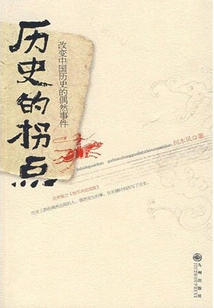
历史的拐点:改变中国历史的偶然事件
He Mufeng
Past history contains countless possibilities, and a certain historical fact is only one possibility realized among many possibilities. And between realization and unrealization, there is an inflection point, which serves as an important task that is likely to rewrite history. There are many such turning points in Chinese history: either an unknown little person changed the course of history, or an inconspicuous incident affected subsequent history. The inevitable changes that had been hidden in history finally emerged due to the intervention of some accidental factors. Let us experience the charm of historical changes at these turning points!
Past history contains countless possibilities, and a certain historical fact is only one possibility realized among many possibilities. And between realization and unrealization, there is an inflection point, which serves as an important task that is likely to rewrite history. There are many such turning points in Chinese history: either an unknown little person changed the course of history, or an inconspicuous incident affected subsequent history. The inevitable changes that had been hidden in history finally emerged due to the intervention of some accidental factors. Let us experience the charm of historical changes at these turning points!
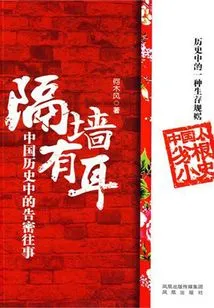
隔墙有耳:中国历史中的告密往事
He Mufeng
For many years, the Confucian education system that supports traditional Chinese culture does not advocate unjust reporting in terms of moral values. However, as long as autocratic politics exists, rulers will encourage reporting. Throughout the entire feudal dynasty, from the Qin to the Qing Dynasty, whistleblowers had always run through it, becoming a stain on the history of the imperial system, and the whistleblower was that dirt. This piece of dirt is huge. The number is beyond our imagination. Not only does it interfere with your private life, but it also controls your soul. The history of informing in ancient China is a history of rulers controlling the souls of others. Whistleblowers in all eras have shown their talents. Through the shameful trick of whistleblowing, some have changed history, some have been infamy for thousands of years, and some have risen to great heights. They may succeed or fail, be irritating or pathetic, and are nothing more than pawns under the autocratic rule.
For many years, the Confucian education system that supports traditional Chinese culture does not advocate unjust reporting in terms of moral values. However, as long as autocratic politics exists, rulers will encourage reporting. Throughout the entire feudal dynasty, from the Qin to the Qing Dynasty, whistleblowers had always run through it, becoming a stain on the history of the imperial system, and the whistleblower was that dirt. This piece of dirt is huge. The number is beyond our imagination. Not only does it interfere with your private life, but it also controls your soul. The history of informing in ancient China is a history of rulers controlling the souls of others. Whistleblowers in all eras have shown their talents. Through the shameful trick of whistleblowing, some have changed history, some have been infamy for thousands of years, and some have risen to great heights. They may succeed or fail, be irritating or pathetic, and are nothing more than pawns under the autocratic rule.