Library
Browse and search books
5 novels found
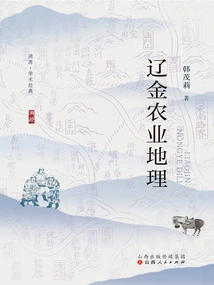
辽金农业地理
Han Maoli
This book is an academic work on the agriculture and geography of the Liao and Jin dynasties. It explores the relationship between man and land during the Liao and Jin dynasties from the perspective of broad agriculture. The Liao and Jin dynasties covered most of northern China, with unique natural geographical units and several important agricultural boundaries that traversed the entire region. Compared with the two Song dynasties, it experienced more drastic changes in politics, economy and even military affairs. The resulting social factors such as population migration continued to promote changes in the regional structure of agricultural production. When comprehensively restoring the agricultural geography of the Liao and Jin dynasties, the author focused on analyzing the environmental characteristics before the formation of grassland farming areas, the characteristics of population mobility after the establishment of the Liao and Jin dynasties, the regional characteristics of agricultural production activities, and the geographical pattern of crop types and planting systems. Based on traditional documents, combined with archaeological excavations and field investigations, the book provides an overall discussion of the regional characteristics and historical processes of agricultural activities in the Liao and Jin dynasties.
This book is an academic work on the agriculture and geography of the Liao and Jin dynasties. It explores the relationship between man and land during the Liao and Jin dynasties from the perspective of broad agriculture. The Liao and Jin dynasties covered most of northern China, with unique natural geographical units and several important agricultural boundaries that traversed the entire region. Compared with the two Song dynasties, it experienced more drastic changes in politics, economy and even military affairs. The resulting social factors such as population migration continued to promote changes in the regional structure of agricultural production. When comprehensively restoring the agricultural geography of the Liao and Jin dynasties, the author focused on analyzing the environmental characteristics before the formation of grassland farming areas, the characteristics of population mobility after the establishment of the Liao and Jin dynasties, the regional characteristics of agricultural production activities, and the geographical pattern of crop types and planting systems. Based on traditional documents, combined with archaeological excavations and field investigations, the book provides an overall discussion of the regional characteristics and historical processes of agricultural activities in the Liao and Jin dynasties.
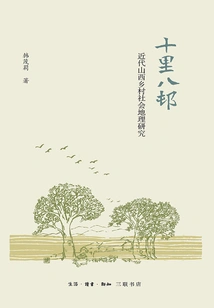
十里八村:近代山西乡村社会地理研究
Han Maoli
This book is a research monograph on Shanxi's rural social geography in the past three hundred years. Starting from the perspective of geography, the author comprehensively uses historical and sociological methods, combined with the personal experience of fieldwork, to conduct a comprehensive and in-depth investigation of a series of issues such as the composition of Shanxi rural farmers and agricultural production space, grassroots management and spatial order, the spatial scope of marriage circles, commercial activities and villagers' travel distance, the spatial expression of rural sacrifices, water conservancy management and social organization, thus presenting the basic aspects of modern Shanxi rural social geography and the historical trajectory of villagers' life development. The author puts forward a core conclusion: "Ten Miles and Eight Villages" is the inter-village communication space that is related to each other in modern Shanxi villages, and the general scope of villagers' cognition and geographical space of knowledge. It is further believed that the scope of social interaction formed through market transactions laid the foundation for various other social activities such as marriage and sacrifice.
This book is a research monograph on Shanxi's rural social geography in the past three hundred years. Starting from the perspective of geography, the author comprehensively uses historical and sociological methods, combined with the personal experience of fieldwork, to conduct a comprehensive and in-depth investigation of a series of issues such as the composition of Shanxi rural farmers and agricultural production space, grassroots management and spatial order, the spatial scope of marriage circles, commercial activities and villagers' travel distance, the spatial expression of rural sacrifices, water conservancy management and social organization, thus presenting the basic aspects of modern Shanxi rural social geography and the historical trajectory of villagers' life development. The author puts forward a core conclusion: "Ten Miles and Eight Villages" is the inter-village communication space that is related to each other in modern Shanxi villages, and the general scope of villagers' cognition and geographical space of knowledge. It is further believed that the scope of social interaction formed through market transactions laid the foundation for various other social activities such as marriage and sacrifice.
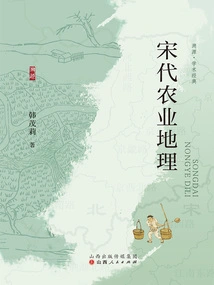
宋代农业地理
Han Maoli
This book is an overall discussion of agricultural development and its geographical distribution in the two Song Dynasties for more than 300 years. The book not only macroscopically points out the importance of agricultural production to the national destiny and people's livelihood in the Song Dynasty, but also based on the regional differences caused by the natural environment and social factors in the Song Dynasty, from the aspects of population, land, crops, water conservancy, agricultural technology, etc., Discusses the agricultural production characteristics of five regions in the Song Dynasty: the middle and lower reaches of the Yellow River, the southeast region, the Jinghu region, the Chuanxia region, and the Lingnan region. It focuses on the relationship between the southward shift of ancient China's economic center of gravity and the two-crop annual rice-wheat rotation system. This book constructs a research paradigm of "agricultural geography", with solid data and rigorous argumentation. It shows the complexity and differences of agricultural complexes in various places in the Song Dynasty, and accurately summarizes the characteristics of Song Dynasty agriculture in the history of Chinese agricultural development as a "connection between past and future". This book helps readers observe the political changes and economic development in the Song Dynasty through the "agricultural perspective", and has high academic reference value.
This book is an overall discussion of agricultural development and its geographical distribution in the two Song Dynasties for more than 300 years. The book not only macroscopically points out the importance of agricultural production to the national destiny and people's livelihood in the Song Dynasty, but also based on the regional differences caused by the natural environment and social factors in the Song Dynasty, from the aspects of population, land, crops, water conservancy, agricultural technology, etc., Discusses the agricultural production characteristics of five regions in the Song Dynasty: the middle and lower reaches of the Yellow River, the southeast region, the Jinghu region, the Chuanxia region, and the Lingnan region. It focuses on the relationship between the southward shift of ancient China's economic center of gravity and the two-crop annual rice-wheat rotation system. This book constructs a research paradigm of "agricultural geography", with solid data and rigorous argumentation. It shows the complexity and differences of agricultural complexes in various places in the Song Dynasty, and accurately summarizes the characteristics of Song Dynasty agriculture in the history of Chinese agricultural development as a "connection between past and future". This book helps readers observe the political changes and economic development in the Song Dynasty through the "agricultural perspective", and has high academic reference value.
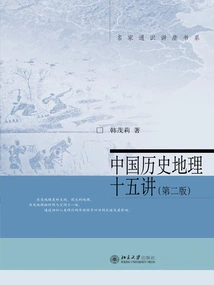
中国历史地理十五讲(第二版)
Han Maoli
This book covers the main fields of historical geography research - territory, environment, political regions, agriculture, transportation, military, cities, etc. It sorts out and introduces the basic issues in these fields and their historical development. It is a good introductory book for understanding China's historical geography.
This book covers the main fields of historical geography research - territory, environment, political regions, agriculture, transportation, military, cities, etc. It sorts out and introduces the basic issues in these fields and their historical development. It is a good introductory book for understanding China's historical geography.
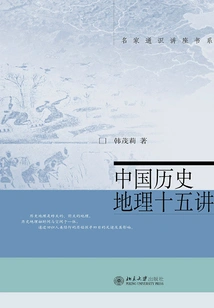
中国历史地理十五讲
Han Maoli
The earth is the foundation of human existence and the stage for human activities. Human beings' behavior of relying on, utilizing and transforming the earth has become various fields of geographical research. Historical geography is the study of the geography of the past. "Fifteen Lectures on Chinese Historical Geography" covers the main areas of historical geography research - territory, environment, political regions, agriculture, transportation, military, cities, etc.
The earth is the foundation of human existence and the stage for human activities. Human beings' behavior of relying on, utilizing and transforming the earth has become various fields of geographical research. Historical geography is the study of the geography of the past. "Fifteen Lectures on Chinese Historical Geography" covers the main areas of historical geography research - territory, environment, political regions, agriculture, transportation, military, cities, etc.