Library
Browse and search books
2 novels found
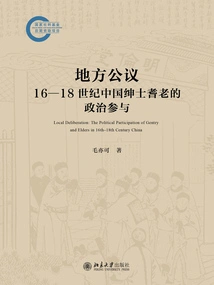
地方公议:16—18世纪中国绅士耆老的政治参与
Hair Can Also Be Used
In ancient Chinese history, there has been a long-standing political tradition of officials consulting local elders about the pros and cons and listening to public opinion. By the middle of the 16th century, this political tradition had developed into a local public deliberation characterized by the gentry and elders gathering together to hold meetings and submit "combined city submissions" to the government. This book systematically studies the historical evolution, operational procedures, application scope and other issues of local public deliberation among gentlemen and elders from the 16th to the 18th centuries.
In ancient Chinese history, there has been a long-standing political tradition of officials consulting local elders about the pros and cons and listening to public opinion. By the middle of the 16th century, this political tradition had developed into a local public deliberation characterized by the gentry and elders gathering together to hold meetings and submit "combined city submissions" to the government. This book systematically studies the historical evolution, operational procedures, application scope and other issues of local public deliberation among gentlemen and elders from the 16th to the 18th centuries.
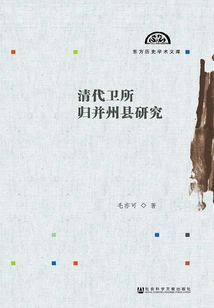
清代卫所归并州县研究(东方历史学术文库)
Hair Can Also Be Used
This book studies the process of the Qing Dynasty when the health offices and their subordinate villages and villages were transferred back to the local management of prefectures and counties. After the establishment of the Qing Dynasty, in the face of the huge health system established by the Ming Dynasty, on the one hand, it quickly eliminated its military functions, and on the other hand, it slowly promoted the internal transformation of the health system. It gradually eliminated the particularity of the health system in terms of management institutions, land ownership, household establishment methods, and the allocation of land tax and grain, and incorporated it into the local civil administration system of prefectures and counties. In the Qing Dynasty, the merging of the imperial guards into prefectures and counties was not only an important government affair in the history of the early Qing Dynasty, but also a typical example of the integration of the military and civilian systems that occurred repeatedly in Chinese history.
This book studies the process of the Qing Dynasty when the health offices and their subordinate villages and villages were transferred back to the local management of prefectures and counties. After the establishment of the Qing Dynasty, in the face of the huge health system established by the Ming Dynasty, on the one hand, it quickly eliminated its military functions, and on the other hand, it slowly promoted the internal transformation of the health system. It gradually eliminated the particularity of the health system in terms of management institutions, land ownership, household establishment methods, and the allocation of land tax and grain, and incorporated it into the local civil administration system of prefectures and counties. In the Qing Dynasty, the merging of the imperial guards into prefectures and counties was not only an important government affair in the history of the early Qing Dynasty, but also a typical example of the integration of the military and civilian systems that occurred repeatedly in Chinese history.