Library
Browse and search books
15 novels found
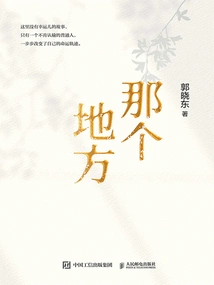
That Place
Literature那个地方
Guo Xiaodong
"That Place", a collection of essays by actor Guo Xiaodong, is a sincere work that sheds its halo and returns to its true nature. The book has 32 essays and 32 soul resonances. With delicate and simple writing, it traces the growth trajectory from rural Shandong to the world stage - the tranquility and beauty of the countryside in childhood, the hardship and helplessness of working life, and the confused perseverance during the years of drifting to Beijing. "That place" is not only my hometown in the geographical sense, but also the origin and concern that we cannot return to; it is also a safe haven in confusion and hardship, giving us warmth and strength; and it is also the spiritual destination that we are looking for throughout our lives to bring peace of mind to our souls. There are no legends or adventures in this book. It only tells how an ordinary person relied on his indomitable resilience to find a way step by step in a place where there seemed to be no way. This is not only the growth history of a person, but also the spiritual map of a generation. Dedicated to all you who stumble on the road of life but never give up.
"That Place", a collection of essays by actor Guo Xiaodong, is a sincere work that sheds its halo and returns to its true nature. The book has 32 essays and 32 soul resonances. With delicate and simple writing, it traces the growth trajectory from rural Shandong to the world stage - the tranquility and beauty of the countryside in childhood, the hardship and helplessness of working life, and the confused perseverance during the years of drifting to Beijing. "That place" is not only my hometown in the geographical sense, but also the origin and concern that we cannot return to; it is also a safe haven in confusion and hardship, giving us warmth and strength; and it is also the spiritual destination that we are looking for throughout our lives to bring peace of mind to our souls. There are no legends or adventures in this book. It only tells how an ordinary person relied on his indomitable resilience to find a way step by step in a place where there seemed to be no way. This is not only the growth history of a person, but also the spiritual map of a generation. Dedicated to all you who stumble on the road of life but never give up.
失落的文明:史图博《海南岛民族志》研究
Guo Xiaodong
Criticism is choice. Selection itself is a process of criticism, criticism and selection, which affirms, advocates and constructs in the process of sublation. Therefore, its focus is not on destruction or subversion but on finding its value and meaning and facing it head-on to introduce and build upon. Ancient Chinese literary theory stops at the most important points and does not extend in form, leaving enough space for understanding and imagination. This must be the boundary set by the established goal and method of "criticism as selection". It also reflects criticism's respect for its object and its limited reservations. This spirit, in a sense, is closely related to the special laws of literary creation and thinking, including the basic attitude and judgment made by literature based on its in-depth understanding of the uniqueness and non-replicability of the human mind's operating methods. Compared with the binary opposition in traditional philosophy, this basic stance contains sharp confrontations, hierarchical relationships, and basic patterns such as the basic grasp of good\u002Fevil, affirmation\u002Fnegation, and essence\u002Faccidentity of the world, highlighting a conscious escape. This self-conscious spirit in ancient Chinese literary theory contains a strong meaning of modernity. Similar to current deconstructionist criticism.
Criticism is choice. Selection itself is a process of criticism, criticism and selection, which affirms, advocates and constructs in the process of sublation. Therefore, its focus is not on destruction or subversion but on finding its value and meaning and facing it head-on to introduce and build upon. Ancient Chinese literary theory stops at the most important points and does not extend in form, leaving enough space for understanding and imagination. This must be the boundary set by the established goal and method of "criticism as selection". It also reflects criticism's respect for its object and its limited reservations. This spirit, in a sense, is closely related to the special laws of literary creation and thinking, including the basic attitude and judgment made by literature based on its in-depth understanding of the uniqueness and non-replicability of the human mind's operating methods. Compared with the binary opposition in traditional philosophy, this basic stance contains sharp confrontations, hierarchical relationships, and basic patterns such as the basic grasp of good\u002Fevil, affirmation\u002Fnegation, and essence\u002Faccidentity of the world, highlighting a conscious escape. This self-conscious spirit in ancient Chinese literary theory contains a strong meaning of modernity. Similar to current deconstructionist criticism.
Apocalypse of Wisdom
History智策天启
Guo Xiaodong
Wang Yi, an ordinary young man living in modern society, traveled to a strange ancient world due to an accident. He struggled to survive in the wilderness, relying on modern knowledge from scratch, and gradually won the trust of ancient people. However, this was not a peaceful era. Faced with feudal exploitation, people's hardships and the decay of the dynasty, he not only needs to adapt, but also plans a way to survive and grow in the treacherous situation. From a village stranger who was mistaken for a "godman" to a civil leader who wisely advises the people and controls the current situation, Wang Yi gradually rises to the top with his wisdom. He taught farmers irrigation methods, used medical knowledge to practice medicine and save lives, gradually promoted the improvement of people's livelihood through business and institutional innovation, and even awakened the people's desire for freedom. However, as his reputation grew, his reforms touched the interests of the court and became an intolerable threat in the eyes of the powerful. In many dangerous situations and power struggles, Wang Yi deeply experienced the fierce collision between ideal and reality. Not only must he fight wits and lead the people, he must also find a balance between the new order and the constraints of tradition. Is it to succumb to power and go with the flow, or to break feudalism and bring about an apocalyptic new era? Wang Yi's choice will determine the fate of countless people. "The Apocalypse of Wisdom", the rise and struggle of a modern wise man in ancient times, brings profound thinking about the nature of knowledge, power and human nature.
Wang Yi, an ordinary young man living in modern society, traveled to a strange ancient world due to an accident. He struggled to survive in the wilderness, relying on modern knowledge from scratch, and gradually won the trust of ancient people. However, this was not a peaceful era. Faced with feudal exploitation, people's hardships and the decay of the dynasty, he not only needs to adapt, but also plans a way to survive and grow in the treacherous situation. From a village stranger who was mistaken for a "godman" to a civil leader who wisely advises the people and controls the current situation, Wang Yi gradually rises to the top with his wisdom. He taught farmers irrigation methods, used medical knowledge to practice medicine and save lives, gradually promoted the improvement of people's livelihood through business and institutional innovation, and even awakened the people's desire for freedom. However, as his reputation grew, his reforms touched the interests of the court and became an intolerable threat in the eyes of the powerful. In many dangerous situations and power struggles, Wang Yi deeply experienced the fierce collision between ideal and reality. Not only must he fight wits and lead the people, he must also find a balance between the new order and the constraints of tradition. Is it to succumb to power and go with the flow, or to break feudalism and bring about an apocalyptic new era? Wang Yi's choice will determine the fate of countless people. "The Apocalypse of Wisdom", the rise and struggle of a modern wise man in ancient times, brings profound thinking about the nature of knowledge, power and human nature.
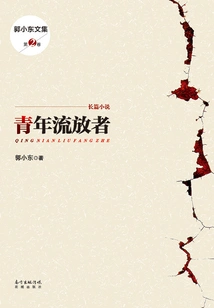
Young Exiles (collected Works of Guo Xiaodong)
General Fiction青年流放者(郭小东文集)
Guo Xiaodong
Young exiles, from resurgence to doom, from heroes to prisoners, from glory to gloom, from smooth roads to cliffs, from eagles to caged birds... The novel depicts many portraits of educated youths with difficult fates. The absurdity of the world and the triviality of the market are silently combined into a generation in its prime, a generation of howling ghosts, a generation of fighting under the red flag, a generation of beautiful melancholy and cruel romance. Twenty-three young lives were laid to rest in the jungle of Hainan Island. They died collectively at midnight on October 17, 1970. It was their blood that ignited the soul of this novel and ignited the shocking fire in the hearts of young exiles for thousands of years.
Young exiles, from resurgence to doom, from heroes to prisoners, from glory to gloom, from smooth roads to cliffs, from eagles to caged birds... The novel depicts many portraits of educated youths with difficult fates. The absurdity of the world and the triviality of the market are silently combined into a generation in its prime, a generation of howling ghosts, a generation of fighting under the red flag, a generation of beautiful melancholy and cruel romance. Twenty-three young lives were laid to rest in the jungle of Hainan Island. They died collectively at midnight on October 17, 1970. It was their blood that ignited the soul of this novel and ignited the shocking fire in the hearts of young exiles for thousands of years.
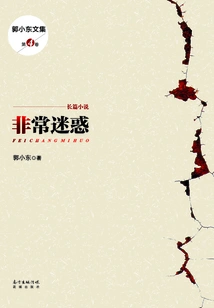
Very Confused (collected Works of Guo Xiaodong)
General Fiction非常迷惑(郭小东文集)
Guo Xiaodong
The university is a pure and holy place, and its bounden duty is to preach, teach, and solve doubts. However, in this novel, the university reveals another side of it that is profoundly despicable. Focusing on the pursuit of a manuscript of "History of Modern Chinese Literature", the urban saga of the trinity of university shady scenes, spontaneous choirs, underworld and erotic pleasure unfolds. A familiar yet strange alien story. The sanctimonious university president, the free intellectuals who go their own way, the urban women who hate me for being hesitant or avant-garde and alternative, the mysterious and scheming "big sisters", the Baiyun Mountain singers who are still intoxicated in the passionate era, a group of big and small people who inspire us to think in the opposite direction.
The university is a pure and holy place, and its bounden duty is to preach, teach, and solve doubts. However, in this novel, the university reveals another side of it that is profoundly despicable. Focusing on the pursuit of a manuscript of "History of Modern Chinese Literature", the urban saga of the trinity of university shady scenes, spontaneous choirs, underworld and erotic pleasure unfolds. A familiar yet strange alien story. The sanctimonious university president, the free intellectuals who go their own way, the urban women who hate me for being hesitant or avant-garde and alternative, the mysterious and scheming "big sisters", the Baiyun Mountain singers who are still intoxicated in the passionate era, a group of big and small people who inspire us to think in the opposite direction.
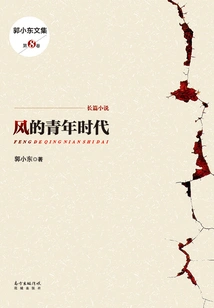
The Youth of the Wind (collected Works of Guo Xiaodong)
General Fiction风的青年时代(郭小东文集)
Guo Xiaodong
For us, Fang Shu has always been an unsolvable mystery. Her simplicity conceals profundity, her casualness emphasizes dignity, her chicness contains many unspeakable hidden melodies and sorrows, and her beauty and elegance contain a wildness that cannot be ignored or violated. I often see Fang Shu clearly above the world in the hustle and bustle of all living beings, walking freely and freely, with empty eyes but focusing on something or someone, which makes me shed tears. Fang Shu has actually let the tropical jungles and guns of Myanmar forge a female ghost, an invulnerable female ghost, instead of a person or a woman.
For us, Fang Shu has always been an unsolvable mystery. Her simplicity conceals profundity, her casualness emphasizes dignity, her chicness contains many unspeakable hidden melodies and sorrows, and her beauty and elegance contain a wildness that cannot be ignored or violated. I often see Fang Shu clearly above the world in the hustle and bustle of all living beings, walking freely and freely, with empty eyes but focusing on something or someone, which makes me shed tears. Fang Shu has actually let the tropical jungles and guns of Myanmar forge a female ghost, an invulnerable female ghost, instead of a person or a woman.
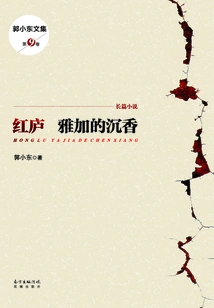
红庐:雅加的沉香(郭小东文集)
Guo Xiaodong
Agarwood incense, conceived in the belly of ancient trees, grows deep in the mountains, sometimes sinking or appearing, its supernatural power is unpredictable, and it seems that it does not want to be known; and a kind of incense-conscious Li people, dozens of groups, build nests in the valleys, and pray to each other on the mountain. God, when purchasing in separate branches, it is almost inevitable that tigers and leopards will be attacked, snakes and dragons will be encountered, and fragrant trees will be found. The roots, troughs, and branches cannot be seen. The Li people will knock the roots with an ax and listen. Then they will know where the knot is, and break the tree to get it. The secret cannot be passed on by hand, and if one is born with this kind of skill, it will not cause the fragrance to eventually perish. However, it will take hundreds of years for the tree to begin to bear knots, and it will take hundreds of knots to mature. Even though heaven and earth do not love its treasures, they will take them endlessly, and they will grow in the sky. And the wise people in Li will not move forward for fear of being tired, and the fools will mistakenly take them for burning, until the fragrant fragrance has turned into charred wood.
Agarwood incense, conceived in the belly of ancient trees, grows deep in the mountains, sometimes sinking or appearing, its supernatural power is unpredictable, and it seems that it does not want to be known; and a kind of incense-conscious Li people, dozens of groups, build nests in the valleys, and pray to each other on the mountain. God, when purchasing in separate branches, it is almost inevitable that tigers and leopards will be attacked, snakes and dragons will be encountered, and fragrant trees will be found. The roots, troughs, and branches cannot be seen. The Li people will knock the roots with an ax and listen. Then they will know where the knot is, and break the tree to get it. The secret cannot be passed on by hand, and if one is born with this kind of skill, it will not cause the fragrance to eventually perish. However, it will take hundreds of years for the tree to begin to bear knots, and it will take hundreds of knots to mature. Even though heaven and earth do not love its treasures, they will take them endlessly, and they will grow in the sky. And the wise people in Li will not move forward for fear of being tired, and the fools will mistakenly take them for burning, until the fragrant fragrance has turned into charred wood.
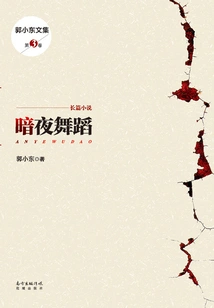
Dancing in the Dark (collected Works of Guo Xiaodong)
General Fiction暗夜舞蹈(郭小东文集)
Guo Xiaodong
Years passed by without knowing where he ended up, and Liszt's disappearance became an unsolvable mystery. This person who went from an educated youth to a university professor is an anomaly. There are too many confusions in his life, his love has the despair of lovesickness, his success hides change and nothingness, he bids farewell to glitz and disappears into the invisible at the most glorious time. His life was like a dancer dancing in the dark night, with no one to accompany him and no one to cheer him. He was always moving in the darkness and nothingness. At his most brilliant moment, he was like a dazzling meteor in the sky, crossing the emptiness with his own fall and lighting up the starry sky.
Years passed by without knowing where he ended up, and Liszt's disappearance became an unsolvable mystery. This person who went from an educated youth to a university professor is an anomaly. There are too many confusions in his life, his love has the despair of lovesickness, his success hides change and nothingness, he bids farewell to glitz and disappears into the invisible at the most glorious time. His life was like a dancer dancing in the dark night, with no one to accompany him and no one to cheer him. He was always moving in the darkness and nothingness. At his most brilliant moment, he was like a dazzling meteor in the sky, crossing the emptiness with his own fall and lighting up the starry sky.
Check-in in the Underworld: Exploring the Ancient Tomb
Suspense and Supernatural冥境签到:古墓探秘录
Guo Xiaodong
Lin Yifan, a young archeology enthusiast, accidentally traveled to the world of tomb robbing and became an inexperienced tomb robbing novice. However, he activated a mysterious system called "Underworld Sign-in". Whenever he enters the ancient tomb, he can sign in and receive random rewards, increase skills, or obtain ancient treasures. With the help of the system, Lin Yifan gradually grew from an ignorant newcomer to a skilled tomb explorer. During the visit to the tomb, Lin Yifan forged deep friendships with Wu Xie, Zhang Qiling, Wang Fatty and others, and also met the mysterious opponent sent by the Wang family - the cold and courageous Aning. As he continues to delve deeper into the strange tombs, he gradually uncovers the thousand-year secrets of ancient civilization: the dynastic curse buried in the Qixing Lu Palace, the mystery of eternal life contained in the Qinling Sacred Tree, the mysterious altar in the Yunding Heavenly Palace... The conspiracies and legends hidden behind each tomb are intertwined, leading them to an abyss of no return. During the journey of exploring the tombs, Lin Yifan's various abilities unlocked through the sign-in system allowed him to escape danger many times in the dangerous tomb passages. However, he also discovered that there seemed to be deeper secrets hidden behind this system, which were closely related to the curses in those ancient tombs. In the end, Lin Yifan was involved in the Wang family's millennium-long plan, and gradually uncovered a shocking conspiracy intertwined with ancient powers and mysterious organizations. As the door of the last ancient tomb opened, Lin Yifan and his partners stepped into the forbidden land where the final truth was buried. Faced with the choice of life and death, Lin Yifan must use all his abilities to fight against his destined enemy. And the ultimate secret hidden behind the system will also be revealed along with the dusty history of the ancient tomb...
Lin Yifan, a young archeology enthusiast, accidentally traveled to the world of tomb robbing and became an inexperienced tomb robbing novice. However, he activated a mysterious system called "Underworld Sign-in". Whenever he enters the ancient tomb, he can sign in and receive random rewards, increase skills, or obtain ancient treasures. With the help of the system, Lin Yifan gradually grew from an ignorant newcomer to a skilled tomb explorer. During the visit to the tomb, Lin Yifan forged deep friendships with Wu Xie, Zhang Qiling, Wang Fatty and others, and also met the mysterious opponent sent by the Wang family - the cold and courageous Aning. As he continues to delve deeper into the strange tombs, he gradually uncovers the thousand-year secrets of ancient civilization: the dynastic curse buried in the Qixing Lu Palace, the mystery of eternal life contained in the Qinling Sacred Tree, the mysterious altar in the Yunding Heavenly Palace... The conspiracies and legends hidden behind each tomb are intertwined, leading them to an abyss of no return. During the journey of exploring the tombs, Lin Yifan's various abilities unlocked through the sign-in system allowed him to escape danger many times in the dangerous tomb passages. However, he also discovered that there seemed to be deeper secrets hidden behind this system, which were closely related to the curses in those ancient tombs. In the end, Lin Yifan was involved in the Wang family's millennium-long plan, and gradually uncovered a shocking conspiracy intertwined with ancient powers and mysterious organizations. As the door of the last ancient tomb opened, Lin Yifan and his partners stepped into the forbidden land where the final truth was buried. Faced with the choice of life and death, Lin Yifan must use all his abilities to fight against his destined enemy. And the ultimate secret hidden behind the system will also be revealed along with the dusty history of the ancient tomb...
The Mastiff in 1966 (collected Works of Guo Xiaodong)
General Fiction1966的獒(郭小东文集)
Guo Xiaodong
In 1966, the rapid progress of the "Cultural Revolution" broke the tranquility of a small coastal town. Whether they are high-level intellectuals, ordinary fishermen, or even people with disabilities, they are inevitably drawn into the vortex of struggle. Due to a poor family background, Ya Lei, a fifteen-year-old boy, had to face the humiliating reality that his father was criticized and his mother was forced to study. In order to find freedom, he thought of smuggling and put it into practice. However, due to the leak of information, the smuggling plan failed. Fortunately, with the help of a Tibetan mastiff from afar, he successfully escaped the pursuit of the Public Security Bureau. However, other stowaways were not as lucky as Ya Lei. After being captured, they were paraded through the streets and sentenced, completely losing their self-esteem and freedom. Despite this, after witnessing scenes of tragedy, Alei still longs for and pursues light. In order to leave the small town, he chose to go to Hainan voluntarily - in his opinion, this was his best opportunity, even though Hainan was very barren at the time. In Hainan, Ya Lei experienced and witnessed life and death again and again. Those tragic youth deaths carved scars in Ya Lei's heart that never healed...
In 1966, the rapid progress of the "Cultural Revolution" broke the tranquility of a small coastal town. Whether they are high-level intellectuals, ordinary fishermen, or even people with disabilities, they are inevitably drawn into the vortex of struggle. Due to a poor family background, Ya Lei, a fifteen-year-old boy, had to face the humiliating reality that his father was criticized and his mother was forced to study. In order to find freedom, he thought of smuggling and put it into practice. However, due to the leak of information, the smuggling plan failed. Fortunately, with the help of a Tibetan mastiff from afar, he successfully escaped the pursuit of the Public Security Bureau. However, other stowaways were not as lucky as Ya Lei. After being captured, they were paraded through the streets and sentenced, completely losing their self-esteem and freedom. Despite this, after witnessing scenes of tragedy, Alei still longs for and pursues light. In order to leave the small town, he chose to go to Hainan voluntarily - in his opinion, this was his best opportunity, even though Hainan was very barren at the time. In Hainan, Ya Lei experienced and witnessed life and death again and again. Those tragic youth deaths carved scars in Ya Lei's heart that never healed...
Bronze Bowl (collected Works of Guo Xiaodong)
General Fiction铜钵盂(郭小东文集)
Guo Xiaodong
This book is a full-length novel named after Chaoshan, with a strong regional cultural flavor and unique literary style. There are many characters in the novel, including more than a hundred people from the cultural, academic, political and business circles in the late Qing Dynasty and the early Republic of China, such as Kang Youwei, Liang Qichao, Yu Youren and so on. Many Chaoshan humanities are reflected in novels. Blind masters, sailors, revolutionaries, brokers... All appeared one after another, and all kinds of creatures appeared.
This book is a full-length novel named after Chaoshan, with a strong regional cultural flavor and unique literary style. There are many characters in the novel, including more than a hundred people from the cultural, academic, political and business circles in the late Qing Dynasty and the early Republic of China, such as Kang Youwei, Liang Qichao, Yu Youren and so on. Many Chaoshan humanities are reflected in novels. Blind masters, sailors, revolutionaries, brokers... All appeared one after another, and all kinds of creatures appeared.
Lost in the Painting
Suspense and Supernatural画中迷踪
Guo Xiaodong
The famous painter Wang Zhiyuan mysteriously disappeared on the eve of his new exhibition, leaving behind only unfinished paintings and a warning: "Don't trust anyone." Faced with the police investigation that made no progress, Wang Zhiyuan's family turned to private detective Li Ming for help. After Li Ming entered Wang Zhiyuan's studio, he gradually discovered a series of bizarre clues: altered paintings, mysterious maps, secret codes and familiar symbols. As the investigation deepens, Li Ming realizes that there is an amazing secret hidden in Wang Zhiyuan's paintings, and behind this secret, it seems to involve a long-standing art theft case. Unraveling this confusing painting requires not only keen observation, but also finding a breakthrough to the truth on the edge of danger. When each painting becomes a puzzle piece of clues, Li Ming must find the truth in the fog, and what may be waiting for him is an endless abyss.
The famous painter Wang Zhiyuan mysteriously disappeared on the eve of his new exhibition, leaving behind only unfinished paintings and a warning: "Don't trust anyone." Faced with the police investigation that made no progress, Wang Zhiyuan's family turned to private detective Li Ming for help. After Li Ming entered Wang Zhiyuan's studio, he gradually discovered a series of bizarre clues: altered paintings, mysterious maps, secret codes and familiar symbols. As the investigation deepens, Li Ming realizes that there is an amazing secret hidden in Wang Zhiyuan's paintings, and behind this secret, it seems to involve a long-standing art theft case. Unraveling this confusing painting requires not only keen observation, but also finding a breakthrough to the truth on the edge of danger. When each painting becomes a puzzle piece of clues, Li Ming must find the truth in the fog, and what may be waiting for him is an endless abyss.
Renji Lane (collected Works of Guo Xiaodong)
General Fiction仁记巷(郭小东文集)
Guo Xiaodong
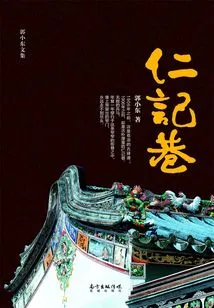
One morning in 1906, due to an uninvited guest from Xiaodu, "Renji Lane", which had always been full of ambitions, became a little cloudy. Guo Xinchen suddenly felt a chill. On the bright autumn morning in Lianjiang, there was still a touch of moisture in the alley, and Guo Xinchen's eyes were filled with mist.
One morning in 1906, due to an uninvited guest from Xiaodu, "Renji Lane", which had always been full of ambitions, became a little cloudy. Guo Xinchen suddenly felt a chill. On the bright autumn morning in Lianjiang, there was still a touch of moisture in the alley, and Guo Xinchen's eyes were filled with mist.
红色娘子军(郭小东文集)
Guo Xiaodong
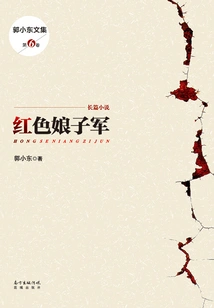
This is a new "Red Detachment of Women". The author boldly deconstructed and rewritten the movie "Red Detachment of Women" from a unique perspective, preserving the original story structure while extending the history. In a vague, uncertain and specious form, the author created a group of new characters - the female Red Army soldier Feng Qionghua and her granddaughter Feng, Qionghua's lover Zhong Bo, and the filmmaker who claims to be the grandson of Nan Batian, etc. The forgetfulness and examination of history, the confusion and escape from the current situation are all re-evaluated in a modern spirit.
This is a new "Red Detachment of Women". The author boldly deconstructed and rewritten the movie "Red Detachment of Women" from a unique perspective, preserving the original story structure while extending the history. In a vague, uncertain and specious form, the author created a group of new characters - the female Red Army soldier Feng Qionghua and her granddaughter Feng, Qionghua's lover Zhong Bo, and the filmmaker who claims to be the grandson of Nan Batian, etc. The forgetfulness and examination of history, the confusion and escape from the current situation are all re-evaluated in a modern spirit.
当太阳成为河流(郭小东文集)
Guo Xiaodong
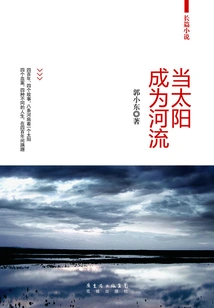
Four hundred years, four stories, eight rivers shouldering one sun. Four murders, four different lives, staggering over four hundred years. For four hundred years, the Sun River has been bleeding, so the sunset is red, the setting sun is like blood, and the sky sometimes rains down with weeping blood. Like the annual rainy season in Jakarta, which comes as scheduled, the mountain roads are muddy, the city is gloomy, and people's hearts are flooded. At the same time, it also blocks stories and time.
Four hundred years, four stories, eight rivers shouldering one sun. Four murders, four different lives, staggering over four hundred years. For four hundred years, the Sun River has been bleeding, so the sunset is red, the setting sun is like blood, and the sky sometimes rains down with weeping blood. Like the annual rainy season in Jakarta, which comes as scheduled, the mountain roads are muddy, the city is gloomy, and people's hearts are flooded. At the same time, it also blocks stories and time.