Library
Browse and search books
1 novel found
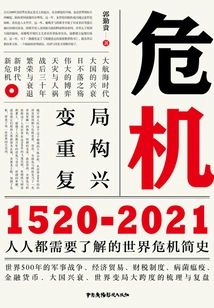
Crisis: 1520-2021
History危机:1520-2021
Guo Qingui
This book first focuses on in-depth exploration of the causality and correlation before and after the crisis, so it selects certain historical events as background information, dismantling and analyzing the dozens of global crises that have occurred in the past 500 years under a historical framework related to wars, plagues, currencies, technology, geopolitics, globalization, international order, markets, bubbles (financial bubbles, stock market bubbles, property market bubbles) and other events, so that these crises are no longer unrelated isolated events, but become closely related organisms. Make readers truly realize that crisis is an economic phenomenon that breaks out periodically. Secondly, by focusing on the main line of "crisis" and exploring the logic behind the crisis, it is possible to appropriately select the historical background information instead of simply describing it in chronological order. Therefore, the time period division of each part of this book is only for reference. Some chapters exceed this time period due to structural and logical arrangement considerations, such as Part Three: The Great Game. Finally, this writing method avoids simply sorting out and stacking these crisis events, and instead presents them as highly readable stories and cases. Through these stories and cases, it is not difficult for readers to see the true face of crises, draw experiences and lessons from them, and cultivate a broad historical perspective on crises.
This book first focuses on in-depth exploration of the causality and correlation before and after the crisis, so it selects certain historical events as background information, dismantling and analyzing the dozens of global crises that have occurred in the past 500 years under a historical framework related to wars, plagues, currencies, technology, geopolitics, globalization, international order, markets, bubbles (financial bubbles, stock market bubbles, property market bubbles) and other events, so that these crises are no longer unrelated isolated events, but become closely related organisms. Make readers truly realize that crisis is an economic phenomenon that breaks out periodically. Secondly, by focusing on the main line of "crisis" and exploring the logic behind the crisis, it is possible to appropriately select the historical background information instead of simply describing it in chronological order. Therefore, the time period division of each part of this book is only for reference. Some chapters exceed this time period due to structural and logical arrangement considerations, such as Part Three: The Great Game. Finally, this writing method avoids simply sorting out and stacking these crisis events, and instead presents them as highly readable stories and cases. Through these stories and cases, it is not difficult for readers to see the true face of crises, draw experiences and lessons from them, and cultivate a broad historical perspective on crises.