Library
Browse and search books
2 novels found
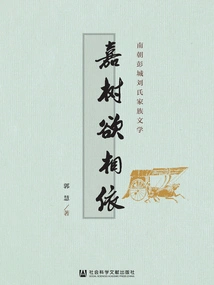
嘉树欲相依:南朝彭城刘氏家族文学
Guo Hui
The Liu family in Pengcheng in the Southern Dynasties was one of the literary families that produced the most writers and had the greatest influence in the Southern Dynasties. "There were seventy brothers and nephews at that time, and they were all capable of writing, which was unprecedented in modern times" ("Liang Shu Biography of Liu Xiaochuo"). The Liu family was an important promoter of the development and changes of literature in the Southern Dynasties. Its family literature can be said to be a microcosm of the entire literary history of the Southern Dynasties. It completely reflects the evolution trajectory from Yuanjia literature to Yongming literature to Liang-Chen literature, connecting the Wei and Jin Dynasties to the Sui and Tang Dynasties. This book systematically explains the literary achievements of the Liu family, especially the Liu family's creative genres, creative techniques and creative characteristics.
The Liu family in Pengcheng in the Southern Dynasties was one of the literary families that produced the most writers and had the greatest influence in the Southern Dynasties. "There were seventy brothers and nephews at that time, and they were all capable of writing, which was unprecedented in modern times" ("Liang Shu Biography of Liu Xiaochuo"). The Liu family was an important promoter of the development and changes of literature in the Southern Dynasties. Its family literature can be said to be a microcosm of the entire literary history of the Southern Dynasties. It completely reflects the evolution trajectory from Yuanjia literature to Yongming literature to Liang-Chen literature, connecting the Wei and Jin Dynasties to the Sui and Tang Dynasties. This book systematically explains the literary achievements of the Liu family, especially the Liu family's creative genres, creative techniques and creative characteristics.
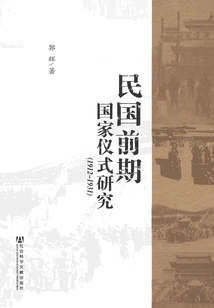
民国前期国家仪式研究(1912~1931)
Guo Hui
The book takes the construction of regime legitimacy as its theme, combines knowledge from anthropology, sociology, political science and other disciplines to define the concept of "national rituals of the Republic of China", and uses case studies to examine the performance of national rituals in the first 20 years of the Republic of China. The book collects a large amount of historical materials and uses time as a clue to explain the national rituals of the Nanjing Provisional Government, the Beijing Government, and the early Nanjing National Government during the Republic of China, and depicts the history of changes in national rituals in the early Republic of China. From the vertical aspect, we seize typical cases, involve the historical background and political background of national ritual performances, restore the scenes of various national ritual performances, and the social repercussions of the ceremony, and then explore the national ritual itself and the political and cultural connotations and meanings behind it. Systematically and deeply explore the complex relationship between national rituals and legitimacy construction, the subjective motivations and objective functions of national rituals, and believe that national rituals have become important tools and forms of "political expression".
The book takes the construction of regime legitimacy as its theme, combines knowledge from anthropology, sociology, political science and other disciplines to define the concept of "national rituals of the Republic of China", and uses case studies to examine the performance of national rituals in the first 20 years of the Republic of China. The book collects a large amount of historical materials and uses time as a clue to explain the national rituals of the Nanjing Provisional Government, the Beijing Government, and the early Nanjing National Government during the Republic of China, and depicts the history of changes in national rituals in the early Republic of China. From the vertical aspect, we seize typical cases, involve the historical background and political background of national ritual performances, restore the scenes of various national ritual performances, and the social repercussions of the ceremony, and then explore the national ritual itself and the political and cultural connotations and meanings behind it. Systematically and deeply explore the complex relationship between national rituals and legitimacy construction, the subjective motivations and objective functions of national rituals, and believe that national rituals have become important tools and forms of "political expression".