Library
Browse and search books
7 novels found
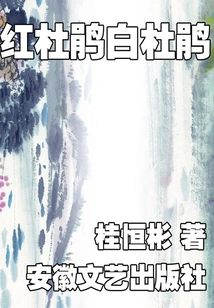
Red Azalea White Azalea
Literature红杜鹃白杜鹃
Gui Hengbin
The land where the Red Army grew up is red. The road that the Red Army walked is embedded in the brown earth. Walk in, step by step, and walk into the depths of history, looking for the lightness of life.
The land where the Red Army grew up is red. The road that the Red Army walked is embedded in the brown earth. Walk in, step by step, and walk into the depths of history, looking for the lightness of life.
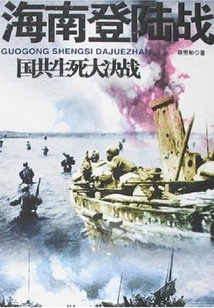
Hainan Landing Battle
Literature海南登陆战
Gui Hengbin
After the liberation of Guangdong, the 100,000 remnant Kuomintang troops who retreated to Hainan Island, under the command of Hainan Defense Commander-in-Chief Xue Yue, attempted to use Hainan Island as a springboard to counterattack the mainland by relying on natural dangers. In order to annihilate this enemy and liberate Hainan Island, the Central Military Commission decided to command the 40th and 43rd Army with the head of the 15th Corps, and with the cooperation of the Qiongya Column on the island, launch the Hainan Island Campaign. Based on the characteristics of sea-crossing operations, the 15th Corps followed the campaign policy of "combining active stowaways, batched small crossings and final landings", and organized two batches of approximately one division of troops to sneak across to Hainan Island in March 1950. Strengthened the strength of the People's Liberation Army on the island. On April 16, the main force of the People's Liberation Army carried out the forced crossing. After a forced crossing all night, with the support of the troops on the island, they successfully landed on the island and quickly developed in depth.
After the liberation of Guangdong, the 100,000 remnant Kuomintang troops who retreated to Hainan Island, under the command of Hainan Defense Commander-in-Chief Xue Yue, attempted to use Hainan Island as a springboard to counterattack the mainland by relying on natural dangers. In order to annihilate this enemy and liberate Hainan Island, the Central Military Commission decided to command the 40th and 43rd Army with the head of the 15th Corps, and with the cooperation of the Qiongya Column on the island, launch the Hainan Island Campaign. Based on the characteristics of sea-crossing operations, the 15th Corps followed the campaign policy of "combining active stowaways, batched small crossings and final landings", and organized two batches of approximately one division of troops to sneak across to Hainan Island in March 1950. Strengthened the strength of the People's Liberation Army on the island. On April 16, the main force of the People's Liberation Army carried out the forced crossing. After a forced crossing all night, with the support of the troops on the island, they successfully landed on the island and quickly developed in depth.
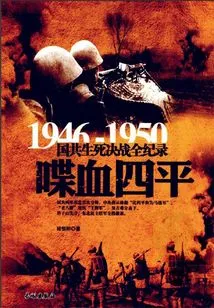
Bloodshed
Military喋血四平
Gui Hengbin
From April to May 1946, the Northeast Democratic Allied Forces launched a defensive campaign against the Kuomintang army's attack in the Siping area. Siping is an important military town in Northeast China. During the War of Liberation, the Battle of Siping became famous both at home and abroad, and was called the "Madrid of the East" by foreign reporters. In this battle, the Northeastern Democratic Alliance forces annihilated more than 10,000 enemies, delaying the Kuomintang's attack on North Manchuria and playing an important role in consolidating the base areas in North Manchuria.
From April to May 1946, the Northeast Democratic Allied Forces launched a defensive campaign against the Kuomintang army's attack in the Siping area. Siping is an important military town in Northeast China. During the War of Liberation, the Battle of Siping became famous both at home and abroad, and was called the "Madrid of the East" by foreign reporters. In this battle, the Northeastern Democratic Alliance forces annihilated more than 10,000 enemies, delaying the Kuomintang's attack on North Manchuria and playing an important role in consolidating the base areas in North Manchuria.
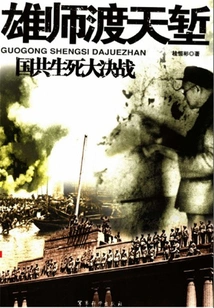
The Army Crosses the Chasm
Literature雄师渡天堑
Gui Hengbin
After the three major battles, the Kuomintang government attempted to use the natural dangers of the Yangtze River to "rule the Yangtze River" to prevent the People's Liberation Army from moving south. On April 20, 1949, the Kuomintang government refused to sign a domestic peace agreement, and the peace negotiations broke down. On April 21, Chairman Mao Zedong and Commander-in-Chief Zhu De issued orders to march across the country, and the People's Liberation Army launched a cross-river campaign. The People's Liberation Army forcibly crossed the Yangtze River on a front line of more than 500 kilometers from Hukou in the west to Jiangyin in the east, completely destroying the Yangtze River defense line of more than 600,000 Kuomintang defenders. On the 23rd, Nanjing, the capital of the Kuomintang, was liberated, announcing the demise of the 22-year reactionary rule of the Kuomintang. The People's Liberation Army liberated Shanghai on May 27, and Chongming Island on June 2. At this point, the cross-river battle ended successfully. This battle lasted 42 days and wiped out more than 430,000 enemies, creating favorable conditions for the People's Liberation Army to liberate all of East China and march into the central, south and southwest regions.
After the three major battles, the Kuomintang government attempted to use the natural dangers of the Yangtze River to "rule the Yangtze River" to prevent the People's Liberation Army from moving south. On April 20, 1949, the Kuomintang government refused to sign a domestic peace agreement, and the peace negotiations broke down. On April 21, Chairman Mao Zedong and Commander-in-Chief Zhu De issued orders to march across the country, and the People's Liberation Army launched a cross-river campaign. The People's Liberation Army forcibly crossed the Yangtze River on a front line of more than 500 kilometers from Hukou in the west to Jiangyin in the east, completely destroying the Yangtze River defense line of more than 600,000 Kuomintang defenders. On the 23rd, Nanjing, the capital of the Kuomintang, was liberated, announcing the demise of the 22-year reactionary rule of the Kuomintang. The People's Liberation Army liberated Shanghai on May 27, and Chongming Island on June 2. At this point, the cross-river battle ended successfully. This battle lasted 42 days and wiped out more than 430,000 enemies, creating favorable conditions for the People's Liberation Army to liberate all of East China and march into the central, south and southwest regions.
In River Island
General Fiction在河之洲
Gui Hengbin
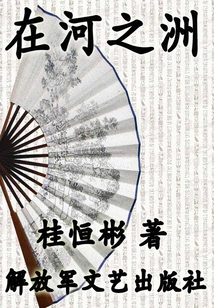
The novel combines fiction and reality, adopts a beaded composite chapter structure, uses plain and low-key language to present the rapid changes in contemporary Chinese society, and observes the collision and transfer of values in historical time and space. The whole book is full of sentiments about the simple emotions, the shape of desire, and the joys and sorrows of existence. In the work, the emotional entanglements and ideological conflicts between the two generations, such as the armed police hero Han Lin, the ace public security director Mu Tianyun, the junior public security frontiers Mu Xiaoyun, Han Xue, and Haiou, the harmonious society's Hai Mama, Bailian, Chunlan, and the transformed human nature of Han Yue, Arrogant Duck, Chen Lianqing, and the old sea monster are all displayed vividly and vividly, making people's lives unforgettable.
The novel combines fiction and reality, adopts a beaded composite chapter structure, uses plain and low-key language to present the rapid changes in contemporary Chinese society, and observes the collision and transfer of values in historical time and space. The whole book is full of sentiments about the simple emotions, the shape of desire, and the joys and sorrows of existence. In the work, the emotional entanglements and ideological conflicts between the two generations, such as the armed police hero Han Lin, the ace public security director Mu Tianyun, the junior public security frontiers Mu Xiaoyun, Han Xue, and Haiou, the harmonious society's Hai Mama, Bailian, Chunlan, and the transformed human nature of Han Yue, Arrogant Duck, Chen Lianqing, and the old sea monster are all displayed vividly and vividly, making people's lives unforgettable.
无敌铁拳:“突击英雄连”纪实
Gui Hengbin
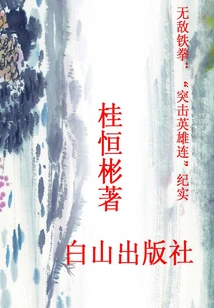
That was the morning of the last century. The new wind is calling in the hometown of Yanzhao, and the Tianjin Guard at the land and water dock is filled with smoke. In the ice and snow on both sides of the Haihe River, the warriors of the Seventh Company were born and died. They planted the red flag on the Jintang Bridge before dawn. The instructor Ma Zhanhai fell, and the bullet penetrated his chest. The blood was as red as the sun. Troops from all walks of life surged towards the Jintang Bridge. The comrades held the flag high...
That was the morning of the last century. The new wind is calling in the hometown of Yanzhao, and the Tianjin Guard at the land and water dock is filled with smoke. In the ice and snow on both sides of the Haihe River, the warriors of the Seventh Company were born and died. They planted the red flag on the Jintang Bridge before dawn. The instructor Ma Zhanhai fell, and the bullet penetrated his chest. The blood was as red as the sun. Troops from all walks of life surged towards the Jintang Bridge. The comrades held the flag high...
Sweeping Across the Yangtze River
Literature席卷长江
Gui Hengbin
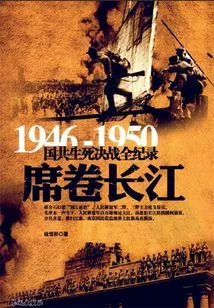
The final reports of the participants in the change of dynasties, the memories of past events of those who witnessed the confrontation between the Kuomintang and the Communist Party, the battlefield photos of those who witnessed the dramatic changes of the times... The classic battles engraved on the monument of the military history of the Republic! "The Complete Record of the Life-and-Death Battle between the Kuomintang and the Communist Party from 1946 to 1950: Sweeping the Yangtze River" is dedicated to the 90th anniversary of the founding of the Communist Party of China. "The Complete Record of the Life-and-Death Battle between the Kuomintang and the Communists in 1946-1950: Sweeping the Yangtze River" was written by Gui Hengbin. It tells that the Battle of Crossing the River was another large-scale battle operation of our army after the three major battles. In this battle, more than 430,000 Kuomintang troops were wiped out, and large cities such as Nanjing, Hangzhou, Shanghai, and Wuhan were liberated, as well as vast areas in Jiangsu, Zhejiang, Jiangxi, Anhui, Fujian, and Hubei. This victory shattered the delusion of the reactionary Kuomintang group headed by Chiang Kai-shek's attempt to "rule across the river", created favorable conditions for marching into South China and Southwest China, and accelerated the liberation of the country.
The final reports of the participants in the change of dynasties, the memories of past events of those who witnessed the confrontation between the Kuomintang and the Communist Party, the battlefield photos of those who witnessed the dramatic changes of the times... The classic battles engraved on the monument of the military history of the Republic! "The Complete Record of the Life-and-Death Battle between the Kuomintang and the Communist Party from 1946 to 1950: Sweeping the Yangtze River" is dedicated to the 90th anniversary of the founding of the Communist Party of China. "The Complete Record of the Life-and-Death Battle between the Kuomintang and the Communists in 1946-1950: Sweeping the Yangtze River" was written by Gui Hengbin. It tells that the Battle of Crossing the River was another large-scale battle operation of our army after the three major battles. In this battle, more than 430,000 Kuomintang troops were wiped out, and large cities such as Nanjing, Hangzhou, Shanghai, and Wuhan were liberated, as well as vast areas in Jiangsu, Zhejiang, Jiangxi, Anhui, Fujian, and Hubei. This victory shattered the delusion of the reactionary Kuomintang group headed by Chiang Kai-shek's attempt to "rule across the river", created favorable conditions for marching into South China and Southwest China, and accelerated the liberation of the country.