Library
Browse and search books
4 novels found
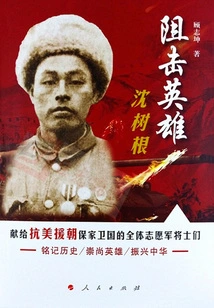
Blocking Hero Shen Shugen
Literature阻击英雄沈树根
Gu Zhikun
This book uses documentary literature to truly and three-dimensionally reproduce the legendary and wonderful life of Platoon Leader Shen Shugen, a heroic platoon leader who was awarded the "First Class Combat Hero" and "Jiufeng Blocking Hero" of the Chinese People's Volunteers and the Third Class National Flag Medal of the Democratic People's Republic of Korea. It describes in detail that when he served as the platoon leader of the Chinese People's Volunteer Army, he led a platoon of 33 soldiers. He fought fiercely with the enemy for 3 days and nights in the Jiufeng Blockade after the fifth battle in Korea, and repelled 13 enemy attacks. In the end, only one person in the platoon died, and 3 soldiers were killed. At the cost of serious casualties, he annihilated more than 300 enemies and broke through the heavy encirclement of two enemy battalions; creating a record for the Chinese People's Volunteers to win with fewer troops in the War to Resist U. S. Aggression and Aid Korea, and was regarded as a typical battle example of which the Chinese People's Volunteers are proud. The narrative in this book is real, vivid, and full of ups and downs. It is a red book that promotes the spirit of patriotism and revolutionary heroism.
This book uses documentary literature to truly and three-dimensionally reproduce the legendary and wonderful life of Platoon Leader Shen Shugen, a heroic platoon leader who was awarded the "First Class Combat Hero" and "Jiufeng Blocking Hero" of the Chinese People's Volunteers and the Third Class National Flag Medal of the Democratic People's Republic of Korea. It describes in detail that when he served as the platoon leader of the Chinese People's Volunteer Army, he led a platoon of 33 soldiers. He fought fiercely with the enemy for 3 days and nights in the Jiufeng Blockade after the fifth battle in Korea, and repelled 13 enemy attacks. In the end, only one person in the platoon died, and 3 soldiers were killed. At the cost of serious casualties, he annihilated more than 300 enemies and broke through the heavy encirclement of two enemy battalions; creating a record for the Chinese People's Volunteers to win with fewer troops in the War to Resist U. S. Aggression and Aid Korea, and was regarded as a typical battle example of which the Chinese People's Volunteers are proud. The narrative in this book is real, vivid, and full of ups and downs. It is a red book that promotes the spirit of patriotism and revolutionary heroism.
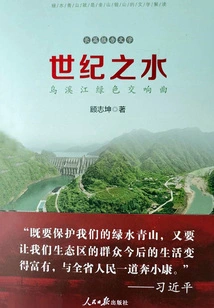
世纪之水:乌溪江绿色交响曲
Gu Zhikun
"Water of the Century" uses the form of literature and art to panoramically show the people on both sides of the Wuxi River, who used their own flesh and blood to build the iconic Huangtankou Power Station and Hunan Town Power Station on the turbulent and unruly Wuxi River under extremely poor material conditions, extremely harsh construction conditions, and very crude and even primitive construction equipment. It is known as "the cradle of China's water conservancy and hydropower construction" and "Zhejiang's first night pearl". It is the first full-length literary work so far that uses the Wuxi River as the background in a panoramic and three-dimensional way.
"Water of the Century" uses the form of literature and art to panoramically show the people on both sides of the Wuxi River, who used their own flesh and blood to build the iconic Huangtankou Power Station and Hunan Town Power Station on the turbulent and unruly Wuxi River under extremely poor material conditions, extremely harsh construction conditions, and very crude and even primitive construction equipment. It is known as "the cradle of China's water conservancy and hydropower construction" and "Zhejiang's first night pearl". It is the first full-length literary work so far that uses the Wuxi River as the background in a panoramic and three-dimensional way.
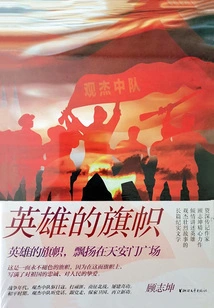
Hero's Flag
Literature英雄的旗帜
Gu Zhikun
A long documentary work about the life and deeds of the Anti-Japanese War hero Guan Jie. Guanjie was a native of Shangyu, Zhejiang. He was the captain of the 7th Squadron of the 3rd Brigade of the 5th Detachment of the Zhejiang East Column. He died heroically in the battle with the Japanese and puppets in July 1944 and was awarded the honorary title of "Guanjie Squadron" by the East Zhejiang Column. "Flag of Heroes" truly and artistically presents the heroic stories of Guan Jie and his heroic squadron in war years and peacetime.
A long documentary work about the life and deeds of the Anti-Japanese War hero Guan Jie. Guanjie was a native of Shangyu, Zhejiang. He was the captain of the 7th Squadron of the 3rd Brigade of the 5th Detachment of the Zhejiang East Column. He died heroically in the battle with the Japanese and puppets in July 1944 and was awarded the honorary title of "Guanjie Squadron" by the East Zhejiang Column. "Flag of Heroes" truly and artistically presents the heroic stories of Guan Jie and his heroic squadron in war years and peacetime.
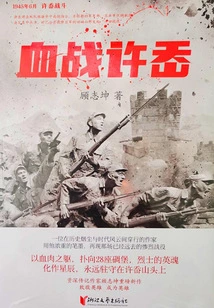
Bloody Battle with Xu Ao
Literature血战许岙
Gu Zhikun
The Battle of Xu'ao took place in June 1945. According to the instructions of the Central China Bureau and with the approval of the New Fourth Army Military Headquarters and the Jiangsu and Zhejiang Military Region, the East Zhejiang Guerrilla Column decided to concentrate its forces and launch a "campaign for land" against the Tianxiu Mountain Division, which had openly surrendered to the Japanese army. On June 7, according to the order of Commander He Kexi, the decisive battle of Xu'ao, commanded by the column's Chief of Staff Liu Hengyun and Director of the Political Department Zhang Wenbi, began. After 14 days and nights of continuous fighting, our army conquered 28 bunkers, annihilated more than 1,000 enemies, and captured a large number of items. By June 21, the so-called "unbreakable Maginot Line of Defense in eastern Zhejiang" that Tian Xiushan had boasted had been completely destroyed. Tianxiu Mountain, who was trapped in Shangyu County, lost Xu Ao and there was no hope of rescue. On June 30, he led his remaining troops and their families to abandon the city and fled westward, and Shangyu County was liberated. The Battle of Xu'ao was the largest and most glorious offensive against the enemy since the establishment of the East Zhejiang Guerrilla Column. It not only removed Tianxiu Mountain, the nail in the Siming Mountain base area, but also liberated hundreds of thousands of people in the Shangyu area, and the three anti-Japanese base areas of Sanbei, Siming, and Kuaiji became one.
The Battle of Xu'ao took place in June 1945. According to the instructions of the Central China Bureau and with the approval of the New Fourth Army Military Headquarters and the Jiangsu and Zhejiang Military Region, the East Zhejiang Guerrilla Column decided to concentrate its forces and launch a "campaign for land" against the Tianxiu Mountain Division, which had openly surrendered to the Japanese army. On June 7, according to the order of Commander He Kexi, the decisive battle of Xu'ao, commanded by the column's Chief of Staff Liu Hengyun and Director of the Political Department Zhang Wenbi, began. After 14 days and nights of continuous fighting, our army conquered 28 bunkers, annihilated more than 1,000 enemies, and captured a large number of items. By June 21, the so-called "unbreakable Maginot Line of Defense in eastern Zhejiang" that Tian Xiushan had boasted had been completely destroyed. Tianxiu Mountain, who was trapped in Shangyu County, lost Xu Ao and there was no hope of rescue. On June 30, he led his remaining troops and their families to abandon the city and fled westward, and Shangyu County was liberated. The Battle of Xu'ao was the largest and most glorious offensive against the enemy since the establishment of the East Zhejiang Guerrilla Column. It not only removed Tianxiu Mountain, the nail in the Siming Mountain base area, but also liberated hundreds of thousands of people in the Shangyu area, and the three anti-Japanese base areas of Sanbei, Siming, and Kuaiji became one.