Library
Browse and search books
5 novels found
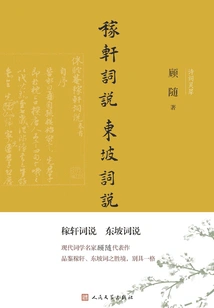
Jiaxuan Ci Theory Dongpo Ci Theory
Literature稼轩词说 东坡词说
Gu Sui
"Jia Xuan Ci Shu" and "Dongpo Ci Shu" are two short books written by Mr. Gu Sui, a famous expert in classical literature research, in the 1930s. Mr. Gu is good at composing lyrics and has very high attainments in the study of lyrics. His way of speaking emphasizes interest and understanding. "Jia Xuan Ci Shuo" was published one after another in the "Min Yuan" supplement of Tianjin's "Republic of China Daily", starting from September 3 to November 8, 1947, and was published twenty-five times in total. "Dongpo Ci Shuo" was published in the "Literature" supplement of "North China Daily" on July 11, 1948, but its content was not fully published and was not fully published until later. These two small books embody his way of speaking and his views on poetry. His way of speaking and viewpoints still have a very high reference value for contemporary readers to appreciate words, and are very suitable for general readers. "Jia Xuan Ci Shuo" was written first, and "Dongpo Ci Shu" was written later. The latter often supplements and echoes the former, so the order of the book cannot be adjusted arbitrarily. Today, people often use "Su Xin Ci Shuo" as the title of the joint publication, which seems inappropriate. Today, the author's original intention is still followed to determine the order.
"Jia Xuan Ci Shu" and "Dongpo Ci Shu" are two short books written by Mr. Gu Sui, a famous expert in classical literature research, in the 1930s. Mr. Gu is good at composing lyrics and has very high attainments in the study of lyrics. His way of speaking emphasizes interest and understanding. "Jia Xuan Ci Shuo" was published one after another in the "Min Yuan" supplement of Tianjin's "Republic of China Daily", starting from September 3 to November 8, 1947, and was published twenty-five times in total. "Dongpo Ci Shuo" was published in the "Literature" supplement of "North China Daily" on July 11, 1948, but its content was not fully published and was not fully published until later. These two small books embody his way of speaking and his views on poetry. His way of speaking and viewpoints still have a very high reference value for contemporary readers to appreciate words, and are very suitable for general readers. "Jia Xuan Ci Shuo" was written first, and "Dongpo Ci Shu" was written later. The latter often supplements and echoes the former, so the order of the book cannot be adjusted arbitrarily. Today, people often use "Su Xin Ci Shuo" as the title of the joint publication, which seems inappropriate. Today, the author's original intention is still followed to determine the order.
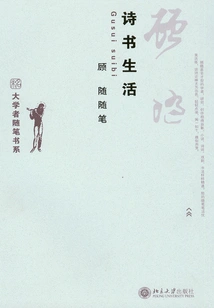
诗书生活:顾随随笔
Gu Sui
"Life in Poems and Books: Gu Sui's Essays" contains a large number of Gu Sui's essays, including three parts: writing and time, people and masterpieces, and collection and Zen Buddhism. Nearly 50 articles. Content introduction: The weather in Qingdao is still warm and not autumn-like at the moment. Wild flowers such as daisies, morning glories, bellflowers, and other unknown flowers can be found all over the mountains, as bright as clouds. My study room is also very cool, with glass on all sides and bright electric lights. Qingdao has its own seas and mountains, but it is most difficult to travel together. It is cold and I don't want to travel alone. Every time I sit alone in front of the stove, I often miss the old rain and miss people at the end of the year. This is what I call it.
"Life in Poems and Books: Gu Sui's Essays" contains a large number of Gu Sui's essays, including three parts: writing and time, people and masterpieces, and collection and Zen Buddhism. Nearly 50 articles. Content introduction: The weather in Qingdao is still warm and not autumn-like at the moment. Wild flowers such as daisies, morning glories, bellflowers, and other unknown flowers can be found all over the mountains, as bright as clouds. My study room is also very cool, with glass on all sides and bright electric lights. Qingdao has its own seas and mountains, but it is most difficult to travel together. It is cold and I don't want to travel alone. Every time I sit alone in front of the stove, I often miss the old rain and miss people at the end of the year. This is what I call it.
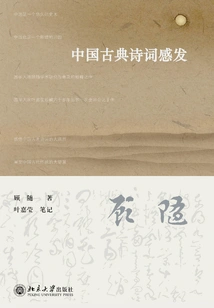
中国古典诗词感发
Gu Sui
"Inspirations from Chinese Classical Poetry" is a masterpiece that can comprehend the grand realm of Chinese classical poetry, elucidate the great wisdom of ancient Chinese culture, and provide lifelong benefits in reality. It is compiled based on the lecture records of Gu Sui, the master of Chinese studies recorded by Ye Jiaying, and has been made public to the world for the first time. This work is both ancient and modern, Chinese and foreign, literature, history, philosophy, and Zen. It is popular and elegant, combines emotions and reasoning, is serious and solemn, and is humorous. It talks about everything inside and outside poetry, and is full of literary talent. It has seen something that no one has seen before, and it has inspired something that no one has ever published. It reproduces the spirit, emotion, and insight of a generation of masters. It compares poetry and life, poetry and life. In the artistic conception of Chinese classical poetry, one can understand the wonderful meaning of traditional Chinese life and understand the philosophy of real life.
"Inspirations from Chinese Classical Poetry" is a masterpiece that can comprehend the grand realm of Chinese classical poetry, elucidate the great wisdom of ancient Chinese culture, and provide lifelong benefits in reality. It is compiled based on the lecture records of Gu Sui, the master of Chinese studies recorded by Ye Jiaying, and has been made public to the world for the first time. This work is both ancient and modern, Chinese and foreign, literature, history, philosophy, and Zen. It is popular and elegant, combines emotions and reasoning, is serious and solemn, and is humorous. It talks about everything inside and outside poetry, and is full of literary talent. It has seen something that no one has seen before, and it has inspired something that no one has ever published. It reproduces the spirit, emotion, and insight of a generation of masters. It compares poetry and life, poetry and life. In the artistic conception of Chinese classical poetry, one can understand the wonderful meaning of traditional Chinese life and understand the philosophy of real life.
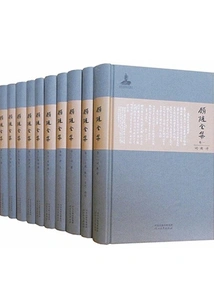
Complete Works of Gu Sui
Literature顾随全集
Gu Sui
The ten-volume "The Complete Works of Gu Sui" published this time has a total word count of nearly 4 million words, including all the writings of Mr. Gu Sui's life that have been compiled so far. Readers can use this to get a complete picture of Mr. Gu Sui's moral articles. The first volume is "Ci, Qu, Poems", the second volume is "Novel, Prose, Diary, Translation", and the third volume is "On Writings", with a preface based on the treatises on Ci, Qu, Poetry, Literature, Novels, Buddhism and Calligraphy. The fourth volume is "Lecture Notes", which contains Mr. Gu Sui's lectures on "Buddhist Translated Literature", "Classical Literary Criticism", "Mao Zedong's Poems", thirty-two sections of "Tang Dynasty Poetry", and two short chapters "Li Sao" and "The Chronicles of Xiang Yu". Volumes 5 and 6 are "Book of Poetry". Gu Sui has been teaching at the university since 1929, teaching Chinese classical literature. This volume and the following two volumes (Volume 6 and Volume 7) are compiled based on the lecture notes of Ye Jiaying, Liu Zaizhao and other disciples at that time, so they are named "Chuan Shi Lu" and "Chuan Wen Lu". There are two volumes of Biography of Poems, which include the compiled transcripts of Gu Sui's lectures on classical poetry. The seventh volume is "Biography of Records", which contains a compilation of the actual records of Gu Sui's lectures on Chinese classical prose. Volumes 8 and 9 are "Letters". Volume eight contains 489 letters written by Gu Sui to Lu Boxing and Lu Jishao in the past 40 years from 1921 to 1959. Volume 9 contains a total of 241 letters written by Gu Sui to Zhou Zuoren, Feng Zhi, Tai Jinnong, Zhou Ruchang, etc., Arranged in the order of teachers, friends, disciples, and family members. Volume 10 is "Calligraphy". Gu Sui is proficient in the art of calligraphy. He once studied under the calligraphy master Mr. Shen Yinmo. He is good at cursive and regular script and is a famous modern calligrapher. This volume is a photocopy of some of his handwriting.
The ten-volume "The Complete Works of Gu Sui" published this time has a total word count of nearly 4 million words, including all the writings of Mr. Gu Sui's life that have been compiled so far. Readers can use this to get a complete picture of Mr. Gu Sui's moral articles. The first volume is "Ci, Qu, Poems", the second volume is "Novel, Prose, Diary, Translation", and the third volume is "On Writings", with a preface based on the treatises on Ci, Qu, Poetry, Literature, Novels, Buddhism and Calligraphy. The fourth volume is "Lecture Notes", which contains Mr. Gu Sui's lectures on "Buddhist Translated Literature", "Classical Literary Criticism", "Mao Zedong's Poems", thirty-two sections of "Tang Dynasty Poetry", and two short chapters "Li Sao" and "The Chronicles of Xiang Yu". Volumes 5 and 6 are "Book of Poetry". Gu Sui has been teaching at the university since 1929, teaching Chinese classical literature. This volume and the following two volumes (Volume 6 and Volume 7) are compiled based on the lecture notes of Ye Jiaying, Liu Zaizhao and other disciples at that time, so they are named "Chuan Shi Lu" and "Chuan Wen Lu". There are two volumes of Biography of Poems, which include the compiled transcripts of Gu Sui's lectures on classical poetry. The seventh volume is "Biography of Records", which contains a compilation of the actual records of Gu Sui's lectures on Chinese classical prose. Volumes 8 and 9 are "Letters". Volume eight contains 489 letters written by Gu Sui to Lu Boxing and Lu Jishao in the past 40 years from 1921 to 1959. Volume 9 contains a total of 241 letters written by Gu Sui to Zhou Zuoren, Feng Zhi, Tai Jinnong, Zhou Ruchang, etc., Arranged in the order of teachers, friends, disciples, and family members. Volume 10 is "Calligraphy". Gu Sui is proficient in the art of calligraphy. He once studied under the calligraphy master Mr. Shen Yinmo. He is good at cursive and regular script and is a famous modern calligrapher. This volume is a photocopy of some of his handwriting.
传学:中国文学讲记
Gu Sui
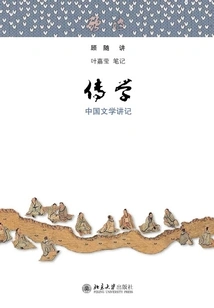
Gu Sui, a modern and contemporary Chinese scholar and writer, gave lectures at Peking University and other universities. Ye Jiaying, a contemporary scholar and Gu Sui's student at the time, took detailed notes. This "Biography" compiles and edits all of Ye Jiaying's notes. It is the first complete note to be published after more than sixty years. It is a comprehensive reproduction of Gu Sui's classroom lectures on Chinese literature. It is a masterpiece of his popularization and research of teaching literature, cultivating talents, and enlightening life through classroom lectures. It is based on the development of Chinese classical literature, integrating exquisite knowledge and wise thoughts. It wanders inside and outside literature, exploring history, ancient and modern China and the West, literature, history, philosophy and Zen. It is broad and profound yet popular and full of vitality. The author regards "life" in literature as the fundamental essence. Although he quotes from many sources and is imaginative, he always revolves around this center, full of emotions, literary grace, and wit. The truth of knowledge and the beauty of narration come close to the soul in perfect harmony. This book is very suitable for the general public to read. It does not just focus on the ivory tower, nor does it only focus on studying classics. Instead, it is full of "sense of life", "human touch" and "life energy". The humanistic spirit flows in the Chinese cultural context and continues in daily life. Life and reading complement each other, self-cultivation and enlightenment complement each other, and happiness and scholarship are in harmony. Famous masters such as Chen Yuan, Shen Congwen, Zhou Ruchang, Qi Gong, Feng Zhi, Zhang Zhongxing, Wu Xiaoru, Ye Jiaying, Guo Yuheng, Shi Shuqing, Wu Shichang, etc. All highly recommended Gu Sui's lectures. The chapters in this book are complete and reasonable, the structure is clear and rigorous, and the system is well-established. It can be said to be a unique history of Chinese literature. Its original manuscript followed Ye Jiaying around the country and abroad, and has been kept with her for more than sixty years. After many years of compilation, revision, and annotation, it was fully presented to readers under the title of "Biography" more than sixty years later. This "Biography" is the only version that includes all of Ye Jiaying's notes. It was published for the first time by Peking University Press in the form of a final version. Without profound and flexible knowledge, there would be no wonderful literature. This is exactly what "Biography" brings to readers.
Gu Sui, a modern and contemporary Chinese scholar and writer, gave lectures at Peking University and other universities. Ye Jiaying, a contemporary scholar and Gu Sui's student at the time, took detailed notes. This "Biography" compiles and edits all of Ye Jiaying's notes. It is the first complete note to be published after more than sixty years. It is a comprehensive reproduction of Gu Sui's classroom lectures on Chinese literature. It is a masterpiece of his popularization and research of teaching literature, cultivating talents, and enlightening life through classroom lectures. It is based on the development of Chinese classical literature, integrating exquisite knowledge and wise thoughts. It wanders inside and outside literature, exploring history, ancient and modern China and the West, literature, history, philosophy and Zen. It is broad and profound yet popular and full of vitality. The author regards "life" in literature as the fundamental essence. Although he quotes from many sources and is imaginative, he always revolves around this center, full of emotions, literary grace, and wit. The truth of knowledge and the beauty of narration come close to the soul in perfect harmony. This book is very suitable for the general public to read. It does not just focus on the ivory tower, nor does it only focus on studying classics. Instead, it is full of "sense of life", "human touch" and "life energy". The humanistic spirit flows in the Chinese cultural context and continues in daily life. Life and reading complement each other, self-cultivation and enlightenment complement each other, and happiness and scholarship are in harmony. Famous masters such as Chen Yuan, Shen Congwen, Zhou Ruchang, Qi Gong, Feng Zhi, Zhang Zhongxing, Wu Xiaoru, Ye Jiaying, Guo Yuheng, Shi Shuqing, Wu Shichang, etc. All highly recommended Gu Sui's lectures. The chapters in this book are complete and reasonable, the structure is clear and rigorous, and the system is well-established. It can be said to be a unique history of Chinese literature. Its original manuscript followed Ye Jiaying around the country and abroad, and has been kept with her for more than sixty years. After many years of compilation, revision, and annotation, it was fully presented to readers under the title of "Biography" more than sixty years later. This "Biography" is the only version that includes all of Ye Jiaying's notes. It was published for the first time by Peking University Press in the form of a final version. Without profound and flexible knowledge, there would be no wonderful literature. This is exactly what "Biography" brings to readers.