Library
Browse and search books
7 novels found
论巴蜀与中原的关系
Gu Jiegang
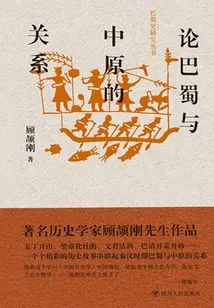
The Bashu History Research Association (later renamed the Bashu Culture Research Association) was established in 1979. Mr. Zhang Xiushu was the first president and Mr. Yang Xizong was the second president. In 2001, Mr. Li Youming, who was actually responsible for the specific work, advocated a younger generation, and Luo Zhitian, a professor at Sichuan University, succeeded him as president. In 2018, there was another change of office, and Xu Lianggong, a professor at Sichuan University, took over as president. Shortly after the establishment of the research association, the "Bashu History Research Series" was edited and published in 1981, focusing on the cultural, political, economic, ethnic and other issues of the Bashu region before the unification of Qin. Professor Xu Lianggong thought that the book needed to be reprinted urgently, and Sichuan People's Publishing House was happy to help, so the new edition was created.
The Bashu History Research Association (later renamed the Bashu Culture Research Association) was established in 1979. Mr. Zhang Xiushu was the first president and Mr. Yang Xizong was the second president. In 2001, Mr. Li Youming, who was actually responsible for the specific work, advocated a younger generation, and Luo Zhitian, a professor at Sichuan University, succeeded him as president. In 2018, there was another change of office, and Xu Lianggong, a professor at Sichuan University, took over as president. Shortly after the establishment of the research association, the "Bashu History Research Series" was edited and published in 1981, focusing on the cultural, political, economic, ethnic and other issues of the Bashu region before the unification of Qin. Professor Xu Lianggong thought that the book needed to be reprinted urgently, and Sichuan People's Publishing House was happy to help, so the new edition was created.
国史讲话:上古
Gu Jiegang
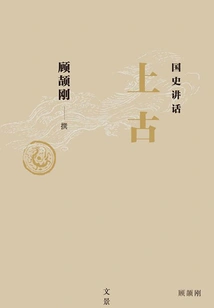
In ancient times, in ordinary people's minds, there were all kinds of magnificent and moving myths and legends, such as Pangu created the world, Nuwa skillfully mended the sky, Fuxi created the Eight Trigrams, Shen Nong tasted hundreds of herbs, Yao and Shun abdicated, Dayu controlled the floods, etc. For thousands of years, these legends have been regarded as trustworthy history and influenced generations of people. But, is that really the case? There are also the Xia, Shang and Zhou dynasties. Apart from Xia Qi seizing the throne, Shang Tang annihilating Jie, King Wen defeating Zhou, as well as the stories of kings, saints and virtuous ministers such as Bigan gouging out his heart, Jiang Shang fishing, Zhou Gong spitting out food, and the specious characterization of a "slave society", there seems to be no other deep imprint in the memory. However, is this period of history that lasted almost two thousand years really nothing more than that? Qian Mu's Bole, the teacher of Tan Qixiang, Tong Shuye, Yang Xiangkui, Bai Shouyi and other historical masters, and the historian Gu Jiegang, who has long been the number one in the history of the Republic of China, started his lectures with sincerity and ease. It turns out that the true meaning of antiquity is not the legend of the Three Sovereigns and Five Emperors, nor the stories of sages and saints written by King Tang and Wen of Shang Dynasty, but the birth of "China" and "Country" that are connected by our blood...
In ancient times, in ordinary people's minds, there were all kinds of magnificent and moving myths and legends, such as Pangu created the world, Nuwa skillfully mended the sky, Fuxi created the Eight Trigrams, Shen Nong tasted hundreds of herbs, Yao and Shun abdicated, Dayu controlled the floods, etc. For thousands of years, these legends have been regarded as trustworthy history and influenced generations of people. But, is that really the case? There are also the Xia, Shang and Zhou dynasties. Apart from Xia Qi seizing the throne, Shang Tang annihilating Jie, King Wen defeating Zhou, as well as the stories of kings, saints and virtuous ministers such as Bigan gouging out his heart, Jiang Shang fishing, Zhou Gong spitting out food, and the specious characterization of a "slave society", there seems to be no other deep imprint in the memory. However, is this period of history that lasted almost two thousand years really nothing more than that? Qian Mu's Bole, the teacher of Tan Qixiang, Tong Shuye, Yang Xiangkui, Bai Shouyi and other historical masters, and the historian Gu Jiegang, who has long been the number one in the history of the Republic of China, started his lectures with sincerity and ease. It turns out that the true meaning of antiquity is not the legend of the Three Sovereigns and Five Emperors, nor the stories of sages and saints written by King Tang and Wen of Shang Dynasty, but the birth of "China" and "Country" that are connected by our blood...
当代中国史学
Gu Jiegang
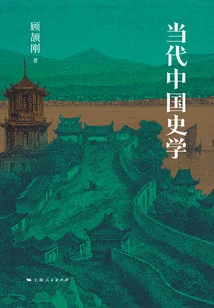
This is a monograph that reviews the development of historiography over a century from 1845 to 1945. The book is divided into three parts, covering the early stage of Chinese historiography in the past century to the rise of the Jingjin literary movement. The book is written in the middle of China's past century, mainly recording the excavation of new historical materials in the first 30 years of the 20th century. This chapter compiles the later period of Chinese historiography in the past century, mainly recording the research progress of various specialized histories, the writing of general history and chronological history, the study of oracle bone inscriptions and bronze inscriptions, the study of Mongolian history, Yuan history and the history of Sino-foreign communication, the study of popular literature history and art history, as well as the ancient history debate movement and ancient history research. The book is not large in length, but has a clear structure, fluent writing, lofty intentions, and dense information. It is considered a masterpiece in the field of modern Chinese history.
This is a monograph that reviews the development of historiography over a century from 1845 to 1945. The book is divided into three parts, covering the early stage of Chinese historiography in the past century to the rise of the Jingjin literary movement. The book is written in the middle of China's past century, mainly recording the excavation of new historical materials in the first 30 years of the 20th century. This chapter compiles the later period of Chinese historiography in the past century, mainly recording the research progress of various specialized histories, the writing of general history and chronological history, the study of oracle bone inscriptions and bronze inscriptions, the study of Mongolian history, Yuan history and the history of Sino-foreign communication, the study of popular literature history and art history, as well as the ancient history debate movement and ancient history research. The book is not large in length, but has a clear structure, fluent writing, lofty intentions, and dense information. It is considered a masterpiece in the field of modern Chinese history.
Doubt and Knowledge
Literature怀疑与学问
Gu Jiegang
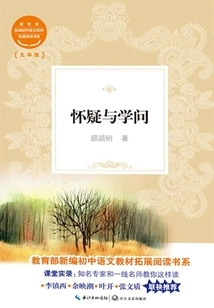
This book is a collection of essays written by the famous scholar and historian Gu Jiegang. It not only includes essays on teaching young people how to aspire, read, study, etc., But also includes his essays on folk culture, myths and legends, historical deeds, etc. Among them, "Doubt and Knowledge" was selected into the Ministry of Education's new junior high school Chinese textbook. It integrates ideological, academic and interesting elements. It is a universal reading book suitable for primary and secondary school students and has a certain academic color.
This book is a collection of essays written by the famous scholar and historian Gu Jiegang. It not only includes essays on teaching young people how to aspire, read, study, etc., But also includes his essays on folk culture, myths and legends, historical deeds, etc. Among them, "Doubt and Knowledge" was selected into the Ministry of Education's new junior high school Chinese textbook. It integrates ideological, academic and interesting elements. It is a universal reading book suitable for primary and secondary school students and has a certain academic color.
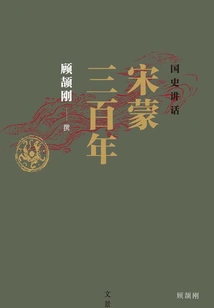
国史讲话:宋蒙三百年
Gu Jiegang
Why was the Song Dynasty, which was extremely prosperous and powerful, always suppressed by foreigners? Or you can also ask the other way around, how could the Song Dynasty, which was always invaded by foreign races, still be prosperous and prosperous? From Zhao Kuangyin, who gave up his military power over a glass of wine and counted all the agencies, to Aguda, who started a rebellion with two thousand people and conquered thousands of miles, from Abaoji, who unified eight tribes and destroyed everything, to Temujin, who conquered the east and west and made the world surrender, how did the Song, Liao, Xia, Jin and Yuan take turns to conquer the world? What are the similarities and differences in their rise, growth and decline? Why did the struggle for survival among China's various ethnic groups reach a climax in these three hundred years? Qian Mu's Bole was the legendary teacher who taught Tan Qixiang, Tong Shuye, Yang Xiangkui, Hou Renzhi, Bai Shouyi, Hu Houxuan and many other masters of history. Historian Gu Jiegang, who had long been the number one in the history of the Republic of China, gave lectures with sincerity and ease. It turns out that although the development trend of history is inevitable, it is full of coincidences and helplessness...
Why was the Song Dynasty, which was extremely prosperous and powerful, always suppressed by foreigners? Or you can also ask the other way around, how could the Song Dynasty, which was always invaded by foreign races, still be prosperous and prosperous? From Zhao Kuangyin, who gave up his military power over a glass of wine and counted all the agencies, to Aguda, who started a rebellion with two thousand people and conquered thousands of miles, from Abaoji, who unified eight tribes and destroyed everything, to Temujin, who conquered the east and west and made the world surrender, how did the Song, Liao, Xia, Jin and Yuan take turns to conquer the world? What are the similarities and differences in their rise, growth and decline? Why did the struggle for survival among China's various ethnic groups reach a climax in these three hundred years? Qian Mu's Bole was the legendary teacher who taught Tan Qixiang, Tong Shuye, Yang Xiangkui, Hou Renzhi, Bai Shouyi, Hu Houxuan and many other masters of history. Historian Gu Jiegang, who had long been the number one in the history of the Republic of China, gave lectures with sincerity and ease. It turns out that although the development trend of history is inevitable, it is full of coincidences and helplessness...
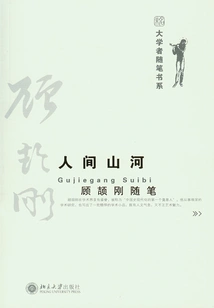
人间山河:顾颉刚随笔
Gu Jiegang
Gu Jiegang, the author of "The Mountains and Rivers of the World: Essays of Gu Jiegang", enjoys a high reputation in academic circles and is called "the first founder of the modernization of Chinese history". He engaged in difficult academic research and also wrote a number of incisive academic sketches, which have both humanistic flavor and artistic charm.
Gu Jiegang, the author of "The Mountains and Rivers of the World: Essays of Gu Jiegang", enjoys a high reputation in academic circles and is called "the first founder of the modernization of Chinese history". He engaged in difficult academic research and also wrote a number of incisive academic sketches, which have both humanistic flavor and artistic charm.
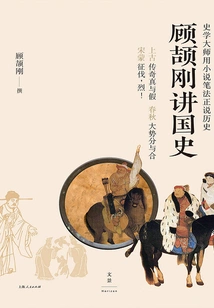
顾颉刚讲国史
Gu Jiegang
In ancient times, in ordinary people's minds, there were all kinds of magnificent and moving myths and legends, such as Pangu created the world, Nuwa skillfully mended the sky, Fuxi created the Eight Trigrams, Shen Nong tasted hundreds of herbs, Yao and Shun abdicated, Dayu controlled the floods, etc. For thousands of years, these legends have been regarded as trustworthy history and influenced generations of people. What is the situation close to reality? During the Xia, Shang and Zhou dynasties, apart from the stories of Xia Qi seizing the throne, Shang Tang annihilating Jie, King Wen defeating Zhou, and the stories of Bigan gouging out his heart, Jiang Shang fishing, and Zhou Gong spitting out food, as well as the specious characterization of a "slave society", there seems to be no other deep imprint in the memory. Is this period of history that lasts almost two thousand years really nothing more than that? It is said that there were many assassins during the Spring and Autumn Period. For example, in 712 BC, Minister Yu Fu of the State of Lu sent an assassin to stab Duke Yin of Lu to death; in 611 BC, Mrs. Xiang sent an assassin to stab to death her grandson Duke Zhao of Song; in 607 BC, members of the powerful minister Zhao Dun of Jin stabbed Duke Ling of Jin to death; however, why were similar regicide scenes frequently staged during the Spring and Autumn Period? ... Qian Mu's Bole, the teacher of masters of history such as Tan Qixiang, Tong Shuye, Yang Xiangkui, and Bai Shouyi, and the historian Gu Jiegang, who has long held the top position in the field of ancient history in the Republic of China, started his lectures with sincerity and relaxed, telling the truth and falsehood of ancient legends, the division and convergence of the Spring and Autumn Period, and the fierce conquests of Song and Mongolia.
In ancient times, in ordinary people's minds, there were all kinds of magnificent and moving myths and legends, such as Pangu created the world, Nuwa skillfully mended the sky, Fuxi created the Eight Trigrams, Shen Nong tasted hundreds of herbs, Yao and Shun abdicated, Dayu controlled the floods, etc. For thousands of years, these legends have been regarded as trustworthy history and influenced generations of people. What is the situation close to reality? During the Xia, Shang and Zhou dynasties, apart from the stories of Xia Qi seizing the throne, Shang Tang annihilating Jie, King Wen defeating Zhou, and the stories of Bigan gouging out his heart, Jiang Shang fishing, and Zhou Gong spitting out food, as well as the specious characterization of a "slave society", there seems to be no other deep imprint in the memory. Is this period of history that lasts almost two thousand years really nothing more than that? It is said that there were many assassins during the Spring and Autumn Period. For example, in 712 BC, Minister Yu Fu of the State of Lu sent an assassin to stab Duke Yin of Lu to death; in 611 BC, Mrs. Xiang sent an assassin to stab to death her grandson Duke Zhao of Song; in 607 BC, members of the powerful minister Zhao Dun of Jin stabbed Duke Ling of Jin to death; however, why were similar regicide scenes frequently staged during the Spring and Autumn Period? ... Qian Mu's Bole, the teacher of masters of history such as Tan Qixiang, Tong Shuye, Yang Xiangkui, and Bai Shouyi, and the historian Gu Jiegang, who has long held the top position in the field of ancient history in the Republic of China, started his lectures with sincerity and relaxed, telling the truth and falsehood of ancient legends, the division and convergence of the Spring and Autumn Period, and the fierce conquests of Song and Mongolia.