Library
Browse and search books
2 novels found
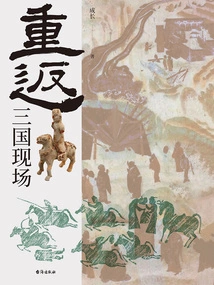
Return: Three Kingdoms Live
History重返:三国现场
Growing Up
"Return: The Three Kingdoms Scene" uses history, cultural relics, and relics as clues. Through sorting out the cultural relics from the late Han Dynasty and the Three Kingdoms period collected in major cultural and museum institutions and investigating the cultural relics of the Three Kingdoms across the country, "Return: The Three Kingdoms Scene" uses the "dual evidence method" of "materials in the underground" and "materials on paper" to present readers with a more realistic, three-dimensional and interesting era of the Three Kingdoms. History's personal experience is greater than any narration. The book covers ancient city sites, ancient tombs, ancient battlefields, temples, murals, calligraphy, inscriptions, porcelain, lacquerware, coins, weapons, architecture, clothing, food, social life, religion, Sino-foreign exchanges and many other fields related to the Three Kingdoms. It contains more than 400 national treasure-level cultural relics and on-site photos and hand-drawn maps of the Three Kingdoms relics. The perspective is novel and the pictures and texts provide a panoramic view of the "Visible Three Kingdoms".
"Return: The Three Kingdoms Scene" uses history, cultural relics, and relics as clues. Through sorting out the cultural relics from the late Han Dynasty and the Three Kingdoms period collected in major cultural and museum institutions and investigating the cultural relics of the Three Kingdoms across the country, "Return: The Three Kingdoms Scene" uses the "dual evidence method" of "materials in the underground" and "materials on paper" to present readers with a more realistic, three-dimensional and interesting era of the Three Kingdoms. History's personal experience is greater than any narration. The book covers ancient city sites, ancient tombs, ancient battlefields, temples, murals, calligraphy, inscriptions, porcelain, lacquerware, coins, weapons, architecture, clothing, food, social life, religion, Sino-foreign exchanges and many other fields related to the Three Kingdoms. It contains more than 400 national treasure-level cultural relics and on-site photos and hand-drawn maps of the Three Kingdoms relics. The perspective is novel and the pictures and texts provide a panoramic view of the "Visible Three Kingdoms".
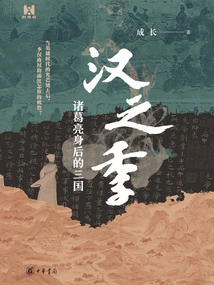
汉之季:诸葛亮身后的三国
Growing Up
This book focuses on the Three Kingdoms after the twelfth year of the founding of the Shu Han Dynasty (234). Starting from this year, the Three Kingdoms faded away from the glory of heroes and showed the true background of history. After the three kingdoms of Wei, Shu, and Wu experienced the thorny path of the founding generation, they began to face their own difficulties: the legitimacy of the founding of the country, the transition of power between generations, the discord between the monarch and the powerful ministers, the change of military strategy, the rise of meritorious sons, the intensification of ethnic conflicts on the border, etc. Putting them in the complex relationship of conflicts, alliances, and checks and balances between the three regimes, they take on special significance. From 234 to 263, the year when the Shu Han fell, it was the "post-Zhuge Liang era" of the Shu Han for thirty years. As the weakest country among the Three Kingdoms, the Shu Han regime still maintains its tenacious vitality. The game between imperial power and prime minister power, the struggle between the "new people" and the "old people", the debate between the Northern Expedition and self-preservation, and the subtle alliance between Wu and Shu, together constitute an excellent perspective from which to observe the Three Kingdoms. Jiang Wan, Fei Yi, Jiang Wei, Wang Ping, Zhuge Zhan, Luo Xian, Chen Shou... And even the later master Liu Chan, they only really appeared in this period. Amidst the ups and downs of the Shu Han regime, there are still many intriguing stories.
This book focuses on the Three Kingdoms after the twelfth year of the founding of the Shu Han Dynasty (234). Starting from this year, the Three Kingdoms faded away from the glory of heroes and showed the true background of history. After the three kingdoms of Wei, Shu, and Wu experienced the thorny path of the founding generation, they began to face their own difficulties: the legitimacy of the founding of the country, the transition of power between generations, the discord between the monarch and the powerful ministers, the change of military strategy, the rise of meritorious sons, the intensification of ethnic conflicts on the border, etc. Putting them in the complex relationship of conflicts, alliances, and checks and balances between the three regimes, they take on special significance. From 234 to 263, the year when the Shu Han fell, it was the "post-Zhuge Liang era" of the Shu Han for thirty years. As the weakest country among the Three Kingdoms, the Shu Han regime still maintains its tenacious vitality. The game between imperial power and prime minister power, the struggle between the "new people" and the "old people", the debate between the Northern Expedition and self-preservation, and the subtle alliance between Wu and Shu, together constitute an excellent perspective from which to observe the Three Kingdoms. Jiang Wan, Fei Yi, Jiang Wei, Wang Ping, Zhuge Zhan, Luo Xian, Chen Shou... And even the later master Liu Chan, they only really appeared in this period. Amidst the ups and downs of the Shu Han regime, there are still many intriguing stories.