Library
Browse and search books
1 novel found
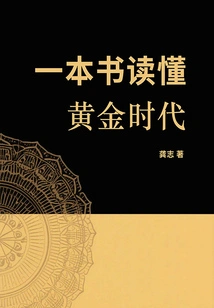
A Book to Understand the Golden Age
Literature一本书读懂黄金时代
Gong Zhi
Wang Xiaobo's "Golden Age" uses absurd and poetic touches to launch a philosophical experiment on power, freedom and existence in the rubber forests of Yunnan's educated youth. This book provides an in-depth analysis of the "great friendship" between Wang Er and Chen Qingyang, revealing how sex writing has become a linguistic alchemy for deconstructing totalitarianism: from the collective violence of the stigma of "broken shoes" to the two people's fight against moral judgment with physical pleasure; from the playful subversion of the handed-in materials to the epic of awakening in which Chen Qingyang transforms from a defined person into a narrative subject. Through the double mirror of the narrative of educated youth, this book explores the disenchantment of the collective memory of the Cultural Revolution through the text, and the eternal dilemma of human nature between hammering and dancing. The book also dissects Wang Xiaobo's language carnival - the tension between vulgarity and poetry, the edge of ironic aesthetics, and the reconstruction of the novel's style through essay writing, ultimately pointing to a question that transcends the times: when discipline attempts to obliterate individual reality, can we keep the gold of our souls in the midst of absurdity? With the sharpness of literary criticism, this book reveals for readers the code of spiritual breakthrough in Wang Xiaobo's "Hammered Ox" and "Half-Dark Cloud".
Wang Xiaobo's "Golden Age" uses absurd and poetic touches to launch a philosophical experiment on power, freedom and existence in the rubber forests of Yunnan's educated youth. This book provides an in-depth analysis of the "great friendship" between Wang Er and Chen Qingyang, revealing how sex writing has become a linguistic alchemy for deconstructing totalitarianism: from the collective violence of the stigma of "broken shoes" to the two people's fight against moral judgment with physical pleasure; from the playful subversion of the handed-in materials to the epic of awakening in which Chen Qingyang transforms from a defined person into a narrative subject. Through the double mirror of the narrative of educated youth, this book explores the disenchantment of the collective memory of the Cultural Revolution through the text, and the eternal dilemma of human nature between hammering and dancing. The book also dissects Wang Xiaobo's language carnival - the tension between vulgarity and poetry, the edge of ironic aesthetics, and the reconstruction of the novel's style through essay writing, ultimately pointing to a question that transcends the times: when discipline attempts to obliterate individual reality, can we keep the gold of our souls in the midst of absurdity? With the sharpness of literary criticism, this book reveals for readers the code of spiritual breakthrough in Wang Xiaobo's "Hammered Ox" and "Half-Dark Cloud".