Library
Browse and search books
3 novels found
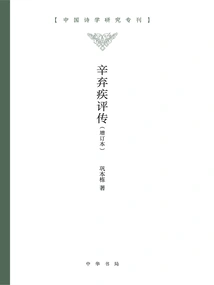
Critical Biography of Xin Qiji: Updated Edition (Special Issue on Chinese Poetics Research)
Literature辛弃疾评传:增订本(中国诗学研究专刊)
Gong Bendong
The era Xin Qiji lived in was a tragic era, and his life was also tragic. After Xin Qiji returned to the south, his ambition of recovery was impossible to realize, and his ideals and reality were in conflict. He entered and exited with twists and turns, and his mentality also changed accordingly. He wrote poems, which may mean "setting sun, smokey willows", or "straight to grab Cao Tun and Liu". They are vigorous and sparse, but also profound and graceful, showing a deep sense of worry and responsibility for the future and destiny of the country and nation. Therefore, although his lyrics were learned from Wu and Cai, and inherited from Su Shi, he was able to combine hardness and softness, and created his own high style. He occupies an important position in the history of Chinese literature and has far-reaching influence. This book attempts to place the study of Xin Qiji in the historical background and conditions of the long-term confrontation between the Song and Jin Dynasties. By grasping his mentality after returning to the south, he enters the world of his literary creation, reveals the anxiety and sense of responsibility expressed in his lyrics, displays the majestic, profound and elegant style of his lyrics, summarizes and abstracts his stylistic concepts and aesthetic tastes, traces the artistic origins of his lyrics, and discusses his status and influence in the history of Chinese literature. In addition, this book also has a special discussion on Xin Qiji's poetry creation.
The era Xin Qiji lived in was a tragic era, and his life was also tragic. After Xin Qiji returned to the south, his ambition of recovery was impossible to realize, and his ideals and reality were in conflict. He entered and exited with twists and turns, and his mentality also changed accordingly. He wrote poems, which may mean "setting sun, smokey willows", or "straight to grab Cao Tun and Liu". They are vigorous and sparse, but also profound and graceful, showing a deep sense of worry and responsibility for the future and destiny of the country and nation. Therefore, although his lyrics were learned from Wu and Cai, and inherited from Su Shi, he was able to combine hardness and softness, and created his own high style. He occupies an important position in the history of Chinese literature and has far-reaching influence. This book attempts to place the study of Xin Qiji in the historical background and conditions of the long-term confrontation between the Song and Jin Dynasties. By grasping his mentality after returning to the south, he enters the world of his literary creation, reveals the anxiety and sense of responsibility expressed in his lyrics, displays the majestic, profound and elegant style of his lyrics, summarizes and abstracts his stylistic concepts and aesthetic tastes, traces the artistic origins of his lyrics, and discusses his status and influence in the history of Chinese literature. In addition, this book also has a special discussion on Xin Qiji's poetry creation.
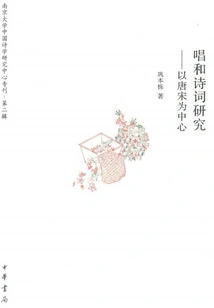
唱和诗词研究:以唐宋为中心(南京大学中国诗学研究中心专刊·第二辑)
Gong Bendong
This book combines a comprehensive review with case studies to discuss the origin, development and characteristics of singing and poetry, several issues in the evaluation and research of singing and poetry, and the role, status and influence of singing and poetry in the history of Chinese literature. The issue of perspective is also discussed, as well as some cases of harmonious poetry such as the couplets of Han Yu and Meng Jiao, the harmonious poems of Yuan Zhen and Bai Juyi, Su Shi's "Poetry of He Tao" and the "Poetry of Harmony" by Fang Qianli, Yang Zemin and Chen Yunping of the Southern Song Dynasty.
This book combines a comprehensive review with case studies to discuss the origin, development and characteristics of singing and poetry, several issues in the evaluation and research of singing and poetry, and the role, status and influence of singing and poetry in the history of Chinese literature. The issue of perspective is also discussed, as well as some cases of harmonious poetry such as the couplets of Han Yu and Meng Jiao, the harmonious poems of Yuan Zhen and Bai Juyi, Su Shi's "Poetry of He Tao" and the "Poetry of Harmony" by Fang Qianli, Yang Zemin and Chen Yunping of the Southern Song Dynasty.
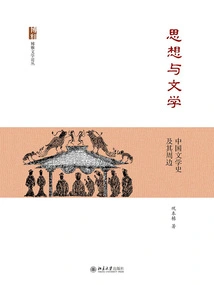
思想与文学:中国文学史及其周边
Gong Bendong
"Ideology and Literature: The History of Chinese Literature and Its Surroundings" starts from several important issues in the history of Chinese literature, in the form of special research, and strives to explore and unearth the real motivations and creative themes of literary development from the background of traditional Chinese thought and culture. It hopes to reveal and explain the different literary faces and characteristics formed at different stages of the development of literary history from multiple angles and at a higher level, and further promote the development of literary history research. The book has nineteen chapters in total, and the important issues discussed include: Qu Yuan's mental journey and the changes brought by his cultural background to the writing of "Li Sao"; the relationship between literature and images formed by the murals in the Chu ancestral temple and the creation of "Nine Songs"; and the "Nine Songs" and "Tianwen" together constitute a complete ancient history and the story of the gods. The system has also become an example of the cultural integration of northern and southern China in the early days; the origin of the Warring States strategists and Han Fu; the theory of talent in the Wei and Jin Dynasties and the theory of character in Liu Xie's "Wen Xin Diao Long"; the political ideals of scholars and the mentality of writing "Wen Xin Diao Long"; social changes in the prosperous Tang Dynasty and the evolution of poetry; military thinking and the "momentum" in the poetry of the Tang and Five Dynasties On; the purpose and reasons for the compilation of the "Four Big Books" in the early Song Dynasty; the Qingli party struggle and Mei Yaochen's poetry creation; the historical investigation of poor poetry and late completion; Ouyang Xiu's classics and literature; Su Shi's combination of Confucianism and Taoism and respect for nature in literary creation; the shortcomings in the implementation of the new law on work criticism involved in Su Shi's Wutai Poetry Case and the problems in Xi and Feng The important position in the poetry world; the struggle between the old and new parties in the Northern Song Dynasty and the creation of halal poetry; the cultural and historical significance of the Song Dynasty's southern migration, cultural Shaoxing, and the compilation of "He Qingzhen Ci" and "Song Wenjian" by three companies; the impact of Xin Qiji's change of mentality on the style of poetry after returning to the south; the relationship between important poetry selections of the Ming and Qing dynasties and the trends of the times, and the process of literary canonization.
"Ideology and Literature: The History of Chinese Literature and Its Surroundings" starts from several important issues in the history of Chinese literature, in the form of special research, and strives to explore and unearth the real motivations and creative themes of literary development from the background of traditional Chinese thought and culture. It hopes to reveal and explain the different literary faces and characteristics formed at different stages of the development of literary history from multiple angles and at a higher level, and further promote the development of literary history research. The book has nineteen chapters in total, and the important issues discussed include: Qu Yuan's mental journey and the changes brought by his cultural background to the writing of "Li Sao"; the relationship between literature and images formed by the murals in the Chu ancestral temple and the creation of "Nine Songs"; and the "Nine Songs" and "Tianwen" together constitute a complete ancient history and the story of the gods. The system has also become an example of the cultural integration of northern and southern China in the early days; the origin of the Warring States strategists and Han Fu; the theory of talent in the Wei and Jin Dynasties and the theory of character in Liu Xie's "Wen Xin Diao Long"; the political ideals of scholars and the mentality of writing "Wen Xin Diao Long"; social changes in the prosperous Tang Dynasty and the evolution of poetry; military thinking and the "momentum" in the poetry of the Tang and Five Dynasties On; the purpose and reasons for the compilation of the "Four Big Books" in the early Song Dynasty; the Qingli party struggle and Mei Yaochen's poetry creation; the historical investigation of poor poetry and late completion; Ouyang Xiu's classics and literature; Su Shi's combination of Confucianism and Taoism and respect for nature in literary creation; the shortcomings in the implementation of the new law on work criticism involved in Su Shi's Wutai Poetry Case and the problems in Xi and Feng The important position in the poetry world; the struggle between the old and new parties in the Northern Song Dynasty and the creation of halal poetry; the cultural and historical significance of the Song Dynasty's southern migration, cultural Shaoxing, and the compilation of "He Qingzhen Ci" and "Song Wenjian" by three companies; the impact of Xin Qiji's change of mentality on the style of poetry after returning to the south; the relationship between important poetry selections of the Ming and Qing dynasties and the trends of the times, and the process of literary canonization.