Library
Browse and search books
14 novels found
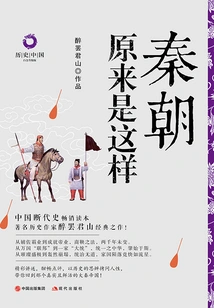
秦朝原来是这样(白金升级版)
Get Drunk In Junshan
Remote and barren, living with the barbarians, how did a small country rise against the odds in the turbulent times of the Spring and Autumn Period, annex the eight wastelands, and dominate the world? This book condenses the history of the rise and fall of the Qin Dynasty for more than 500 years. The historical materials used by the author are all from "Zuo Zhuan", "Historical Records", "Warring States Policy", "Lu Shi Chun Qiu", "Zi Zhi Tong Jian", as well as the works of hundreds of scholars in the pre-Qin period, as well as textual research and comments from past dynasties. The author combines the opinions of many scholars and focuses on the rise of the Qin Empire and the arduous process of unifying the country. Advocating martial arts, advocating wisdom, treating talents courteously, and innovating systems. Since Shang Yang's reform, Qin State has been at war with the other six countries for more than two hundred years, finally making Qin Shihuang dominate the world. Du Mu in the Tang Dynasty once lamented: "Those who destroy the Six Kingdoms are the Six Kingdoms and are not Qin; those who belong to Qin are Qin and are not the world." From Jing Ke's assassination of Qin to the burning of books and humiliation of Confucian scholars, from Zhao Gao's manipulation of power to the cruelty of loyal and good people, unbridled expropriation and cruel massacres have caused loyal and virtuous people to choke, and scholars to become alienated, and the people dare to be angry but dare not speak out. Even if the Qin regime collected the weapons of the world and cast twelve golden figures, it still could not stop the rebel army who raised poles as flags and chopped trees as soldiers; even if the Qin regime burned books, humiliated Confucians, and restricted the world's thoughts, it could not bear to die at the hands of Liu Bang and Xiang Yu who did not study. In just ten years, the Qin State went from being invincible to quickly perishing, and ended hastily in a turbulent uprising. This book connects the fragments of history to give you a coherent and comprehensive understanding of the real Qin Empire. Qin Dynasty, it turned out to be like this.
Remote and barren, living with the barbarians, how did a small country rise against the odds in the turbulent times of the Spring and Autumn Period, annex the eight wastelands, and dominate the world? This book condenses the history of the rise and fall of the Qin Dynasty for more than 500 years. The historical materials used by the author are all from "Zuo Zhuan", "Historical Records", "Warring States Policy", "Lu Shi Chun Qiu", "Zi Zhi Tong Jian", as well as the works of hundreds of scholars in the pre-Qin period, as well as textual research and comments from past dynasties. The author combines the opinions of many scholars and focuses on the rise of the Qin Empire and the arduous process of unifying the country. Advocating martial arts, advocating wisdom, treating talents courteously, and innovating systems. Since Shang Yang's reform, Qin State has been at war with the other six countries for more than two hundred years, finally making Qin Shihuang dominate the world. Du Mu in the Tang Dynasty once lamented: "Those who destroy the Six Kingdoms are the Six Kingdoms and are not Qin; those who belong to Qin are Qin and are not the world." From Jing Ke's assassination of Qin to the burning of books and humiliation of Confucian scholars, from Zhao Gao's manipulation of power to the cruelty of loyal and good people, unbridled expropriation and cruel massacres have caused loyal and virtuous people to choke, and scholars to become alienated, and the people dare to be angry but dare not speak out. Even if the Qin regime collected the weapons of the world and cast twelve golden figures, it still could not stop the rebel army who raised poles as flags and chopped trees as soldiers; even if the Qin regime burned books, humiliated Confucians, and restricted the world's thoughts, it could not bear to die at the hands of Liu Bang and Xiang Yu who did not study. In just ten years, the Qin State went from being invincible to quickly perishing, and ended hastily in a turbulent uprising. This book connects the fragments of history to give you a coherent and comprehensive understanding of the real Qin Empire. Qin Dynasty, it turned out to be like this.
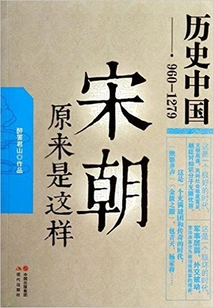
宋朝原来是这样
Get Drunk In Junshan
"The Song Dynasty Is Like This" uses a vertical and horizontal writing style to write the three hundred years of the Song Dynasty's magnificent history full of contradictions and entanglements. There are praises for the highly civilized politics and cultural ecology of the Song Dynasty, interpretations and criticisms of its military and diplomatic failures, and even reflections on the historical paradox of the Song Dynasty, when the people were rich but the country was weak.
"The Song Dynasty Is Like This" uses a vertical and horizontal writing style to write the three hundred years of the Song Dynasty's magnificent history full of contradictions and entanglements. There are praises for the highly civilized politics and cultural ecology of the Song Dynasty, interpretations and criticisms of its military and diplomatic failures, and even reflections on the historical paradox of the Song Dynasty, when the people were rich but the country was weak.
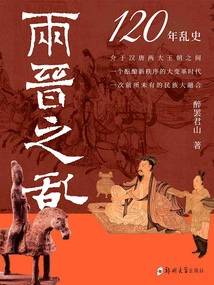
两晋之乱
Get Drunk In Junshan
The Jin Dynasty, a dynasty with little sense of historical existence, ended one troubled era and started another. In the Jin Dynasty, as the dominance of Confucianism was broken, innovations occurred in philosophy, literature, art, history, and science and technology, and some of them became independent knowledge. Thoughts include metaphysics, Taoism, and Buddhism that were developed in the local area and Buddhism spread eastward from India. The grassland culture of the border peoples and the Chinese culture of the Jin Dynasty gradually began cultural exchanges and national integration. Although the culture of the two Jin Dynasties developed towards diversification and was an era of cultural creation, conflict and integration, the two Jin Dynasties were the epochal period of the strong and powerful cultural inheritance of the Qin and Han Dynasties. The decline of culture caused the new political system to fall apart soon after its existence. We have to learn from history. The book contains many detailed and wonderful descriptions of war, as well as analysis of the state of the world and people's hearts. By describing the chaos, it enlightens us that while we must inherit the strong and powerful spirit of the great era, we should also pay attention to the experiences and lessons of the chaotic era.
The Jin Dynasty, a dynasty with little sense of historical existence, ended one troubled era and started another. In the Jin Dynasty, as the dominance of Confucianism was broken, innovations occurred in philosophy, literature, art, history, and science and technology, and some of them became independent knowledge. Thoughts include metaphysics, Taoism, and Buddhism that were developed in the local area and Buddhism spread eastward from India. The grassland culture of the border peoples and the Chinese culture of the Jin Dynasty gradually began cultural exchanges and national integration. Although the culture of the two Jin Dynasties developed towards diversification and was an era of cultural creation, conflict and integration, the two Jin Dynasties were the epochal period of the strong and powerful cultural inheritance of the Qin and Han Dynasties. The decline of culture caused the new political system to fall apart soon after its existence. We have to learn from history. The book contains many detailed and wonderful descriptions of war, as well as analysis of the state of the world and people's hearts. By describing the chaos, it enlightens us that while we must inherit the strong and powerful spirit of the great era, we should also pay attention to the experiences and lessons of the chaotic era.
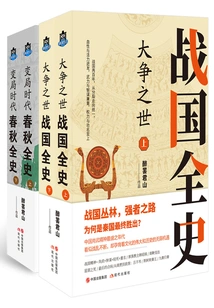
春秋战国五百年(套装)
Get Drunk In Junshan
The Spring and Autumn Period and the Warring States Period were the best era and the worst era in Chinese history. The Spring and Autumn Period and the Warring States Period were an era of great changes, an era of inheriting the past and forging ahead with the future. The Spring and Autumn Period and the Warring States Period were characterized by constant turmoil and killings, but they gave birth to cultural greatness and unlimited historical opportunities. The Spring and Autumn Period and the Warring States Period were the years when China's martial spirit was at its peak, demonstrating bloody and flying vitality. The Spring and Autumn Period and the Warring States Period advocated bravery and resourcefulness, intertwined with bloodiness and power. The Spring and Autumn Period was the last glorious era of Chinese aristocratic spirit. The Warring States Period was a bit more cruel and bloody, but it also gave civilians more opportunities to step onto the political stage, making society more vibrant. This book takes the five-hundred-year struggle for supremacy among princes during the Spring and Autumn and Warring States periods as the main line, and presents this soul-stirring and magnificent history in a three-dimensional and panoramic manner. The Spring and Autumn Period and the Warring States Period were also a foggy era in Chinese history, with insufficient historical data and confusing clues. This book is based on the records of classic historical books, and through precise tailoring and reasoning, it clearly presents the relationships between characters and historical events, and fully reproduces the legendary era created by princes, generals, celebrities, and small figures.
The Spring and Autumn Period and the Warring States Period were the best era and the worst era in Chinese history. The Spring and Autumn Period and the Warring States Period were an era of great changes, an era of inheriting the past and forging ahead with the future. The Spring and Autumn Period and the Warring States Period were characterized by constant turmoil and killings, but they gave birth to cultural greatness and unlimited historical opportunities. The Spring and Autumn Period and the Warring States Period were the years when China's martial spirit was at its peak, demonstrating bloody and flying vitality. The Spring and Autumn Period and the Warring States Period advocated bravery and resourcefulness, intertwined with bloodiness and power. The Spring and Autumn Period was the last glorious era of Chinese aristocratic spirit. The Warring States Period was a bit more cruel and bloody, but it also gave civilians more opportunities to step onto the political stage, making society more vibrant. This book takes the five-hundred-year struggle for supremacy among princes during the Spring and Autumn and Warring States periods as the main line, and presents this soul-stirring and magnificent history in a three-dimensional and panoramic manner. The Spring and Autumn Period and the Warring States Period were also a foggy era in Chinese history, with insufficient historical data and confusing clues. This book is based on the records of classic historical books, and through precise tailoring and reasoning, it clearly presents the relationships between characters and historical events, and fully reproduces the legendary era created by princes, generals, celebrities, and small figures.
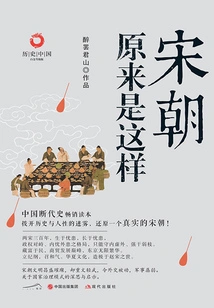
宋朝原来是这样
Get Drunk In Junshan
Since Song Taizu Zhao Kuangyin and Chen Qiao rebelled and used force to seize the power of the Later Zhou Dynasty, he was very wary of the situation in the Five Dynasties period when princes were entrenched and attacking each other. He was even more afraid of being conquered due to doubts about the legitimacy of the "yellow robe", so he "released his military power with a glass of wine" to consolidate the foundation of imperial power. At the same time, the external threat of confrontation between neighboring regimes existed for a long time. The Song Dynasty also tried to take into account domestic and foreign affairs to expand its territory. It failed in important battles with the Liao, Xixia, Jin, and Mongolian-Yuan wars, and failed to realize its long-cherished wish for unification. The pattern of internal and external troubles formed the basic national policy of Emperor Taizong of the Song Dynasty to "defend the internal situation and weaken the external situation" and "strengthen the trunk and weak branches". He focused on preventing internal chaos and passively defended himself externally. Compared with military officers, the monarchs of the Song Dynasty believed that civil servants would not pose a substantial threat to the imperial power. The tendency of "advocating literature and suppressing military affairs" cultivated through imperial examinations gradually emerged. The political status of civil and military officials became increasingly disparate, which gradually formed the governance philosophy of "cultivating civil servants and cultivating civil servants." The Zhao and Song dynasties were born out of sorrow, poor and weak, and the overall country was weak. However, the wealth was hidden among the people, and commerce and trade reached its peak. During the two and three hundred years of the Song Dynasty, it created brilliant economic and cultural achievements, ranking at the forefront of the world at that time. It is worthy of being a splendid era of prosperous civilization in Chinese history. However, due to the "swords and guns stored in the treasury, the horses released in the Nanshan Mountains", they blindly followed the "ancestral law" and implemented the policy of "valuing civility over military force", failing to "migrate with the times" and failing to update the national governance model, which resulted in passive diplomacy and weak military, which eventually led to the end of the dynasty.
Since Song Taizu Zhao Kuangyin and Chen Qiao rebelled and used force to seize the power of the Later Zhou Dynasty, he was very wary of the situation in the Five Dynasties period when princes were entrenched and attacking each other. He was even more afraid of being conquered due to doubts about the legitimacy of the "yellow robe", so he "released his military power with a glass of wine" to consolidate the foundation of imperial power. At the same time, the external threat of confrontation between neighboring regimes existed for a long time. The Song Dynasty also tried to take into account domestic and foreign affairs to expand its territory. It failed in important battles with the Liao, Xixia, Jin, and Mongolian-Yuan wars, and failed to realize its long-cherished wish for unification. The pattern of internal and external troubles formed the basic national policy of Emperor Taizong of the Song Dynasty to "defend the internal situation and weaken the external situation" and "strengthen the trunk and weak branches". He focused on preventing internal chaos and passively defended himself externally. Compared with military officers, the monarchs of the Song Dynasty believed that civil servants would not pose a substantial threat to the imperial power. The tendency of "advocating literature and suppressing military affairs" cultivated through imperial examinations gradually emerged. The political status of civil and military officials became increasingly disparate, which gradually formed the governance philosophy of "cultivating civil servants and cultivating civil servants." The Zhao and Song dynasties were born out of sorrow, poor and weak, and the overall country was weak. However, the wealth was hidden among the people, and commerce and trade reached its peak. During the two and three hundred years of the Song Dynasty, it created brilliant economic and cultural achievements, ranking at the forefront of the world at that time. It is worthy of being a splendid era of prosperous civilization in Chinese history. However, due to the "swords and guns stored in the treasury, the horses released in the Nanshan Mountains", they blindly followed the "ancestral law" and implemented the policy of "valuing civility over military force", failing to "migrate with the times" and failing to update the national governance model, which resulted in passive diplomacy and weak military, which eventually led to the end of the dynasty.
有趣得让人睡不着的三国史(三)
Get Drunk In Junshan
The best-selling historical author Zui Bajunshan has been hiding in the mountains for many years, reading historical materials, and based on the official history to create this history of the Three Kingdoms that is informative and interesting, full of laughter and tears, from the Yellow Turban Uprising to the fall of the Eastern Wu Dynasty, from the imperial power system to the cultural atmosphere, from the generals of the Southern and Northern Expeditions to the lonely and brave soldiers, from the intrigues to the mutual sympathy, covering all aspects of the history of the Three Kingdoms. The author uses vivid and vivid words to outline the magnificent historical scenes, and makes inferences about the neglected and misunderstood issues in the history of the Three Kingdoms. The argument is rigorous and the viewpoint is unique.
The best-selling historical author Zui Bajunshan has been hiding in the mountains for many years, reading historical materials, and based on the official history to create this history of the Three Kingdoms that is informative and interesting, full of laughter and tears, from the Yellow Turban Uprising to the fall of the Eastern Wu Dynasty, from the imperial power system to the cultural atmosphere, from the generals of the Southern and Northern Expeditions to the lonely and brave soldiers, from the intrigues to the mutual sympathy, covering all aspects of the history of the Three Kingdoms. The author uses vivid and vivid words to outline the magnificent historical scenes, and makes inferences about the neglected and misunderstood issues in the history of the Three Kingdoms. The argument is rigorous and the viewpoint is unique.
变局时代:春秋全史(全二册)
Get Drunk In Junshan
The Spring and Autumn Period was an era of great changes, with the alternation of the old and the new; the Spring and Autumn Period was a chaotic era with numerous princes and frequent wars, but monarchy was not supreme and freedom was not stifled; the Spring and Autumn Period was an era that advocated bravery and resourcefulness, where blood and power were intertwined; the Spring and Autumn Period was the last glorious era of the Chinese aristocratic spirit, where character and morality were supreme. This book takes the three hundred years of the Spring and Autumn Period as the main line of the feudal princes' struggle for hegemony, and presents this soul-stirring and magnificent history in a three-dimensional and panoramic manner. It is based on the records of classic historical books such as "Zuo Zhuan", "Guoyu", "Lü Shi Chun Qiu", "Historical Records", and "Zi Zhi Tong Jian", etc., And fully demonstrates the Spring and Autumn Spiritual Genealogy jointly constructed by princes, generals, ministers, and small figures.
The Spring and Autumn Period was an era of great changes, with the alternation of the old and the new; the Spring and Autumn Period was a chaotic era with numerous princes and frequent wars, but monarchy was not supreme and freedom was not stifled; the Spring and Autumn Period was an era that advocated bravery and resourcefulness, where blood and power were intertwined; the Spring and Autumn Period was the last glorious era of the Chinese aristocratic spirit, where character and morality were supreme. This book takes the three hundred years of the Spring and Autumn Period as the main line of the feudal princes' struggle for hegemony, and presents this soul-stirring and magnificent history in a three-dimensional and panoramic manner. It is based on the records of classic historical books such as "Zuo Zhuan", "Guoyu", "Lü Shi Chun Qiu", "Historical Records", and "Zi Zhi Tong Jian", etc., And fully demonstrates the Spring and Autumn Spiritual Genealogy jointly constructed by princes, generals, ministers, and small figures.
有趣得让人睡不着的三国史(套装共3册)
Get Drunk In Junshan
The author of this book, Zui Bajunshan, is the first moderator of Tianya's "Cooking Wine and Discussing History". He tells history realistically and interestingly, and is highly sought after by over a million fans. This 700,000-word masterpiece covers all aspects of the history of the Three Kingdoms and solves all the mysteries of the Three Kingdoms for you. Based on historical materials, jump out of the fictional perspective, put aside historical prejudices, disrespect Liu, do not belittle Cao, do not ignore Soochow, and restore the true appearance of the history of the Three Kingdoms. The young scholar Absalom, the author of "Cold Conscience", and the literary and historical writer Wang Jueren, the author of "The Bloody Tang Dynasty" jointly recommended it.
The author of this book, Zui Bajunshan, is the first moderator of Tianya's "Cooking Wine and Discussing History". He tells history realistically and interestingly, and is highly sought after by over a million fans. This 700,000-word masterpiece covers all aspects of the history of the Three Kingdoms and solves all the mysteries of the Three Kingdoms for you. Based on historical materials, jump out of the fictional perspective, put aside historical prejudices, disrespect Liu, do not belittle Cao, do not ignore Soochow, and restore the true appearance of the history of the Three Kingdoms. The young scholar Absalom, the author of "Cold Conscience", and the literary and historical writer Wang Jueren, the author of "The Bloody Tang Dynasty" jointly recommended it.
春秋无义战(下)
Get Drunk In Junshan
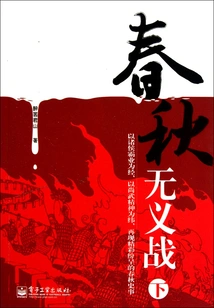
The discussion of annihilation of troops ended the confrontation between Jin and Chu, but it could not eliminate the war. The resurgent Qi State stubbornly blocked the Jin State's hegemony in the Central Plains, and the Jin State was in turmoil with constant civil strife. King Helu of Wu used his unparalleled courage to destroy the capital of Chu and rewrite the territory of southern hegemony. However, he was unexpectedly defeated at the hands of the little-known Gou Jian. Gou Jian, the king of Yue, experienced great ups and downs, fell behind and fell behind again. With the perseverance of "sleeping on fuel and tasting courage", he finally boarded the last train for hegemony...
The discussion of annihilation of troops ended the confrontation between Jin and Chu, but it could not eliminate the war. The resurgent Qi State stubbornly blocked the Jin State's hegemony in the Central Plains, and the Jin State was in turmoil with constant civil strife. King Helu of Wu used his unparalleled courage to destroy the capital of Chu and rewrite the territory of southern hegemony. However, he was unexpectedly defeated at the hands of the little-known Gou Jian. Gou Jian, the king of Yue, experienced great ups and downs, fell behind and fell behind again. With the perseverance of "sleeping on fuel and tasting courage", he finally boarded the last train for hegemony...
有趣得让人睡不着的三国史(二)
Get Drunk In Junshan
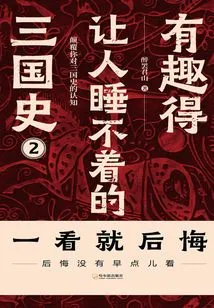
The best-selling historical author Zui Bajunshan has been hiding in the mountains for many years, reading historical materials, and based on the official history to create this history of the Three Kingdoms that is informative and interesting, full of laughter and tears, from the Yellow Turban Uprising to the fall of the Eastern Wu Dynasty, from the imperial power system to the cultural atmosphere, from the generals of the Southern and Northern Expeditions to the lonely and brave soldiers, from the intrigues to the mutual sympathy, covering all aspects of the history of the Three Kingdoms. The author uses vivid and vivid words to outline the magnificent historical scenes, and makes inferences about the neglected and misunderstood issues in the history of the Three Kingdoms. The argument is rigorous and the viewpoint is unique.
The best-selling historical author Zui Bajunshan has been hiding in the mountains for many years, reading historical materials, and based on the official history to create this history of the Three Kingdoms that is informative and interesting, full of laughter and tears, from the Yellow Turban Uprising to the fall of the Eastern Wu Dynasty, from the imperial power system to the cultural atmosphere, from the generals of the Southern and Northern Expeditions to the lonely and brave soldiers, from the intrigues to the mutual sympathy, covering all aspects of the history of the Three Kingdoms. The author uses vivid and vivid words to outline the magnificent historical scenes, and makes inferences about the neglected and misunderstood issues in the history of the Three Kingdoms. The argument is rigorous and the viewpoint is unique.
夏商周原来是这样
Get Drunk In Junshan
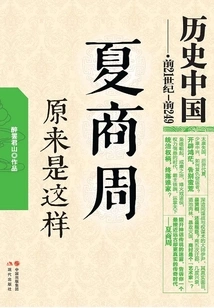
The Xia, Shang and Zhou dynasties laid the foundation of Chinese civilization. However, the history of the three dynasties is complicated and confusing. The historical materials are originally limited. In addition, the Qin Dynasty burned books, which only makes future generations sigh at the sight of flowers in the fog. This book strives to dig out the truth of that glorious historical era from limited clues with a rigorous and realistic attitude. By comparing "Historical Records", "The Year of the Bamboo Secretary", "Shangshu", and the documents of pre-Qin scholars, it eliminates falsehoods and retains true ones, and questions many traditional conclusions in history. For example, how can Shaokang and ZTE avenge the country's thieves? Are Xia Jie and Shang Zhou really the most tyrannical monarchs in history? Is the Machiavellian master Yi Yin a virtuous prime minister or a traitor? This book integrates stories scattered in various historical materials into a relatively complete story, with clear chronological order, coherent historical events, and orderly context. It combines knowledge and storytelling, and is highly readable, which shows the author's hard work.
The Xia, Shang and Zhou dynasties laid the foundation of Chinese civilization. However, the history of the three dynasties is complicated and confusing. The historical materials are originally limited. In addition, the Qin Dynasty burned books, which only makes future generations sigh at the sight of flowers in the fog. This book strives to dig out the truth of that glorious historical era from limited clues with a rigorous and realistic attitude. By comparing "Historical Records", "The Year of the Bamboo Secretary", "Shangshu", and the documents of pre-Qin scholars, it eliminates falsehoods and retains true ones, and questions many traditional conclusions in history. For example, how can Shaokang and ZTE avenge the country's thieves? Are Xia Jie and Shang Zhou really the most tyrannical monarchs in history? Is the Machiavellian master Yi Yin a virtuous prime minister or a traitor? This book integrates stories scattered in various historical materials into a relatively complete story, with clear chronological order, coherent historical events, and orderly context. It combines knowledge and storytelling, and is highly readable, which shows the author's hard work.
有趣得让人睡不着的三国史(一)
Get Drunk In Junshan
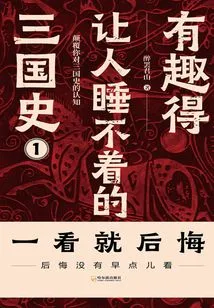
The best-selling historical author Zui Bajunshan has been hiding in the mountains for many years, reading historical materials, and based on the official history to create this history of the Three Kingdoms that is informative and interesting, full of laughter and tears, from the Yellow Turban Uprising to the fall of the Eastern Wu Dynasty, from the imperial power system to the cultural atmosphere, from the generals of the Southern and Northern Expeditions to the lonely and brave soldiers, from the intrigues to the mutual sympathy, covering all aspects of the history of the Three Kingdoms. The author uses vivid and vivid words to outline the magnificent historical scenes, and makes inferences about the neglected and misunderstood issues in the history of the Three Kingdoms. The argument is rigorous and the viewpoint is unique.
The best-selling historical author Zui Bajunshan has been hiding in the mountains for many years, reading historical materials, and based on the official history to create this history of the Three Kingdoms that is informative and interesting, full of laughter and tears, from the Yellow Turban Uprising to the fall of the Eastern Wu Dynasty, from the imperial power system to the cultural atmosphere, from the generals of the Southern and Northern Expeditions to the lonely and brave soldiers, from the intrigues to the mutual sympathy, covering all aspects of the history of the Three Kingdoms. The author uses vivid and vivid words to outline the magnificent historical scenes, and makes inferences about the neglected and misunderstood issues in the history of the Three Kingdoms. The argument is rigorous and the viewpoint is unique.
汉朝原来是这样
Get Drunk In Junshan
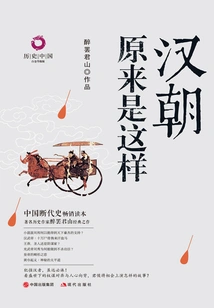
"Historical China (Platinum Upgraded Edition)" is a best-selling book on the chronological history of China, an encyclopedia-style popular history book, and classic masterpieces by many famous writers in the history writing world today, including Wang Jueren, Zuiba Junshan, Jin Manlou, Jiang Lang, Zhang Cheng... With exciting and rich content and a different narrative perspective, it depicts flesh-and-blood history, reveals the long-misunderstood and unexpected historical truth, and interprets true human nature from it. It can be said that everything that happens today has corresponding clues and references in history. Chu and Han fought for hegemony, and the heroes came to an end; Yan and Liu founded the country, and the world was unified! A great nation has a name since then: Han. This book describes the outbreak of the Chu-Han War in 206 BC to the fall of the Eastern Han Dynasty in 220 AD. The politics, military, economy, and culture of the Han Dynasty are presented to readers one by one in the form of historical scrolls. How did Liu Bang go from commoner to anti-Qin hero? With women in charge of the country, the emperor in Queen Lu's era was actually a fake? Is the "Rebellion of the Seven Kingdoms" a power reshuffle? One hundred thousand bones in exchange for a bloody BMW? Who is to blame for the witchcraft disaster that caused rivers of blood? Is Zhaojun indispensable for his coming out of the fortress? Who was the romantic emperor who died in Gentle Township? Falling into the "sleeve-cutting habit" and even giving up the throne? Is Wang Mang a saint or a conspirator? When the Eastern Han Dynasty was founded, only Emperor Guangwu Liu Xiuyun crowned hundreds of kings? The young emperor Liu Zhao seized power through a coup. Who were the supporters behind it? In the dark age and the prison of the Party, the countdown to the end of the Eastern Han Dynasty has entered? The rule of Wenjing and Mingzhang, the prosperous age of Hanwu and Yongyuan; hundreds of schools of thought were deposed and Confucianism was respected only; the Silk Road's prestige spread far and wide; the barbarians were pushed away to expand the soil and the stones were carved; those who offended the powerful Han Dynasty would be punished no matter how far away they were! The 410-year reign of the Han Dynasty spanned from the peasant war at the end of Qin to the deposed Emperor Xian of the Han Dynasty, from the Red Eyebrow Army to the Yellow Turban Army, from the Huns to the Qiang people, and from the power of relatives to the power of eunuchs. The once prosperous empire finally collapsed. Based on rich historical materials, with vivid language and rigorous historical attitude, this book truly restores the longest-lived feudal dynasty in Chinese history after the Qin Dynasty. Watch the kings and generals in the prosperous times perform scenes of historical dramas of power chess and people's disapproval.
"Historical China (Platinum Upgraded Edition)" is a best-selling book on the chronological history of China, an encyclopedia-style popular history book, and classic masterpieces by many famous writers in the history writing world today, including Wang Jueren, Zuiba Junshan, Jin Manlou, Jiang Lang, Zhang Cheng... With exciting and rich content and a different narrative perspective, it depicts flesh-and-blood history, reveals the long-misunderstood and unexpected historical truth, and interprets true human nature from it. It can be said that everything that happens today has corresponding clues and references in history. Chu and Han fought for hegemony, and the heroes came to an end; Yan and Liu founded the country, and the world was unified! A great nation has a name since then: Han. This book describes the outbreak of the Chu-Han War in 206 BC to the fall of the Eastern Han Dynasty in 220 AD. The politics, military, economy, and culture of the Han Dynasty are presented to readers one by one in the form of historical scrolls. How did Liu Bang go from commoner to anti-Qin hero? With women in charge of the country, the emperor in Queen Lu's era was actually a fake? Is the "Rebellion of the Seven Kingdoms" a power reshuffle? One hundred thousand bones in exchange for a bloody BMW? Who is to blame for the witchcraft disaster that caused rivers of blood? Is Zhaojun indispensable for his coming out of the fortress? Who was the romantic emperor who died in Gentle Township? Falling into the "sleeve-cutting habit" and even giving up the throne? Is Wang Mang a saint or a conspirator? When the Eastern Han Dynasty was founded, only Emperor Guangwu Liu Xiuyun crowned hundreds of kings? The young emperor Liu Zhao seized power through a coup. Who were the supporters behind it? In the dark age and the prison of the Party, the countdown to the end of the Eastern Han Dynasty has entered? The rule of Wenjing and Mingzhang, the prosperous age of Hanwu and Yongyuan; hundreds of schools of thought were deposed and Confucianism was respected only; the Silk Road's prestige spread far and wide; the barbarians were pushed away to expand the soil and the stones were carved; those who offended the powerful Han Dynasty would be punished no matter how far away they were! The 410-year reign of the Han Dynasty spanned from the peasant war at the end of Qin to the deposed Emperor Xian of the Han Dynasty, from the Red Eyebrow Army to the Yellow Turban Army, from the Huns to the Qiang people, and from the power of relatives to the power of eunuchs. The once prosperous empire finally collapsed. Based on rich historical materials, with vivid language and rigorous historical attitude, this book truly restores the longest-lived feudal dynasty in Chinese history after the Qin Dynasty. Watch the kings and generals in the prosperous times perform scenes of historical dramas of power chess and people's disapproval.
夏商周原来是这样(白金升级版)
Get Drunk In Junshan
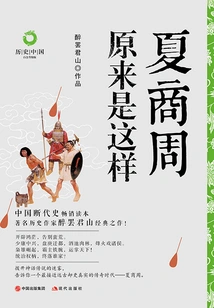
The Xia, Shang and Zhou dynasties laid the foundation of Chinese civilization. However, the history of the three dynasties is complicated and confusing. The historical materials are originally limited. In addition, the Qin Dynasty burned books, which only makes future generations sigh at the sight of flowers in the fog. This book strives to unearth the truth of that glorious historical era from limited clues with a rigorous and realistic attitude. By comparing "Historical Records", "The Year of the Bamboo Secretary", "Shangshu", and the documents of pre-Qin scholars, the falsehood is preserved and the truth is preserved. Are Xia Jie and Shang Zhou really the most tyrannical monarchs in history? Is Yi Yin a virtuous prime minister or a traitor? In the hegemonic era of "respecting the king and rejecting the barbarians", what role did the Emperor Zhou play? This book integrates stories scattered in various historical materials into a relatively complete story, with clear chronological order, coherent historical events, and orderly context. It combines knowledge and storytelling, and is highly readable, which shows the author's hard work.
The Xia, Shang and Zhou dynasties laid the foundation of Chinese civilization. However, the history of the three dynasties is complicated and confusing. The historical materials are originally limited. In addition, the Qin Dynasty burned books, which only makes future generations sigh at the sight of flowers in the fog. This book strives to unearth the truth of that glorious historical era from limited clues with a rigorous and realistic attitude. By comparing "Historical Records", "The Year of the Bamboo Secretary", "Shangshu", and the documents of pre-Qin scholars, the falsehood is preserved and the truth is preserved. Are Xia Jie and Shang Zhou really the most tyrannical monarchs in history? Is Yi Yin a virtuous prime minister or a traitor? In the hegemonic era of "respecting the king and rejecting the barbarians", what role did the Emperor Zhou play? This book integrates stories scattered in various historical materials into a relatively complete story, with clear chronological order, coherent historical events, and orderly context. It combines knowledge and storytelling, and is highly readable, which shows the author's hard work.