Library
Browse and search books
6 novels found
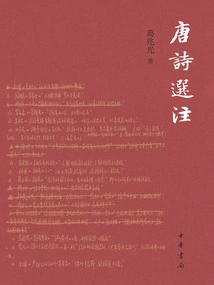
Selected Notes on Tang Poems
Literature唐诗选注
Ge Zhaoguang
Mr. Ge Zhaoguang used his profound insight into the history of poetry and his detailed experience of Tang poetry to select 282 poems by 78 poets from the vast collection of Tang poetry. Among them are both good poems and famous works, as well as works with irreplaceable significance in the development of poetry history. The description of the poet's style in the biography and the summary of previous comments are organically integrated with the author's original ideas; the annotations are widely cited, specific and subtle, which help readers deepen their understanding and feeling of poetic meaning and techniques. The author makes good use of metaphors and the language is easy to understand, making it suitable for ordinary readers as an introduction to poetry.
Mr. Ge Zhaoguang used his profound insight into the history of poetry and his detailed experience of Tang poetry to select 282 poems by 78 poets from the vast collection of Tang poetry. Among them are both good poems and famous works, as well as works with irreplaceable significance in the development of poetry history. The description of the poet's style in the biography and the summary of previous comments are organically integrated with the author's original ideas; the annotations are widely cited, specific and subtle, which help readers deepen their understanding and feeling of poetic meaning and techniques. The author makes good use of metaphors and the language is easy to understand, making it suitable for ordinary readers as an introduction to poetry.
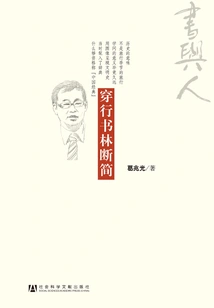
穿行书林断简
Ge Zhaoguang
This year, we dedicate a new series of books to our readers: the Book and People Series. We hope that you can gain profound insights from relatively easy reading. What is introduced here is Ge Zhaoguang's "Walking through the Forest of Books and Broken Slips" (the other three books published at the same time are "East Wind and West Wind" by Ge Xiaojia and Luo Zhitian, "Between Reality and Virtuality" by Hu Baoguo, and "Portraits of Famous People from Qin and Han Dynasties" by Wang Zijin). This book contains "all articles related to books", so it is named "Walking through the Forest of Books". From the experience of "being entangled or dependent on each other" with books, the author summarizes three realms or methods of reading, namely "travel, hunting and detective". The author's reading is undoubtedly detective-style. The article often starts from a book, or discusses the current situation and shortcomings of related research fields, or explains his own understanding of historical concepts and methods, and even includes feelings about the personal experience and interests of the author of the book in question, as well as his concern for the changes of the times and social life. The author's "Zen Buddhism and Chinese Culture" in the 1980s and "History of Chinese Thought" at the turn of the century both influenced Xuelin. Although this book only has about 100,000 words, and each article is only four to five thousand words, it fully demonstrates the author's profound academic foundation and excellent ability to control words.
This year, we dedicate a new series of books to our readers: the Book and People Series. We hope that you can gain profound insights from relatively easy reading. What is introduced here is Ge Zhaoguang's "Walking through the Forest of Books and Broken Slips" (the other three books published at the same time are "East Wind and West Wind" by Ge Xiaojia and Luo Zhitian, "Between Reality and Virtuality" by Hu Baoguo, and "Portraits of Famous People from Qin and Han Dynasties" by Wang Zijin). This book contains "all articles related to books", so it is named "Walking through the Forest of Books". From the experience of "being entangled or dependent on each other" with books, the author summarizes three realms or methods of reading, namely "travel, hunting and detective". The author's reading is undoubtedly detective-style. The article often starts from a book, or discusses the current situation and shortcomings of related research fields, or explains his own understanding of historical concepts and methods, and even includes feelings about the personal experience and interests of the author of the book in question, as well as his concern for the changes of the times and social life. The author's "Zen Buddhism and Chinese Culture" in the 1980s and "History of Chinese Thought" at the turn of the century both influenced Xuelin. Although this book only has about 100,000 words, and each article is only four to five thousand words, it fully demonstrates the author's profound academic foundation and excellent ability to control words.
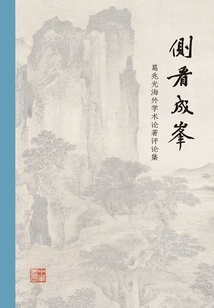
Looking at the Peak from the Side: a Collection of Reviews of Ge Zhaoguang's Overseas Academic Works
History侧看成峰:葛兆光海外学术论著评论集
Ge Zhaoguang
Mr. Ge Zhaoguang is a generalist with broad academic vision and thorough academic vision. While tirelessly conducting research on local academic issues, he always looks overseas. Through extensive cross-domain dialogue, he deeply participates in the most cutting-edge academic debates, seeking new voices and introducing new knowledge, thereby enriching the perspective of observing Chinese issues. "Looking at the Peak from the Side: A Collection of Commentaries on Ge Zhaoguang's Overseas Academic Works" is the embodiment of his long-term efforts and achievements. In this book, Mr. Ge Zhaoguang adheres to the four research perspectives that he has always insisted on "standing on the extension of the study of modern China issues", that is, "shortening of time, expanding space, increasing historical materials, and complex issues", especially from the perspective of "complicated issues" that governs the overall situation. From the compilation of the history of imperial China such as Bu Zhengmin, By Yu Yingshi's new interpretive framework for the intellectual history of the Song Dynasty, he conducted in-depth comments and dialogues on topics such as the modern Japanese Sinologists' investigation of China's periphery and the biologist Locke's in-depth investigation of the Naxi culture in the southwestern frontier, showing a strong sense of pre-current, a clear sense of truth-seeking, and a conscious sense of understanding. This book comprehensively presents Mr. Ge Zhaoguang's observations and thoughts on overseas academic works.
Mr. Ge Zhaoguang is a generalist with broad academic vision and thorough academic vision. While tirelessly conducting research on local academic issues, he always looks overseas. Through extensive cross-domain dialogue, he deeply participates in the most cutting-edge academic debates, seeking new voices and introducing new knowledge, thereby enriching the perspective of observing Chinese issues. "Looking at the Peak from the Side: A Collection of Commentaries on Ge Zhaoguang's Overseas Academic Works" is the embodiment of his long-term efforts and achievements. In this book, Mr. Ge Zhaoguang adheres to the four research perspectives that he has always insisted on "standing on the extension of the study of modern China issues", that is, "shortening of time, expanding space, increasing historical materials, and complex issues", especially from the perspective of "complicated issues" that governs the overall situation. From the compilation of the history of imperial China such as Bu Zhengmin, By Yu Yingshi's new interpretive framework for the intellectual history of the Song Dynasty, he conducted in-depth comments and dialogues on topics such as the modern Japanese Sinologists' investigation of China's periphery and the biologist Locke's in-depth investigation of the Naxi culture in the southwestern frontier, showing a strong sense of pre-current, a clear sense of truth-seeking, and a conscious sense of understanding. This book comprehensively presents Mr. Ge Zhaoguang's observations and thoughts on overseas academic works.
Selected Notes on Tang Poems
Literature唐诗选注
Ge Zhaoguang
"Selected Notes on Tang Poems" contains a total of 280 Tang poems, from 78 families. According to the trajectory of poetic history and the characteristics of poets, representative works are selected for annotation and appreciation. This book integrates criticism and appreciation, clarifying the meaning of words and sentences, supplementing cultural common sense, sorting out the development of literary history, and showing the relationship between poetry inheritance and reference. It is a new reading experience with extremely rich content.
"Selected Notes on Tang Poems" contains a total of 280 Tang poems, from 78 families. According to the trajectory of poetic history and the characteristics of poets, representative works are selected for annotation and appreciation. This book integrates criticism and appreciation, clarifying the meaning of words and sentences, supplementing cultural common sense, sorting out the development of literary history, and showing the relationship between poetry inheritance and reference. It is a new reading experience with extremely rich content.
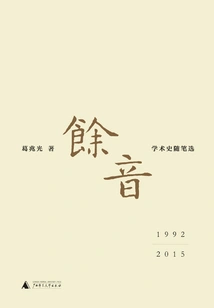
余音:学术史随笔选(1992—2015)
Ge Zhaoguang
The traces of intellectuals over the past century record the academic style and personality of an era before the "remaining sound" fades away. The turbulence of the country and the nation threw all scholars into the huge waves and tore the minds of intellectuals of that era into pieces. In these scholars, we can see the paradox of the times, the changes in trends and the turbulence of ideas. The academic style and personality of an era seem to gradually disappear in the dark fog. Academics and ideas are stimulating each other, knowledge and politics are entangled with each other, and reason and emotion are wrestling with each other. Although it is said that the lingering sound can last for "three days", but what about after "three days"? The lingering sound may become a dead sound and will always drift away. This book contains Professor Ge Zhaoguang's essays in memory of 16 deceased scholars since the late Qing Dynasty and the Republic of China. Some of these people have been integrated into the arteries of history, while others have become forgotten undercurrents. The author reviews their experiences, explores the "changes" and "unchangedness" of their knowledge, thoughts, and beliefs, and captures the subtle struggle and integration between intellectual history and academic history, eras, and individuals.
The traces of intellectuals over the past century record the academic style and personality of an era before the "remaining sound" fades away. The turbulence of the country and the nation threw all scholars into the huge waves and tore the minds of intellectuals of that era into pieces. In these scholars, we can see the paradox of the times, the changes in trends and the turbulence of ideas. The academic style and personality of an era seem to gradually disappear in the dark fog. Academics and ideas are stimulating each other, knowledge and politics are entangled with each other, and reason and emotion are wrestling with each other. Although it is said that the lingering sound can last for "three days", but what about after "three days"? The lingering sound may become a dead sound and will always drift away. This book contains Professor Ge Zhaoguang's essays in memory of 16 deceased scholars since the late Qing Dynasty and the Republic of China. Some of these people have been integrated into the arteries of history, while others have become forgotten undercurrents. The author reviews their experiences, explores the "changes" and "unchangedness" of their knowledge, thoughts, and beliefs, and captures the subtle struggle and integration between intellectual history and academic history, eras, and individuals.
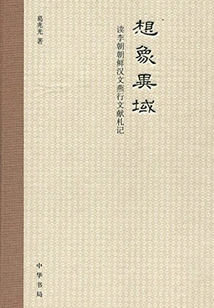
想象异域:读李朝朝鲜汉文燕行文献札记
Ge Zhaoguang
There are many interesting anecdotes and lost history in the Yanxing documents of Chaoshan, many of which are rarely seen in Chinese historical materials. The author was greatly shocked when reading these historical materials, because in the Yanxing documents, for them, "China" was not only a celestial country that was once the source of civilization, but also a place that had become "Huayi metamorphosis" and was full of "smells and odors". In a complicated state of mind, they watched China at close range and recorded various phenomena that they found unusual. Driven by the emotion of imagining the tragedy of a foreign land, Li Daitao stiffly summoned the souls of the Ming Dynasty and searched for all the strange current situations of the Qing Empire. This seems to allow us to re-examine East Asia and China in modern times, re-examine the cultural history of East Asia and China, and rethink issues such as Asia and China, nation and identity, ethnic group and territory, etc.
There are many interesting anecdotes and lost history in the Yanxing documents of Chaoshan, many of which are rarely seen in Chinese historical materials. The author was greatly shocked when reading these historical materials, because in the Yanxing documents, for them, "China" was not only a celestial country that was once the source of civilization, but also a place that had become "Huayi metamorphosis" and was full of "smells and odors". In a complicated state of mind, they watched China at close range and recorded various phenomena that they found unusual. Driven by the emotion of imagining the tragedy of a foreign land, Li Daitao stiffly summoned the souls of the Ming Dynasty and searched for all the strange current situations of the Qing Empire. This seems to allow us to re-examine East Asia and China in modern times, re-examine the cultural history of East Asia and China, and rethink issues such as Asia and China, nation and identity, ethnic group and territory, etc.