Library
Browse and search books
9 novels found
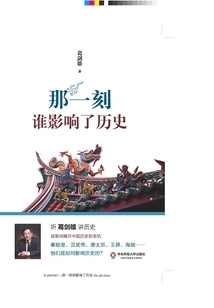
那一刻谁影响了历史
Ge Jianxiong
This book is compiled from the lecture recordings of Professor Ge Jianxiong, a famous historical geographer in my country. The content is from the Spring and Autumn Period to the late Qing Dynasty and selects the most representative figures or events that had an important impact on history. It is divided into Hufu riding and shooting, Luntai crime 15 chapters, including the dispute over temple music, Wang Mang's restructuring, who owns the artifact, the concession of the Han and Wei dynasties, the sinicization of Xianbei, the burning of books in Jiangling, the Xuanwumen Incident, Feng Daochangle, the kings who perished, the book of heaven enshrined Zen, the end of Daojun, the tragedy of Hai Rui, Qianlong's "corruption eradication", etc.
This book is compiled from the lecture recordings of Professor Ge Jianxiong, a famous historical geographer in my country. The content is from the Spring and Autumn Period to the late Qing Dynasty and selects the most representative figures or events that had an important impact on history. It is divided into Hufu riding and shooting, Luntai crime 15 chapters, including the dispute over temple music, Wang Mang's restructuring, who owns the artifact, the concession of the Han and Wei dynasties, the sinicization of Xianbei, the burning of books in Jiangling, the Xuanwumen Incident, Feng Daochangle, the kings who perished, the book of heaven enshrined Zen, the end of Daojun, the tragedy of Hai Rui, Qianlong's "corruption eradication", etc.
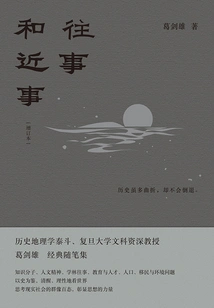
往事和近事(增订本)
Ge Jianxiong
This book is a collection of academic essays by Mr. Ge Jianxiong. The content is mainly divided into five parts: thoughts on China's historical geography, unity and division; notes or reflections on reading history books; memories and remembrances of Gu Jiegang and Tan Qixiang; some opinions on education, talents, intellectuals, and humanistic spirit; and several articles discussing issues such as population, immigration, and the environment. The book's writing is plain, its views are broad, and its critical thinking on the development of culture and civilization is even more thought-provoking.
This book is a collection of academic essays by Mr. Ge Jianxiong. The content is mainly divided into five parts: thoughts on China's historical geography, unity and division; notes or reflections on reading history books; memories and remembrances of Gu Jiegang and Tan Qixiang; some opinions on education, talents, intellectuals, and humanistic spirit; and several articles discussing issues such as population, immigration, and the environment. The book's writing is plain, its views are broad, and its critical thinking on the development of culture and civilization is even more thought-provoking.
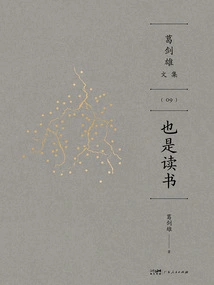
葛剑雄文集9:也是读书
Ge Jianxiong
This book collects more than 70 essays written by Ge Jianxiong, a famous scholar, historical geographer, and professor at Fudan University. The writing spans several decades and includes prefaces, postscripts, introductions, postscripts, and other forms. Read your own books, read other people's books, and read students' books. The content may be a statement of the purpose of your personal work, the process of creation, a review of the work of friends or colleagues, or a message to a student's work. The essence of Professor Ge Jianxiong's academic research and the breadth of his research can be seen. These words have both ideological value and rich connotation. They are full of the joy of reading and reflection on life. They focus on the author's academic and writing research and thinking.
This book collects more than 70 essays written by Ge Jianxiong, a famous scholar, historical geographer, and professor at Fudan University. The writing spans several decades and includes prefaces, postscripts, introductions, postscripts, and other forms. Read your own books, read other people's books, and read students' books. The content may be a statement of the purpose of your personal work, the process of creation, a review of the work of friends or colleagues, or a message to a student's work. The essence of Professor Ge Jianxiong's academic research and the breadth of his research can be seen. These words have both ideological value and rich connotation. They are full of the joy of reading and reflection on life. They focus on the author's academic and writing research and thinking.
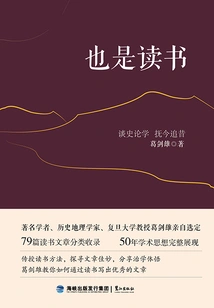
Also Reading
Literature也是读书
Ge Jianxiong
This book collects more than 70 essays written by Ge Jianxiong, a famous scholar, historical geographer, and professor at Fudan University. The writing spans several decades and includes prefaces, postscripts, introductions, postscripts, and other forms. Read your own books, read other people's books, and read students' books. The content may be a statement of the purpose of your personal work, the process of creation, a review of the work of friends or colleagues, or a message to a student's work. The essence of Professor Ge Jianxiong's academic research and the breadth of his research can be seen. These words have both ideological value and rich connotation. They are full of the joy of reading and reflection on life. They focus on the author's academic and writing research and thinking.
This book collects more than 70 essays written by Ge Jianxiong, a famous scholar, historical geographer, and professor at Fudan University. The writing spans several decades and includes prefaces, postscripts, introductions, postscripts, and other forms. Read your own books, read other people's books, and read students' books. The content may be a statement of the purpose of your personal work, the process of creation, a review of the work of friends or colleagues, or a message to a student's work. The essence of Professor Ge Jianxiong's academic research and the breadth of his research can be seen. These words have both ideological value and rich connotation. They are full of the joy of reading and reflection on life. They focus on the author's academic and writing research and thinking.
读万卷书:葛剑雄自选集
Ge Jianxiong
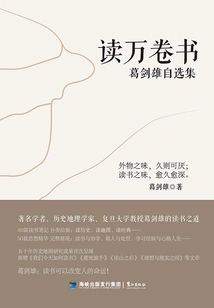
For the famous scholar Ge Jianxiong, books are not only his only way to the academic palace, but also an important source of his profound cultivation and enriched soul. This book contains Professor Ge Jianxiong's essays on reading and scholarship, including a review of his reading career, comments on the works of fellow academics, interpretations of ancient classics, and an introduction to academic research... Readers can not only understand the general introduction to the disciplines of literature and history, but also feel the sincerity and respect of a generation of scholars for academics. Professor Ge Jianxiong talks about reading in a simple and easy-to-understand way, with simplicity, humility and sincerity. He uses his rich experience and experience to translate the joys, sorrows and joys of life into his writings and express them eloquently, giving people infinite enlightenment and subtle guidance.
For the famous scholar Ge Jianxiong, books are not only his only way to the academic palace, but also an important source of his profound cultivation and enriched soul. This book contains Professor Ge Jianxiong's essays on reading and scholarship, including a review of his reading career, comments on the works of fellow academics, interpretations of ancient classics, and an introduction to academic research... Readers can not only understand the general introduction to the disciplines of literature and history, but also feel the sincerity and respect of a generation of scholars for academics. Professor Ge Jianxiong talks about reading in a simple and easy-to-understand way, with simplicity, humility and sincerity. He uses his rich experience and experience to translate the joys, sorrows and joys of life into his writings and express them eloquently, giving people infinite enlightenment and subtle guidance.
中国人口三千年
Ge Jianxiong
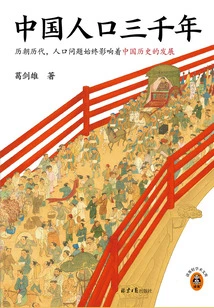
Throughout the past dynasties, population issues have always been the key to China's historical development. Population is not only related to war strength, but also inseparable from food production, finance and taxation, and the number of taxes and servitude. The policy of focusing on agriculture and suppressing business that has been used since the Qin Dynasty may seem pedantic, but in fact it is to ensure the growth of the country's population; the reason why the Tang Dynasty was able to rapidly An important reason for the rapid creation of a prosperous age was the absorption of millions of foreign people; the population of more than 100 million allowed the Southern Song Dynasty to survive in the cracks of Mongolia and Jin for 152 years; the Ming Dynasty's clan population of up to 200,000 ruined the finances and accelerated the demise of the Ming Dynasty. The nomadic peoples are constantly at war with the Central Plains. The fundamental reason is that they must obtain prisoners of war through wars and replenish their population... The history of population is a condensed history of China, and population is a key to the true history. It not only affects China's past, but will also determine its future direction. Open this book and Fudan University professor Ge Jianxiong will take you to look at Chinese history from a population perspective. Throughout the past dynasties, population issues have always been the key to China's historical development. Population is not only related to war strength, but also inseparable from food production, finance and taxation, and the number of taxes and servitude. The policy of focusing on agriculture and suppressing business that has been used since the Qin Dynasty may seem pedantic, but in fact it is to ensure the growth of the country's population; the reason why the Tang Dynasty was able to rapidly An important reason for the rapid creation of a prosperous age was the absorption of millions of foreign people; the population of more than 100 million allowed the Southern Song Dynasty to survive in the cracks of Mongolia and Jin for 152 years; the Ming Dynasty's clan population of up to 200,000 ruined the finances and accelerated the demise of the Ming Dynasty. The nomadic peoples are constantly at war with the Central Plains. The fundamental reason is that they must obtain prisoners of war through wars and replenish their population... The history of population is a condensed history of China, and population is a key to grasping the real history. It not only affects China's past, but will also determine its future direction. Open this book and Fudan University professor Ge Jianxiong will take you to look at Chinese history from a population perspective.
Throughout the past dynasties, population issues have always been the key to China's historical development. Population is not only related to war strength, but also inseparable from food production, finance and taxation, and the number of taxes and servitude. The policy of focusing on agriculture and suppressing business that has been used since the Qin Dynasty may seem pedantic, but in fact it is to ensure the growth of the country's population; the reason why the Tang Dynasty was able to rapidly An important reason for the rapid creation of a prosperous age was the absorption of millions of foreign people; the population of more than 100 million allowed the Southern Song Dynasty to survive in the cracks of Mongolia and Jin for 152 years; the Ming Dynasty's clan population of up to 200,000 ruined the finances and accelerated the demise of the Ming Dynasty. The nomadic peoples are constantly at war with the Central Plains. The fundamental reason is that they must obtain prisoners of war through wars and replenish their population... The history of population is a condensed history of China, and population is a key to the true history. It not only affects China's past, but will also determine its future direction. Open this book and Fudan University professor Ge Jianxiong will take you to look at Chinese history from a population perspective. Throughout the past dynasties, population issues have always been the key to China's historical development. Population is not only related to war strength, but also inseparable from food production, finance and taxation, and the number of taxes and servitude. The policy of focusing on agriculture and suppressing business that has been used since the Qin Dynasty may seem pedantic, but in fact it is to ensure the growth of the country's population; the reason why the Tang Dynasty was able to rapidly An important reason for the rapid creation of a prosperous age was the absorption of millions of foreign people; the population of more than 100 million allowed the Southern Song Dynasty to survive in the cracks of Mongolia and Jin for 152 years; the Ming Dynasty's clan population of up to 200,000 ruined the finances and accelerated the demise of the Ming Dynasty. The nomadic peoples are constantly at war with the Central Plains. The fundamental reason is that they must obtain prisoners of war through wars and replenish their population... The history of population is a condensed history of China, and population is a key to grasping the real history. It not only affects China's past, but will also determine its future direction. Open this book and Fudan University professor Ge Jianxiong will take you to look at Chinese history from a population perspective.
葛剑雄文集8:何以中国
Ge Jianxiong
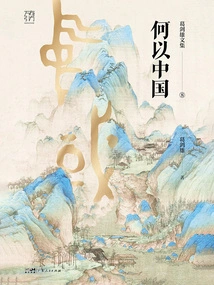
Where did China's long history begin? How did Chinese civilization take root and thrive and endure for a long time? How did the Chinese nation thrive and develop into a big family of fifty-six ethnic groups today? Professor Ge Jianxiong's dozens of new works in recent years, with his profound historical accumulation and unique practical insights, tell the origin and development of Chinese civilization from the oracle bones and bronzes that carry the dawn of civilization, to the Yellow River and Yangtze River that gave birth to countless splendid cultures, to the canals and the Silk Road that influence regional and world exchanges. This is not only a review of history, but also an in-depth discussion of cultural self-confidence, guiding us to rethink the foundation and future of Chinese culture in the complex and ever-changing present.
Where did China's long history begin? How did Chinese civilization take root and thrive and endure for a long time? How did the Chinese nation thrive and develop into a big family of fifty-six ethnic groups today? Professor Ge Jianxiong's dozens of new works in recent years, with his profound historical accumulation and unique practical insights, tell the origin and development of Chinese civilization from the oracle bones and bronzes that carry the dawn of civilization, to the Yellow River and Yangtze River that gave birth to countless splendid cultures, to the canals and the Silk Road that influence regional and world exchanges. This is not only a review of history, but also an in-depth discussion of cultural self-confidence, guiding us to rethink the foundation and future of Chinese culture in the complex and ever-changing present.
小说,小说网,最新热门小说-QQ阅读_阅文集团旗下网站
Ge Jianxiong
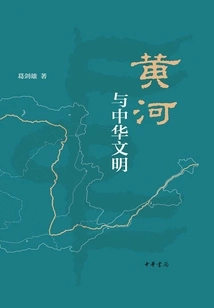
The Yellow River is the mother river of the Chinese nation. Since ancient times, the tranquility of the Yellow River has been the guarantee and symbol of the people's peaceful and contented life and the country's prosperity. So, why is the Yellow River said to be the mother river? What is its relationship with the Chinese nation, how did it give birth to a glorious civilization, how did it form its unique look, and how should it be governed? Ge Jianxiong, a senior professor at Fudan University and a librarian of the Central Museum of Literature and History, wrote the book "The Yellow River and Chinese Civilization" to answer these questions. Professor Ge Jianxiong was the former director of the Institute of Historical Geography at Fudan University and is a first-class expert in the field of historical geography. He studied under Mr. Tan Qixiang and has been paying attention to the field of river culture for many years. The "Introduction" section at the beginning of the book explains the relationship between rivers and human civilization from a high level, providing sufficient evidence for Yellow River management and the importance of the Yellow River from a theoretical perspective. The following eight chapters will first sort out the overall geography of the Yellow River, and then narrate the historical evolution and geographical changes of the Yellow River from various aspects such as how the Yellow River gave birth to Chinese civilization, ancient people's investigation and understanding of the Yellow River, why the Yellow River is turbid and prone to flooding, and how Chinese people have managed the Yellow River since ancient times, showing the close connection between the Yellow River and Chinese civilization. It contains both detailed data and theoretical heights, as well as professional geographical mapping and many magnificent aerial photographs.
The Yellow River is the mother river of the Chinese nation. Since ancient times, the tranquility of the Yellow River has been the guarantee and symbol of the people's peaceful and contented life and the country's prosperity. So, why is the Yellow River said to be the mother river? What is its relationship with the Chinese nation, how did it give birth to a glorious civilization, how did it form its unique look, and how should it be governed? Ge Jianxiong, a senior professor at Fudan University and a librarian of the Central Museum of Literature and History, wrote the book "The Yellow River and Chinese Civilization" to answer these questions. Professor Ge Jianxiong was the former director of the Institute of Historical Geography at Fudan University and is a first-class expert in the field of historical geography. He studied under Mr. Tan Qixiang and has been paying attention to the field of river culture for many years. The "Introduction" section at the beginning of the book explains the relationship between rivers and human civilization from a high level, providing sufficient evidence for Yellow River management and the importance of the Yellow River from a theoretical perspective. The following eight chapters will first sort out the overall geography of the Yellow River, and then narrate the historical evolution and geographical changes of the Yellow River from various aspects such as how the Yellow River gave birth to Chinese civilization, ancient people's investigation and understanding of the Yellow River, why the Yellow River is turbid and prone to flooding, and how Chinese people have managed the Yellow River since ancient times, showing the close connection between the Yellow River and Chinese civilization. It contains both detailed data and theoretical heights, as well as professional geographical mapping and many magnificent aerial photographs.
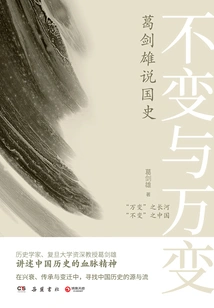
不变与万变:葛剑雄说国史
Ge Jianxiong
The ever-changing river, the "unchanged" China. Ge Jianxiong, a historian and senior professor at Fudan University, talks about the blood and spirit of Chinese history, looking for the origin and flow of Chinese history in the rise and fall, inheritance and changes. If we compare ancient China to a complex and complex collaborative system like the human body, then the land is its skeleton, people are its flesh and blood, and the court and politics are its nerve centers. The long history of China has continued and developed in the process of their mutual influence and integration, and it has become the China we have today.
The ever-changing river, the "unchanged" China. Ge Jianxiong, a historian and senior professor at Fudan University, talks about the blood and spirit of Chinese history, looking for the origin and flow of Chinese history in the rise and fall, inheritance and changes. If we compare ancient China to a complex and complex collaborative system like the human body, then the land is its skeleton, people are its flesh and blood, and the court and politics are its nerve centers. The long history of China has continued and developed in the process of their mutual influence and integration, and it has become the China we have today.