Library
Browse and search books
2 novels found
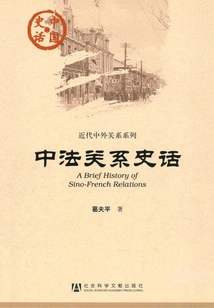
中法关系史话
Ge Fuping
China and France, one in East Asia and the other in Western Europe, are both big countries with splendid cultures. The first contact between China and France took place in the mid-13th century. After that, the two countries began close exchanges in culture and other fields. This friendly relationship lasted until the 19th century. With the development of French capitalism in the 19th century, this beneficial cultural exchange relationship between China and France was replaced by the relationship between aggression and being invaded. From participating in the robbery of the Old Summer Palace and forcing the Qing government to sign the "Beijing Treaty" to coveting the southwest border, to the war between China and France, and then to the Before the Revolution of 1911, and even the outbreak of the Laoxi Kai Incident and the Golden Franc Case, France gradually extended its claws of aggression to China and expanded its rights in China step by step. It was not until the founding of the People's Republic of China in October 1949 that Sino-French relations opened a new page.
China and France, one in East Asia and the other in Western Europe, are both big countries with splendid cultures. The first contact between China and France took place in the mid-13th century. After that, the two countries began close exchanges in culture and other fields. This friendly relationship lasted until the 19th century. With the development of French capitalism in the 19th century, this beneficial cultural exchange relationship between China and France was replaced by the relationship between aggression and being invaded. From participating in the robbery of the Old Summer Palace and forcing the Qing government to sign the "Beijing Treaty" to coveting the southwest border, to the war between China and France, and then to the Before the Revolution of 1911, and even the outbreak of the Laoxi Kai Incident and the Golden Franc Case, France gradually extended its claws of aggression to China and expanded its rights in China step by step. It was not until the founding of the People's Republic of China in October 1949 that Sino-French relations opened a new page.
France and Late Qing China
History法国与晚清中国
Ge Fuping
The Opium War that broke out in 1840 was a watershed in Chinese history. Since then, China has been forcibly incorporated into the capitalist system by Western powers. It has gradually transformed from a feudal society into a semi-colonial and semi-feudal society, and its international status has plummeted. As a major European country, France was one of the Western powers that had relations with China in the late Qing Dynasty. This book fully explores multilingual documents, especially French archives, and truly reproduces France's role and role in the two Opium Wars, the Sino-Japanese Sino-Japanese War, the partition of spheres of influence, the expansion of the French Concession in Shanghai, the Eight-Nation Allied Forces' invasion of China, and the issue of garrisoning and withdrawing troops in Shanghai during the Boxer Rebellion. It examines France's observations and reactions to the political situation in the last decade of the late Qing Dynasty, and conducts an in-depth analysis of France's cooperation and competition with other powers. This book not only reveals the commonalities between France's China policy and the great powers, but also clarifies the personality and reasons of France's China policy. It fully embodies the global history perspective and the research characteristics of the history of international relations. It helps to better understand the complex relationship between the Western powers on the China issue in the 19th century and China's dangerous situation. It also has certain reference significance for us today to better understand the East Asia policies and major power relations of European and American countries and to formulate China's foreign policy.
The Opium War that broke out in 1840 was a watershed in Chinese history. Since then, China has been forcibly incorporated into the capitalist system by Western powers. It has gradually transformed from a feudal society into a semi-colonial and semi-feudal society, and its international status has plummeted. As a major European country, France was one of the Western powers that had relations with China in the late Qing Dynasty. This book fully explores multilingual documents, especially French archives, and truly reproduces France's role and role in the two Opium Wars, the Sino-Japanese Sino-Japanese War, the partition of spheres of influence, the expansion of the French Concession in Shanghai, the Eight-Nation Allied Forces' invasion of China, and the issue of garrisoning and withdrawing troops in Shanghai during the Boxer Rebellion. It examines France's observations and reactions to the political situation in the last decade of the late Qing Dynasty, and conducts an in-depth analysis of France's cooperation and competition with other powers. This book not only reveals the commonalities between France's China policy and the great powers, but also clarifies the personality and reasons of France's China policy. It fully embodies the global history perspective and the research characteristics of the history of international relations. It helps to better understand the complex relationship between the Western powers on the China issue in the 19th century and China's dangerous situation. It also has certain reference significance for us today to better understand the East Asia policies and major power relations of European and American countries and to formulate China's foreign policy.