Library
Browse and search books
13 novels found
如果这是宋史贰:辽宋风云(舒适阅读版)
Gao Tianliuyun
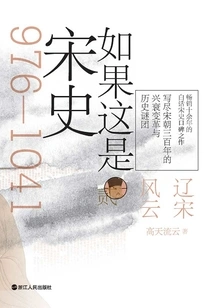
Since the founding of the Northern Song Dynasty, the Liao and Song Dynasties have been in a state of confrontation. The Battle of Gaoliang River was the first head-on confrontation between the main forces of the Liao and Song Dynasties, but it became an important turning point in the fate of the two countries. In this battle, Zhao Guangyi was hit by an arrow and almost lost his life, so he escaped in a panic on a donkey cart. In this battle, the national power accumulated by the Northern Song Dynasty for decades was destroyed. From then on, the Liao Dynasty was strong and the Song Dynasty was weak. In this battle, Brother Yelvxiu recommended himself and became famous in the first battle. After that, he led the Liao army to repeatedly defeat the Song army. After this battle, the Liao Kingdom became a huge empire that dominated the Northern Song Dynasty and dominated the north. In the autumn of 1004, Empress Dowager Xiao and the Liao Shengzong personally led an army southward, with the intention of destroying the Song Dynasty in one fell swoop. Song Zhenzong wanted to flee south to avoid the enemy, but Kou Zhun persuaded him to go to Chanzhou to supervise the war. Unexpectedly, this battle would once again rewrite the fate of the two countries: the Liao army went deep alone and lost its vanguard general. The morale of the army was shaken and it retreated steadily; the Song army's morale was greatly boosted because the emperor personally conquered it and Kou Zhun was in command. Subsequently, the two countries negotiated peace and concluded the famous Chanyuan Alliance. For the next one hundred and twenty years, the Liao and Song Dynasties never met each other at war. The Northern Song Dynasty entered a period of prosperity, and the only prosperous period in the Song Dynasty for 300 years appeared - the Xianping rule. Later, the Tiansheng Dynasty under the regency of Queen Liu E and the popular Renzong Dynasty came one after another.
Since the founding of the Northern Song Dynasty, the Liao and Song Dynasties have been in a state of confrontation. The Battle of Gaoliang River was the first head-on confrontation between the main forces of the Liao and Song Dynasties, but it became an important turning point in the fate of the two countries. In this battle, Zhao Guangyi was hit by an arrow and almost lost his life, so he escaped in a panic on a donkey cart. In this battle, the national power accumulated by the Northern Song Dynasty for decades was destroyed. From then on, the Liao Dynasty was strong and the Song Dynasty was weak. In this battle, Brother Yelvxiu recommended himself and became famous in the first battle. After that, he led the Liao army to repeatedly defeat the Song army. After this battle, the Liao Kingdom became a huge empire that dominated the Northern Song Dynasty and dominated the north. In the autumn of 1004, Empress Dowager Xiao and the Liao Shengzong personally led an army southward, with the intention of destroying the Song Dynasty in one fell swoop. Song Zhenzong wanted to flee south to avoid the enemy, but Kou Zhun persuaded him to go to Chanzhou to supervise the war. Unexpectedly, this battle would once again rewrite the fate of the two countries: the Liao army went deep alone and lost its vanguard general. The morale of the army was shaken and it retreated steadily; the Song army's morale was greatly boosted because the emperor personally conquered it and Kou Zhun was in command. Subsequently, the two countries negotiated peace and concluded the famous Chanyuan Alliance. For the next one hundred and twenty years, the Liao and Song Dynasties never met each other at war. The Northern Song Dynasty entered a period of prosperity, and the only prosperous period in the Song Dynasty for 300 years appeared - the Xianping rule. Later, the Tiansheng Dynasty under the regency of Queen Liu E and the popular Renzong Dynasty came one after another.
如果这是宋史1:太祖开国
Gao Tianliuyun
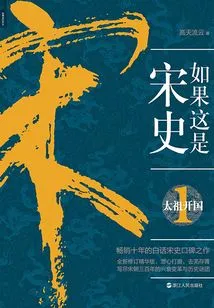
Troubled times are like a kaleidoscope, capable of conjuring up anything unexpected. The warlord Guo Wei ascended to the supreme throne in the world after his family was slaughtered; Chai Rongzhong betrayed his relatives and was on the verge of despair but began his own victorious and magnificent life; Zhao Kuangyin was extremely bored and looked down upon and chose to run away from home without anyone watching. His prospects were good, but a few years later it was his turn to design the blueprint for a new generation of empire... There are too many legends and mysteries in this volume of Song Dynasty history. It is a magnificent epic, and it is also a bizarre cloud of smoke, in which everyone can find their own understanding.
Troubled times are like a kaleidoscope, capable of conjuring up anything unexpected. The warlord Guo Wei ascended to the supreme throne in the world after his family was slaughtered; Chai Rongzhong betrayed his relatives and was on the verge of despair but began his own victorious and magnificent life; Zhao Kuangyin was extremely bored and looked down upon and chose to run away from home without anyone watching. His prospects were good, but a few years later it was his turn to design the blueprint for a new generation of empire... There are too many legends and mysteries in this volume of Song Dynasty history. It is a magnificent epic, and it is also a bizarre cloud of smoke, in which everyone can find their own understanding.
如果这是宋史壹:太祖开国(舒适阅读版)
Gao Tianliuyun
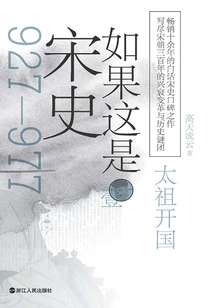
Troubled times are like a kaleidoscope, capable of conjuring up anything unexpected. Zhao Kuangyin was extremely bored and looked down upon and chose to run away from home. No one was optimistic about his prospects. A few years later, it was his turn to design the blueprint for a new generation of empire. Due to a combination of circumstances, as long as the course of history was slightly normal during this period, it would never have been this result. And these also lead to the differences in the new empire. As a soldier, the founding emperor suppressed the army; he had an undefeated record throughout his life, but he set a record of the lowest land expansion speed among all the founding emperors in the past; standing on a fragmented land, he created unprecedented wealth at an astonishing speed! Seventeen years later, standing at the pinnacle of the empire, with glory, prestige, and age at the perfect moment, he suddenly fell, lying alone in the cold Long Live Palace on a snowy night and died... There are too many legends and mysteries in this volume of Song Dynasty history. It is a magnificent epic, and it is also a strange cloud of smoke, in which everyone can find their own understanding.
Troubled times are like a kaleidoscope, capable of conjuring up anything unexpected. Zhao Kuangyin was extremely bored and looked down upon and chose to run away from home. No one was optimistic about his prospects. A few years later, it was his turn to design the blueprint for a new generation of empire. Due to a combination of circumstances, as long as the course of history was slightly normal during this period, it would never have been this result. And these also lead to the differences in the new empire. As a soldier, the founding emperor suppressed the army; he had an undefeated record throughout his life, but he set a record of the lowest land expansion speed among all the founding emperors in the past; standing on a fragmented land, he created unprecedented wealth at an astonishing speed! Seventeen years later, standing at the pinnacle of the empire, with glory, prestige, and age at the perfect moment, he suddenly fell, lying alone in the cold Long Live Palace on a snowy night and died... There are too many legends and mysteries in this volume of Song Dynasty history. It is a magnificent epic, and it is also a strange cloud of smoke, in which everyone can find their own understanding.
如果这是宋史3:变革时代
Gao Tianliuyun
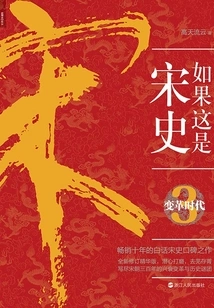
This book tells the story of the mid-Northern Song Dynasty. Although famous ministers such as Yan Shu, Fan Zhongyan, Ouyang Xiu, Bao Zheng, Sima Guang, and Wang Anshi emerged, they faced internal and external troubles and social crises became increasingly serious. In such an environment, the Northern Song Dynasty ushered in an era of change. Renzong appointed Fan Zhongyan and others to implement the New Deal, but because it violated the interests of the aristocracy and bureaucrats, the opposition was huge, and the reform was immediately suspended. Yingzong re-appointed important reformist ministers in an attempt to remedy the long-standing shortcomings, but due to premature death of illness, little was accomplished. Soon after Shenzong ascended the throne, he summoned Wang Anshi to Beijing to implement reforms. Under the attack of the conservative forces, it struggled to maintain the New Deal. After that, the Song army was defeated by Xixia twice, and Shenzong died in depression. Empress Dowager Gao listened to politics behind the curtain, and the new law was abolished. After the death of Empress Dowager Gao, Zhezong took over the government personally, deposed the old party, appointed a new party, and restored the new law. But at this time, the new law has become a butcher knife for party disputes, and the essence of the reform has been completely lost. The era of change that the four generations of emperors of the Zhao family had struggled to support came to an end, and the history of the Northern Song Dynasty would also come to an end.
This book tells the story of the mid-Northern Song Dynasty. Although famous ministers such as Yan Shu, Fan Zhongyan, Ouyang Xiu, Bao Zheng, Sima Guang, and Wang Anshi emerged, they faced internal and external troubles and social crises became increasingly serious. In such an environment, the Northern Song Dynasty ushered in an era of change. Renzong appointed Fan Zhongyan and others to implement the New Deal, but because it violated the interests of the aristocracy and bureaucrats, the opposition was huge, and the reform was immediately suspended. Yingzong re-appointed important reformist ministers in an attempt to remedy the long-standing shortcomings, but due to premature death of illness, little was accomplished. Soon after Shenzong ascended the throne, he summoned Wang Anshi to Beijing to implement reforms. Under the attack of the conservative forces, it struggled to maintain the New Deal. After that, the Song army was defeated by Xixia twice, and Shenzong died in depression. Empress Dowager Gao listened to politics behind the curtain, and the new law was abolished. After the death of Empress Dowager Gao, Zhezong took over the government personally, deposed the old party, appointed a new party, and restored the new law. But at this time, the new law has become a butcher knife for party disputes, and the essence of the reform has been completely lost. The era of change that the four generations of emperors of the Zhao family had struggled to support came to an end, and the history of the Northern Song Dynasty would also come to an end.
如果这是宋史4:南渡北望
Gao Tianliuyun
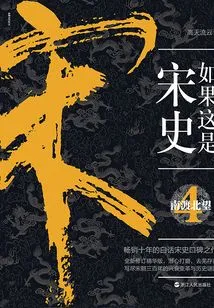
The history of the turn of the two Song Dynasties reproduced in this book is more like a magical suspense drama, full of unexpected and absurd reversals, which sometimes make people rush with blood, sometimes fill them with righteous indignation, but always cannot stop. The wealthy, prosperous, and civilized Northern Song Dynasty was at its peak. It was already the eighth generation of Emperor Huizong. The ruling group was luxurious and corrupt. After four generations of reforms without any results, the building was about to collapse. The emergence of the Six Thieves was a historical necessity. They led the implementation of a series of major erroneous measures that completely emptied the Northern Song Dynasty's national power. At the same time, the Jin Dynasty rose and destroyed the Liao Dynasty. The country was at its peak, which was in sharp contrast to the Northern Song Dynasty. The Jingkang Change was inevitable. Although there were bloody battles with strong generals and troops such as Yue Fei, Han Shizhong, and Wu Jie, and exciting victories such as Huang Tiandang, Xianren Pass, and Zhuxian Town, it seemed that the disadvantages of the Southern Song Dynasty were reversed.
The history of the turn of the two Song Dynasties reproduced in this book is more like a magical suspense drama, full of unexpected and absurd reversals, which sometimes make people rush with blood, sometimes fill them with righteous indignation, but always cannot stop. The wealthy, prosperous, and civilized Northern Song Dynasty was at its peak. It was already the eighth generation of Emperor Huizong. The ruling group was luxurious and corrupt. After four generations of reforms without any results, the building was about to collapse. The emergence of the Six Thieves was a historical necessity. They led the implementation of a series of major erroneous measures that completely emptied the Northern Song Dynasty's national power. At the same time, the Jin Dynasty rose and destroyed the Liao Dynasty. The country was at its peak, which was in sharp contrast to the Northern Song Dynasty. The Jingkang Change was inevitable. Although there were bloody battles with strong generals and troops such as Yue Fei, Han Shizhong, and Wu Jie, and exciting victories such as Huang Tiandang, Xianren Pass, and Zhuxian Town, it seemed that the disadvantages of the Southern Song Dynasty were reversed.
如果这是宋史肆:南渡北望(舒适阅读版)
Gao Tianliuyun
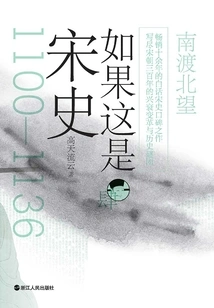
The history between the two Song dynasties is more like a magical suspense drama, full of unexpected and absurd reversals, one after another, making people sometimes passionate and sometimes filled with indignation, but always unable to stop. The wealthy, prosperous, and civilized Northern Song Dynasty was at its peak. It was already the eighth generation of Emperor Huizong. The ruling group was luxurious and corrupt. After four generations of reforms without any results, the building was about to collapse. The emergence of the Six Thieves was a historical necessity. They led the implementation of a series of major erroneous measures that completely emptied the Northern Song Dynasty's national power. At the same time, the Jin Dynasty rose and destroyed the Liao Dynasty. The country was at its peak, which was in sharp contrast to the Northern Song Dynasty. The Jingkang Change was inevitable. Such a contrast in national power also determined the tone of the Southern Emperor Zhao Gou's life - aggrieved and contented. Although there were bloody battles with strong generals and troops such as Yue Fei, Han Shizhong, and Wu Jie, and exciting victories such as Huang Tiandang, Xianren Pass, and Zhuxian Town, it seemed that the disadvantages of the Southern Song Dynasty were reversed.
The history between the two Song dynasties is more like a magical suspense drama, full of unexpected and absurd reversals, one after another, making people sometimes passionate and sometimes filled with indignation, but always unable to stop. The wealthy, prosperous, and civilized Northern Song Dynasty was at its peak. It was already the eighth generation of Emperor Huizong. The ruling group was luxurious and corrupt. After four generations of reforms without any results, the building was about to collapse. The emergence of the Six Thieves was a historical necessity. They led the implementation of a series of major erroneous measures that completely emptied the Northern Song Dynasty's national power. At the same time, the Jin Dynasty rose and destroyed the Liao Dynasty. The country was at its peak, which was in sharp contrast to the Northern Song Dynasty. The Jingkang Change was inevitable. Such a contrast in national power also determined the tone of the Southern Emperor Zhao Gou's life - aggrieved and contented. Although there were bloody battles with strong generals and troops such as Yue Fei, Han Shizhong, and Wu Jie, and exciting victories such as Huang Tiandang, Xianren Pass, and Zhuxian Town, it seemed that the disadvantages of the Southern Song Dynasty were reversed.
如果这是宋史叁:变革时代(舒适阅读版)
Gao Tianliuyun
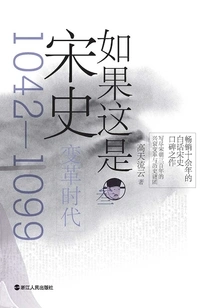
In the middle of the Northern Song Dynasty, although many famous ministers such as Yan Shu, Fan Zhongyan, Ouyang Xiu, Bao Zheng, Sima Guang, and Wang Anshi emerged, they were faced with internal and external troubles and social crises were getting increasingly serious. In such an environment, the Northern Song Dynasty began to seek changes. Renzong appointed Fan Zhongyan and others to implement the New Deal, but because it violated the interests of the aristocracy and bureaucrats, the opposition was huge, and the reform was immediately suspended. Yingzong re-appointed important reformist ministers in an attempt to remedy the long-standing shortcomings, but due to premature death of illness, little was done. Soon after Shenzong ascended the throne, he summoned Wang Anshi to Beijing to implement reforms. Under the attack of the conservative forces, Shenzong swayed left and right and struggled to maintain the New Deal. But after that, the Song army was defeated by Xixia twice, and Shenzong died in depression. Empress Dowager Gao listened to politics behind the curtain, and the new law was abolished. After the death of Empress Dowager Gao, Zhezong took over the government personally, deposed the old party, appointed a new party, and restored the new law. But at this time, the new law has become a butcher knife for party disputes, and the essence of the reform has been completely lost. The era of change that the four generations of emperors of the Zhao family had struggled to support came to an end, and the history of the Northern Song Dynasty would also come to an end.
In the middle of the Northern Song Dynasty, although many famous ministers such as Yan Shu, Fan Zhongyan, Ouyang Xiu, Bao Zheng, Sima Guang, and Wang Anshi emerged, they were faced with internal and external troubles and social crises were getting increasingly serious. In such an environment, the Northern Song Dynasty began to seek changes. Renzong appointed Fan Zhongyan and others to implement the New Deal, but because it violated the interests of the aristocracy and bureaucrats, the opposition was huge, and the reform was immediately suspended. Yingzong re-appointed important reformist ministers in an attempt to remedy the long-standing shortcomings, but due to premature death of illness, little was done. Soon after Shenzong ascended the throne, he summoned Wang Anshi to Beijing to implement reforms. Under the attack of the conservative forces, Shenzong swayed left and right and struggled to maintain the New Deal. But after that, the Song army was defeated by Xixia twice, and Shenzong died in depression. Empress Dowager Gao listened to politics behind the curtain, and the new law was abolished. After the death of Empress Dowager Gao, Zhezong took over the government personally, deposed the old party, appointed a new party, and restored the new law. But at this time, the new law has become a butcher knife for party disputes, and the essence of the reform has been completely lost. The era of change that the four generations of emperors of the Zhao family had struggled to support came to an end, and the history of the Northern Song Dynasty would also come to an end.
如果这是宋史(新版套装全5册)
Gao Tianliuyun
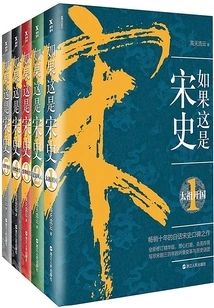
Troubled times are like a kaleidoscope, capable of conjuring up anything unexpected. The warlord Guo Wei ascended to the supreme throne in the world after his family was slaughtered; Chai Rongzhong betrayed his relatives and was on the verge of despair but began his own victorious and magnificent life; Zhao Kuangyin was extremely bored and chose to run away from home. No one was optimistic about his prospects. A few years later, it was his turn to design the blueprint for a new generation of empire. Due to a combination of circumstances, as long as the course of history was slightly normal during this period, it would never have been this result. And these also lead to the differences in the new empire. As a soldier, the founding emperor suppressed the army; he had an undefeated record throughout his life, but he set a record of the lowest land expansion speed among all the founding emperors in the past; standing on a fragmented land, he created unprecedented wealth at an astonishing speed!
Troubled times are like a kaleidoscope, capable of conjuring up anything unexpected. The warlord Guo Wei ascended to the supreme throne in the world after his family was slaughtered; Chai Rongzhong betrayed his relatives and was on the verge of despair but began his own victorious and magnificent life; Zhao Kuangyin was extremely bored and chose to run away from home. No one was optimistic about his prospects. A few years later, it was his turn to design the blueprint for a new generation of empire. Due to a combination of circumstances, as long as the course of history was slightly normal during this period, it would never have been this result. And these also lead to the differences in the new empire. As a soldier, the founding emperor suppressed the army; he had an undefeated record throughout his life, but he set a record of the lowest land expansion speed among all the founding emperors in the past; standing on a fragmented land, he created unprecedented wealth at an astonishing speed!
Death of Yue Fei
History岳飞之死
Gao Tianliuyun
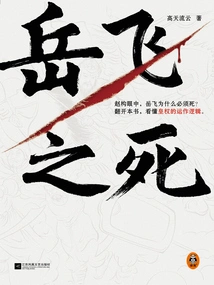
In the seventh year of Shaoxing, Song Gaozong Zhao Gou entrusted Yue Fei with the matter of ZTE. However, just four years later, Yue Fei was suddenly sentenced to death. How did Yue Fei step by step from a trusted general to a serious thorn in his side? The first stage: trust. Faced with the crisis of national subjugation, Yue Fei gradually won the trust of Zhao Gou with his impressive achievements: he regained Jiankang and became a senior general in charge of the local area; he conquered Xianghan and became the youngest festival founder in the Song Dynasty; he suppressed Yang Yao and became the Jiedushi of the two towns in the Jin Dynasty. In the seventh year of Shaoxing, Zhao Gou asked Yue Fei to take over the Huaixi Army, and ordered the generals to "obey Fei's orders and act as if I were personally marching", showing his absolute trust in Yue Fei. The second stage: suspicion. With the end of the crisis of national subjugation, Zhao Gou's attitude towards Yue Fei gradually changed. In the seventh year of Shaoxing, Zhao Gou suddenly refused to hand over the Huaixi Army to Yue Fei for the Northern Expedition, which made Yue Fei resign in anger and went to Lushan without waiting for approval. Zhao Gou was furious about this. The following year, Yue Fei suggested that the emperor establish a prince, which violated the taboo of military commanders not being allowed to interfere in politics, making Zhao Gou secretly suspicious. After that, the more prominent Yue Fei's achievements became and the more he was supported by the army, the less safe Zhao Gou became. The third stage: rupture In April of the eleventh year of Shaoxing, the situation in the Song and Jin Dynasties gradually stabilized. Zhao Gou, who had been planning for a long time, relieved Yue Fei and others from their military power; in July, facing Qin Hui's impeachment, Yue Fei begged the emperor to protect himself, but Zhao Gou ignored him; in September, Yue Fei was falsely accused of treason and thrown into prison; in November, the Jin State made "killing Yue Fei" a condition for peace talks between the two countries. Finally, in the middle of the night on December 29, the eleventh year of Shaoxing, Zhao Gou sentenced Yue Fei to death and set out to destroy all traces of Yue Fei... Open this book and understand the operating logic of imperial power.
In the seventh year of Shaoxing, Song Gaozong Zhao Gou entrusted Yue Fei with the matter of ZTE. However, just four years later, Yue Fei was suddenly sentenced to death. How did Yue Fei step by step from a trusted general to a serious thorn in his side? The first stage: trust. Faced with the crisis of national subjugation, Yue Fei gradually won the trust of Zhao Gou with his impressive achievements: he regained Jiankang and became a senior general in charge of the local area; he conquered Xianghan and became the youngest festival founder in the Song Dynasty; he suppressed Yang Yao and became the Jiedushi of the two towns in the Jin Dynasty. In the seventh year of Shaoxing, Zhao Gou asked Yue Fei to take over the Huaixi Army, and ordered the generals to "obey Fei's orders and act as if I were personally marching", showing his absolute trust in Yue Fei. The second stage: suspicion. With the end of the crisis of national subjugation, Zhao Gou's attitude towards Yue Fei gradually changed. In the seventh year of Shaoxing, Zhao Gou suddenly refused to hand over the Huaixi Army to Yue Fei for the Northern Expedition, which made Yue Fei resign in anger and went to Lushan without waiting for approval. Zhao Gou was furious about this. The following year, Yue Fei suggested that the emperor establish a prince, which violated the taboo of military commanders not being allowed to interfere in politics, making Zhao Gou secretly suspicious. After that, the more prominent Yue Fei's achievements became and the more he was supported by the army, the less safe Zhao Gou became. The third stage: rupture In April of the eleventh year of Shaoxing, the situation in the Song and Jin Dynasties gradually stabilized. Zhao Gou, who had been planning for a long time, relieved Yue Fei and others from their military power; in July, facing Qin Hui's impeachment, Yue Fei begged the emperor to protect himself, but Zhao Gou ignored him; in September, Yue Fei was falsely accused of treason and thrown into prison; in November, the Jin State made "killing Yue Fei" a condition for peace talks between the two countries. Finally, in the middle of the night on December 29, the eleventh year of Shaoxing, Zhao Gou sentenced Yue Fei to death and set out to destroy all traces of Yue Fei... Open this book and understand the operating logic of imperial power.
如果这是宋史5:官宦王朝
Gao Tianliuyun
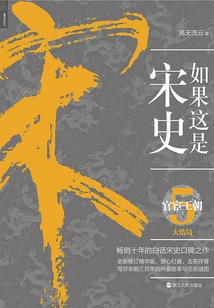
"If This Is Song History 5: The Official Dynasty" tells the history of the Southern Song Dynasty for more than 150 years, and vividly interprets an official dynasty. The foolish and unscrupulous emperors, the important ministers who monopolized power, and the clumsy officials all formed the other side of that era. All of them are swordsmen and Machiavellians, vying to be the first to appear on stage. After the situation in the Southern Song Dynasty stabilized, Qin Hui and others of the Zhuhe faction were reused to sideline Gaozong, and famous generals such as Li Gang and Yue Fei were excluded and framed. Then, the government fell into the hands of Ding Daquan and Jia Sidao one after another, and the country declined rapidly. During the reigns of Du Zong and Gong Zong, the Yuan army marched southward in large numbers and faced a national crisis. However, the government was controlled by Jia Sidao and Chen Yizhong. Eventually, Kaicheng surrendered and Youchu fled. After the Battle of Yashan, the Southern Song Dynasty was overthrown.
"If This Is Song History 5: The Official Dynasty" tells the history of the Southern Song Dynasty for more than 150 years, and vividly interprets an official dynasty. The foolish and unscrupulous emperors, the important ministers who monopolized power, and the clumsy officials all formed the other side of that era. All of them are swordsmen and Machiavellians, vying to be the first to appear on stage. After the situation in the Southern Song Dynasty stabilized, Qin Hui and others of the Zhuhe faction were reused to sideline Gaozong, and famous generals such as Li Gang and Yue Fei were excluded and framed. Then, the government fell into the hands of Ding Daquan and Jia Sidao one after another, and the country declined rapidly. During the reigns of Du Zong and Gong Zong, the Yuan army marched southward in large numbers and faced a national crisis. However, the government was controlled by Jia Sidao and Chen Yizhong. Eventually, Kaicheng surrendered and Youchu fled. After the Battle of Yashan, the Southern Song Dynasty was overthrown.
如果这是宋史伍:官宦王朝(舒适阅读版)
Gao Tianliuyun
During the more than 150 years since the founding of the Southern Song Dynasty, an official dynasty was vividly demonstrated. The foolish and unscrupulous emperors, the important ministers who monopolized power, and the clumsy officials all formed the other side of that era. All of them are swordsmen and Machiavellians, vying to be the first to appear on stage. After the situation in the Southern Song Dynasty stabilized, Qin Hui and others of the Zhuhe faction were reused to sideline Gaozong, and famous generals such as Li Gang and Yue Fei were excluded and framed. Xiaozong had the intention of reviving, but was suppressed by Gaozong for many years. After taking power, he re-employed the main war faction in the Northern Expedition, but was defeated due to the discord between the leaders and generals. He ended up negotiating a peace, calling him his nephew, and ceding territory to pay compensation. Guangzong was weak and sick, and his power fell to the side. Zhao Ruyu and Han Yuzhou secretly took over Ningzong and formed cliques to fight for power. After the fall of the Zhao and Han factions, Shi Miyuan continued to take power and made Lizong not interfere with the government's affairs for ten years after he took the throne. Then, the government fell into the hands of Ding Daquan and Jia Sidao one after another, and the country declined rapidly. During the reigns of Du Zong and Gong Zong, the Yuan army marched southward in large numbers and faced a national crisis. However, the government was controlled by Jia Sidao and Chen Yizhong. Eventually, Kaicheng surrendered and Youchu fled. After the Battle of Yashan, the Southern Song Dynasty was overthrown.
During the more than 150 years since the founding of the Southern Song Dynasty, an official dynasty was vividly demonstrated. The foolish and unscrupulous emperors, the important ministers who monopolized power, and the clumsy officials all formed the other side of that era. All of them are swordsmen and Machiavellians, vying to be the first to appear on stage. After the situation in the Southern Song Dynasty stabilized, Qin Hui and others of the Zhuhe faction were reused to sideline Gaozong, and famous generals such as Li Gang and Yue Fei were excluded and framed. Xiaozong had the intention of reviving, but was suppressed by Gaozong for many years. After taking power, he re-employed the main war faction in the Northern Expedition, but was defeated due to the discord between the leaders and generals. He ended up negotiating a peace, calling him his nephew, and ceding territory to pay compensation. Guangzong was weak and sick, and his power fell to the side. Zhao Ruyu and Han Yuzhou secretly took over Ningzong and formed cliques to fight for power. After the fall of the Zhao and Han factions, Shi Miyuan continued to take power and made Lizong not interfere with the government's affairs for ten years after he took the throne. Then, the government fell into the hands of Ding Daquan and Jia Sidao one after another, and the country declined rapidly. During the reigns of Du Zong and Gong Zong, the Yuan army marched southward in large numbers and faced a national crisis. However, the government was controlled by Jia Sidao and Chen Yizhong. Eventually, Kaicheng surrendered and Youchu fled. After the Battle of Yashan, the Southern Song Dynasty was overthrown.
如果这是宋史套装5册(舒适阅读版)
Gao Tianliuyun
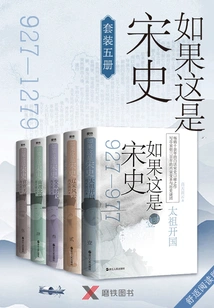
Troubled times are like a kaleidoscope, capable of conjuring up anything unexpected. Since the founding of the Northern Song Dynasty, the Liao and Song Dynasties have been in a state of confrontation. In the middle of the Northern Song Dynasty, although many famous ministers such as Yan Shu, Fan Zhongyan, Ouyang Xiu, Bao Zheng, Sima Guang, and Wang Anshi emerged, they were faced with internal and external troubles and social crises were getting increasingly serious. In such an environment, the Northern Song Dynasty began to seek changes. The history between the two Song dynasties is more like a magical suspense drama, full of unexpected and absurd reversals, one after another, making people sometimes passionate and sometimes filled with indignation, but always unable to stop. During the more than 150 years since the founding of the Southern Song Dynasty, an official dynasty was vividly demonstrated. The foolish and unscrupulous emperors, the important ministers who monopolized power, and the clumsy officials all formed the other side of that era. All of them are swordsmen and Machiavellians, vying to be the first to appear on stage.
Troubled times are like a kaleidoscope, capable of conjuring up anything unexpected. Since the founding of the Northern Song Dynasty, the Liao and Song Dynasties have been in a state of confrontation. In the middle of the Northern Song Dynasty, although many famous ministers such as Yan Shu, Fan Zhongyan, Ouyang Xiu, Bao Zheng, Sima Guang, and Wang Anshi emerged, they were faced with internal and external troubles and social crises were getting increasingly serious. In such an environment, the Northern Song Dynasty began to seek changes. The history between the two Song dynasties is more like a magical suspense drama, full of unexpected and absurd reversals, one after another, making people sometimes passionate and sometimes filled with indignation, but always unable to stop. During the more than 150 years since the founding of the Southern Song Dynasty, an official dynasty was vividly demonstrated. The foolish and unscrupulous emperors, the important ministers who monopolized power, and the clumsy officials all formed the other side of that era. All of them are swordsmen and Machiavellians, vying to be the first to appear on stage.
如果这是宋史(全7册)
Gao Tianliuyun
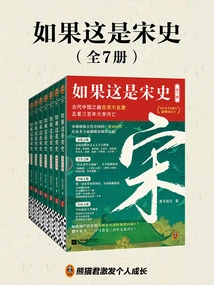
I was furious when I saw it. Why did such a powerful Song Dynasty humiliate itself and sue for peace for three hundred years? This is a vernacular history of the Song Dynasty, which completely describes the history of more than 300 years from the founding of the country by Zhao Kuangyin during the Five Dynasties period to the demise of the Southern Song Dynasty. Focusing on the eighteen emperors of the Song Dynasty, it shows a series of events such as internal fighting in the palace and foreign conquests in the Song Dynasty; it describes in detail the power struggle among the emperors, relatives, and powerful ministers, the policies of the Song Dynasty in the past dynasties, and the details of the wars with Xia, Liao, and Jin. The whole book covers the rise, fall, changes and historical mysteries of the Song Dynasty over three hundred years, and vividly shows the romantic figures of the Song Dynasty.
I was furious when I saw it. Why did such a powerful Song Dynasty humiliate itself and sue for peace for three hundred years? This is a vernacular history of the Song Dynasty, which completely describes the history of more than 300 years from the founding of the country by Zhao Kuangyin during the Five Dynasties period to the demise of the Southern Song Dynasty. Focusing on the eighteen emperors of the Song Dynasty, it shows a series of events such as internal fighting in the palace and foreign conquests in the Song Dynasty; it describes in detail the power struggle among the emperors, relatives, and powerful ministers, the policies of the Song Dynasty in the past dynasties, and the details of the wars with Xia, Liao, and Jin. The whole book covers the rise, fall, changes and historical mysteries of the Song Dynasty over three hundred years, and vividly shows the romantic figures of the Song Dynasty.