Library
Browse and search books
7 novels found
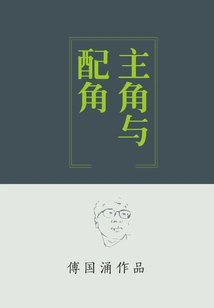
主角与配角
Fu Guoyong
This book examines the typical characters before and after Xinhai with a unique "character awareness". Through many details in front of and behind the scenes, it shows the trajectory of changes in modern China and creates vivid portraits of the characters. The author abandons the traditional view of heroic history of "winners succeed and lose bandits", dig deep into the historical origins of this century-old change, carefully analyze the circumstances and personalities of the heroes of 1911, often resolve disputes in short sentences, and inadvertently reveal the historical truth behind the heavy curtains. Why did Kang You not see Sun Yat-sen until his death? Why didn't Huang Xing replace Sun Yat-sen? In whose hands did Song Jiaoren die? Why didn't Liang Qichao dare to make a revolution? Yuan Shikai who was in a hurry, Cai E who retreated happily, the mystery of Tao Chengzhang's death... People from all walks of life came in droves. The chaos of 1911 is vividly reflected on the page.
This book examines the typical characters before and after Xinhai with a unique "character awareness". Through many details in front of and behind the scenes, it shows the trajectory of changes in modern China and creates vivid portraits of the characters. The author abandons the traditional view of heroic history of "winners succeed and lose bandits", dig deep into the historical origins of this century-old change, carefully analyze the circumstances and personalities of the heroes of 1911, often resolve disputes in short sentences, and inadvertently reveal the historical truth behind the heavy curtains. Why did Kang You not see Sun Yat-sen until his death? Why didn't Huang Xing replace Sun Yat-sen? In whose hands did Song Jiaoren die? Why didn't Liang Qichao dare to make a revolution? Yuan Shikai who was in a hurry, Cai E who retreated happily, the mystery of Tao Chengzhang's death... People from all walks of life came in droves. The chaos of 1911 is vividly reflected on the page.
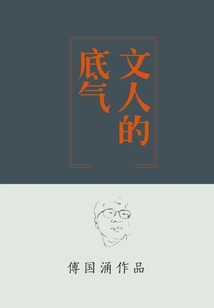
Literary Confidence
History文人的底气
Fu Guoyong
The text included in this book was written by the author intermittently from 1999 to 2004. Some of the text in the book has been published in some newspapers and periodicals, and some of the text is compiled from recordings of the author's speeches. This is the author's longest writing book. Although the text is scattered and provides only sketches, it all revolves around the theme of "A Hundred Years of Chinese Speech History." As the subtitle of this book says, this book, together with "In Search of the Lost Tradition" and "The Waves in the Pen," jointly explore several eras and important figures in the century-old history of Chinese speech. Fu Guoyong diligently combed through the dusty historical materials, revealed many historical truths of modern China, gave readers new inspiration from a new perspective, and achieved the unity of academic and ideological aspects.
The text included in this book was written by the author intermittently from 1999 to 2004. Some of the text in the book has been published in some newspapers and periodicals, and some of the text is compiled from recordings of the author's speeches. This is the author's longest writing book. Although the text is scattered and provides only sketches, it all revolves around the theme of "A Hundred Years of Chinese Speech History." As the subtitle of this book says, this book, together with "In Search of the Lost Tradition" and "The Waves in the Pen," jointly explore several eras and important figures in the century-old history of Chinese speech. Fu Guoyong diligently combed through the dusty historical materials, revealed many historical truths of modern China, gave readers new inspiration from a new perspective, and achieved the unity of academic and ideological aspects.
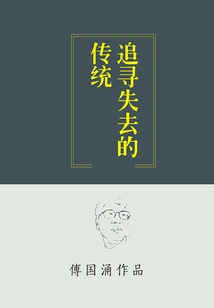
Chasing a Lost Tradition
History追寻失去的传统
Fu Guoyong
This book uses passionate writing to study the fight for freedom of speech by Chinese intellectuals in the first half of the 20th century, the tradition of "literati discussing politics" and the century-old history of speech in China. Freedom of speech is one of the basic standards of a civilized society, a public law in the world, and a symbol of human progress. As early as the beginning of the last century, freedom, democracy, and constitutional government have become the goals pursued tirelessly by Chinese people with lofty ideals. For this ideal, Song Jiaoren, Shao Piaoping, Lin Baishui, Shi Liangcai, Yang Xingfo, etc. Dedicated their precious lives, and Liang Qichao, Zhang Jiluan, Hu Zhengzhi, Cheng Shewo, Chen Mingde, Xu Zhucheng, etc. Dedicated their wisdom, hard work, and lifelong energy. This book is not a general narration of the experiences of historical figures, but a look at the speech space of an era from the experiences of historical figures, and what a literati can do and have done in such a space. This book is about the near and distant, and the scope is thousands of miles.
This book uses passionate writing to study the fight for freedom of speech by Chinese intellectuals in the first half of the 20th century, the tradition of "literati discussing politics" and the century-old history of speech in China. Freedom of speech is one of the basic standards of a civilized society, a public law in the world, and a symbol of human progress. As early as the beginning of the last century, freedom, democracy, and constitutional government have become the goals pursued tirelessly by Chinese people with lofty ideals. For this ideal, Song Jiaoren, Shao Piaoping, Lin Baishui, Shi Liangcai, Yang Xingfo, etc. Dedicated their precious lives, and Liang Qichao, Zhang Jiluan, Hu Zhengzhi, Cheng Shewo, Chen Mingde, Xu Zhucheng, etc. Dedicated their wisdom, hard work, and lifelong energy. This book is not a general narration of the experiences of historical figures, but a look at the speech space of an era from the experiences of historical figures, and what a literati can do and have done in such a space. This book is about the near and distant, and the scope is thousands of miles.
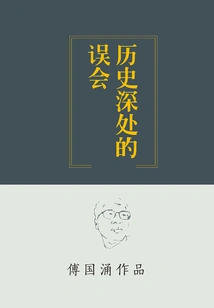
历史深处的误会
Fu Guoyong
This book tells us from the details of modern historical figures: Hong Xiuquan's "Kingdom of Heaven" was not an exploration to save the country in order to make a new name in a foreign country; Kang Youwei did not write a letter on the bus; Yang Du was not as reactionary as others imagined... The author has many unique comments on history, respecting historical data but not adhering to stereotypes. People will be amazed after reading it, and there will be many unexpected gains. In recent years, there has been a consensus in the historical circles: respect history, speak with historical facts, and restore the original appearance of historical events and historical figures.
This book tells us from the details of modern historical figures: Hong Xiuquan's "Kingdom of Heaven" was not an exploration to save the country in order to make a new name in a foreign country; Kang Youwei did not write a letter on the bus; Yang Du was not as reactionary as others imagined... The author has many unique comments on history, respecting historical data but not adhering to stereotypes. People will be amazed after reading it, and there will be many unexpected gains. In recent years, there has been a consensus in the historical circles: respect history, speak with historical facts, and restore the original appearance of historical events and historical figures.
民国商人:1912-1949
Fu Guoyong
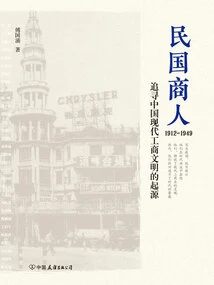
This is a work that traces the history of modern China's industry and commerce and the local tradition of Chinese entrepreneurship. From the perspective of a historical observer and recorder, the author uses plain language and a chronicle writing method to record in detail the emergence, development, glory and decline of China's modern industry and commerce during the historical period from 1912 to 1949. From the perspective of the industrialists as a whole, the author describes their role in that complex period. Situation and destiny, struggle and compromise, innovation and contribution in turbulent times: in just half a century, they created the local tradition of Chinese entrepreneurship, introduced advanced Western scientific management methods, promoted China's modernization process, and created an era of national industrial and commercial prosperity that was almost miraculous! They were no match for the torrent of history and eventually dissipated, but they left us with the most precious spiritual wealth and tradition.
This is a work that traces the history of modern China's industry and commerce and the local tradition of Chinese entrepreneurship. From the perspective of a historical observer and recorder, the author uses plain language and a chronicle writing method to record in detail the emergence, development, glory and decline of China's modern industry and commerce during the historical period from 1912 to 1949. From the perspective of the industrialists as a whole, the author describes their role in that complex period. Situation and destiny, struggle and compromise, innovation and contribution in turbulent times: in just half a century, they created the local tradition of Chinese entrepreneurship, introduced advanced Western scientific management methods, promoted China's modernization process, and created an era of national industrial and commercial prosperity that was almost miraculous! They were no match for the torrent of history and eventually dissipated, but they left us with the most precious spiritual wealth and tradition.
Shi Xianglu
History史想录
Fu Guoyong
"Historical Thoughts" is a collection of a series of speeches by the well-known scholar Fu Guoyong. It explores key issues in the social transformation of modern China: the Revolution of 1911, the May 4th Movement, the intellectual and business class, a century-old history of public opinion and corporate history, etc. It reconstructs the internal historical context of China for a century, vividly presents the rich face of history to us, and is enlightening in understanding the current China in transformation.
"Historical Thoughts" is a collection of a series of speeches by the well-known scholar Fu Guoyong. It explores key issues in the social transformation of modern China: the Revolution of 1911, the May 4th Movement, the intellectual and business class, a century-old history of public opinion and corporate history, etc. It reconstructs the internal historical context of China for a century, vividly presents the rich face of history to us, and is enlightening in understanding the current China in transformation.
寻找中国之美:少年西安行
Fu Guoyong
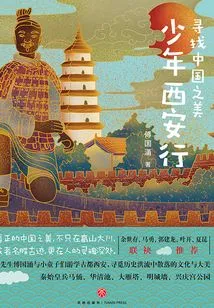
"Searching for the Beauty of China: A Young Man's Journey to Xi'an" is a cultural journey in Xi'an, the ancient capital of the 11th dynasty. Mr. Fu Guoyong led the students to famous scenic spots with profound cultural heritage in Xi'an such as the Terracotta Warriors and Horses, Huaqing Pool, Big Wild Goose Pagoda, Shaanxi History Museum, Xingqing Palace Park, and the Ming City Wall to experience the beauty of history, culture and scenery on the spot. They also had conversations with historical figures such as Qin Shihuang, Li Bai, Du Fu, Du Mu, and Bai Juyi, sharing their little-known experiences and stories behind them, and telling historical and cultural knowledge that cannot be learned in textbooks. From the terracotta warriors and horses with thousands of faces to the Huaqing Pool with lingering regrets, from the ruins of Xingqing Palace echoing the sound of the prosperous Tang Dynasty to the Ming Dynasty city walls that have gone through the vicissitudes of time, Mr. Fu Guoyong and the children visited the ancient capital of Xi'an, looking for the culture and beauty scattered in the torrent of history.
"Searching for the Beauty of China: A Young Man's Journey to Xi'an" is a cultural journey in Xi'an, the ancient capital of the 11th dynasty. Mr. Fu Guoyong led the students to famous scenic spots with profound cultural heritage in Xi'an such as the Terracotta Warriors and Horses, Huaqing Pool, Big Wild Goose Pagoda, Shaanxi History Museum, Xingqing Palace Park, and the Ming City Wall to experience the beauty of history, culture and scenery on the spot. They also had conversations with historical figures such as Qin Shihuang, Li Bai, Du Fu, Du Mu, and Bai Juyi, sharing their little-known experiences and stories behind them, and telling historical and cultural knowledge that cannot be learned in textbooks. From the terracotta warriors and horses with thousands of faces to the Huaqing Pool with lingering regrets, from the ruins of Xingqing Palace echoing the sound of the prosperous Tang Dynasty to the Ming Dynasty city walls that have gone through the vicissitudes of time, Mr. Fu Guoyong and the children visited the ancient capital of Xi'an, looking for the culture and beauty scattered in the torrent of history.