Library
Browse and search books
8 novels found
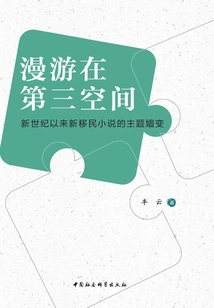
漫游在第三空间:新世纪以来新移民小说的主题嬗变
Fengyun
This book attempts to interpret from the perspective of transnationalism the evolution of themes and characters in Chinese new immigrant novels since the new century, and analyzes the connection between this change and the changes in the living conditions of new immigrants. Since the new century, with the acceleration of China's reform and opening up process, Chinese immigrants have become more and more deeply involved in the economic and cultural development and changes of their home countries by returning to settle down, starting businesses, and participating in economic, trade and cultural exchanges with their home countries, and have become out-and-out "transnational Chinese" in terms of living conditions. From the perspective of cultural identity, transnational Chinese are not only an important carrier of Chinese culture overseas, but also the constructors of the third culture formed based on the integration and innovation of Eastern and Western cultures. Transnational Chinese have achieved simultaneous embedding in two different societies through continuous cross-border activities as the dominant way of their lives and careers. The living conditions of the "transnational Chinese" group are reflected in the creation of new immigrant novels. This book presents the path and trend of the development of new immigrant novels since the new century through the evolution of new immigrant novels in themes such as return, hometown narrative, historical narrative, grassroots writing, and ecological writing, as well as their shaping of transnational Chinese images.
This book attempts to interpret from the perspective of transnationalism the evolution of themes and characters in Chinese new immigrant novels since the new century, and analyzes the connection between this change and the changes in the living conditions of new immigrants. Since the new century, with the acceleration of China's reform and opening up process, Chinese immigrants have become more and more deeply involved in the economic and cultural development and changes of their home countries by returning to settle down, starting businesses, and participating in economic, trade and cultural exchanges with their home countries, and have become out-and-out "transnational Chinese" in terms of living conditions. From the perspective of cultural identity, transnational Chinese are not only an important carrier of Chinese culture overseas, but also the constructors of the third culture formed based on the integration and innovation of Eastern and Western cultures. Transnational Chinese have achieved simultaneous embedding in two different societies through continuous cross-border activities as the dominant way of their lives and careers. The living conditions of the "transnational Chinese" group are reflected in the creation of new immigrant novels. This book presents the path and trend of the development of new immigrant novels since the new century through the evolution of new immigrant novels in themes such as return, hometown narrative, historical narrative, grassroots writing, and ecological writing, as well as their shaping of transnational Chinese images.
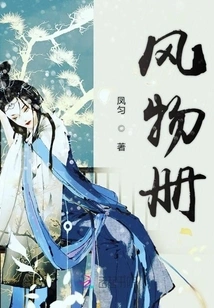
Scenery Album
Fantasy Romance风物册
Fengyun
A mysterious young man, unknown stories, and rare treasures gradually dissipate as the book is opened. When a conspiracy comes to light, who is really paying the price? Who has been waiting? Everything is in the "Book of Scenery", waiting for you to explore...
A mysterious young man, unknown stories, and rare treasures gradually dissipate as the book is opened. When a conspiracy comes to light, who is really paying the price? Who has been waiting? Everything is in the "Book of Scenery", waiting for you to explore...
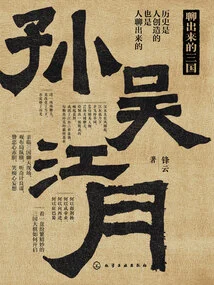
新史纪丛书·聊出来的三国:孙吴江月
Fengyun
This is a historical fact that changed the history of the Three Kingdoms in the late Han Dynasty through chatting. In Chinese history before the Three Kingdoms, the confrontation between the East and the West was overwhelmingly superior to the confrontation between the North and the South - whether it was Zhou's destruction of Shang or Qin's destruction of the Six Kingdoms; whether it was the peasant uprising at the end of the Qin Dynasty or the subsequent struggle between Chu and Han for hegemony... Almost all battles were expressed in the form of a confrontation between East and West. However, when the river of history turned to Chibiji, everything changed. From then on, Jiangdong was no longer a corner of Yangzhou's rule, but became a refuge for the Central Plains regime or separatist forces, and the Yangtze River was their moat. How did this all change? One chat after another gave the answer. From Zhang Hong's "Jingyang Policy" to Lu Su's "Couch Policy", from Gan Ning's "Western Advance Policy" to Zhou Yu's "Ba-Shu Policy", if Zhuge Liang's "Longzhong Pair" aims to achieve one-third of the world, what the above chats want to achieve is at least one-third of the world. So, why did the world end up being divided into three parts? Let's listen to what Jiangdong's Sun family talked about with the counselors and generals!
This is a historical fact that changed the history of the Three Kingdoms in the late Han Dynasty through chatting. In Chinese history before the Three Kingdoms, the confrontation between the East and the West was overwhelmingly superior to the confrontation between the North and the South - whether it was Zhou's destruction of Shang or Qin's destruction of the Six Kingdoms; whether it was the peasant uprising at the end of the Qin Dynasty or the subsequent struggle between Chu and Han for hegemony... Almost all battles were expressed in the form of a confrontation between East and West. However, when the river of history turned to Chibiji, everything changed. From then on, Jiangdong was no longer a corner of Yangzhou's rule, but became a refuge for the Central Plains regime or separatist forces, and the Yangtze River was their moat. How did this all change? One chat after another gave the answer. From Zhang Hong's "Jingyang Policy" to Lu Su's "Couch Policy", from Gan Ning's "Western Advance Policy" to Zhou Yu's "Ba-Shu Policy", if Zhuge Liang's "Longzhong Pair" aims to achieve one-third of the world, what the above chats want to achieve is at least one-third of the world. So, why did the world end up being divided into three parts? Let's listen to what Jiangdong's Sun family talked about with the counselors and generals!
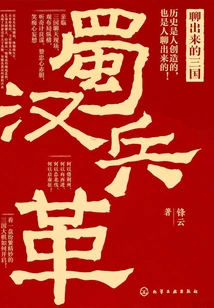
The Three Kingdoms Out of Chat: the Military Revolution of Shu-han (new Historical Records Series)
History聊出来的三国:蜀汉兵革(新史纪丛书)
Fengyun
This is a historical fact that changed the history of the Three Kingdoms in the late Han Dynasty through chatting. Through the detailed description and in-depth analysis of each chat, this book gives a panoramic view of the tortuous entrepreneurial period of Liu Bei and his followers from Youzhou to Xuzhou, and from Jingzhou to Yizhou; the difficult period of maintaining their career after the victory in Chibi and the loss of Jingzhou, the tragic defeat of Yiling, the Northern Expedition and the Southern Expedition; and the helpless failure period of the Shu Han regime's defeat in Hanzhong and the surrender of Chengdu. Liu Bei, who was "indifferent to emotions and anger", did not leave many chat records, but almost every chat was of great significance and meant that some changes had occurred. Why did a conversation with Taishi Ci awaken Pingyuan Xiang at that time? While drinking green plum wine, why did Uncle Liu become so panicked? "Longzhong Pair" is well-known, but why is it fatal? Liu Qi asked Zhuge Liang for advice, what would he do if he went upstairs and took out the stairs? Why did Sun Quan nod in agreement with Lu Su's innovative proposal of "borrowing Jingzhou"? Considering the contradiction between Yizhou and trustworthiness, how did Liu Bei find a solution from Pang Tong's "contingency" theory? What kind of twist is hidden in Bai Di Tuogu? What exquisite designs are buried in "Chu Shi Biao"? Why did Zhuge Liang evaluate Wei Yan's plan to launch a surprise attack on Chang'an from Ziwu Valley as "dangerous"? Why did General Jiang Wei dare not express his anger after a conversation with the empress, and has been stationed in Tashang since then? What kind of secrets does Liu Chan, the king of the subjugated country, hide in Shu? In this complicated history, each chat has profound meaning and far-reaching influence, but what exactly have changed in these chats, and how have they contributed to the change intentionally or unintentionally? The author analyzes it piece by piece, one by one.
This is a historical fact that changed the history of the Three Kingdoms in the late Han Dynasty through chatting. Through the detailed description and in-depth analysis of each chat, this book gives a panoramic view of the tortuous entrepreneurial period of Liu Bei and his followers from Youzhou to Xuzhou, and from Jingzhou to Yizhou; the difficult period of maintaining their career after the victory in Chibi and the loss of Jingzhou, the tragic defeat of Yiling, the Northern Expedition and the Southern Expedition; and the helpless failure period of the Shu Han regime's defeat in Hanzhong and the surrender of Chengdu. Liu Bei, who was "indifferent to emotions and anger", did not leave many chat records, but almost every chat was of great significance and meant that some changes had occurred. Why did a conversation with Taishi Ci awaken Pingyuan Xiang at that time? While drinking green plum wine, why did Uncle Liu become so panicked? "Longzhong Pair" is well-known, but why is it fatal? Liu Qi asked Zhuge Liang for advice, what would he do if he went upstairs and took out the stairs? Why did Sun Quan nod in agreement with Lu Su's innovative proposal of "borrowing Jingzhou"? Considering the contradiction between Yizhou and trustworthiness, how did Liu Bei find a solution from Pang Tong's "contingency" theory? What kind of twist is hidden in Bai Di Tuogu? What exquisite designs are buried in "Chu Shi Biao"? Why did Zhuge Liang evaluate Wei Yan's plan to launch a surprise attack on Chang'an from Ziwu Valley as "dangerous"? Why did General Jiang Wei dare not express his anger after a conversation with the empress, and has been stationed in Tashang since then? What kind of secrets does Liu Chan, the king of the subjugated country, hide in Shu? In this complicated history, each chat has profound meaning and far-reaching influence, but what exactly have changed in these chats, and how have they contributed to the change intentionally or unintentionally? The author analyzes it piece by piece, one by one.
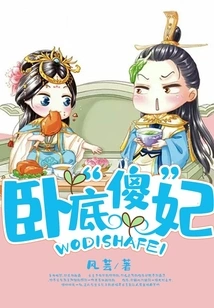
Undercover "silly" Concubine
Ancient Romance卧底“傻”妃
Fengyun
He was the one who saved her, and he was the one who wanted to kill her. His conscience that had not yet been extinguished prevented him from doing it in the end, but it made the two of them hate each other even more deeply. From then on, they tortured each other and took advantage of each other until they died... Why did the only person he regarded as a confidant in this world also lie to him and harm him? Why did he still not believe her even though she was willing to betray her master for him? When all the turmoil comes to an end, will he and her live together forever or will they live and die together?
He was the one who saved her, and he was the one who wanted to kill her. His conscience that had not yet been extinguished prevented him from doing it in the end, but it made the two of them hate each other even more deeply. From then on, they tortured each other and took advantage of each other until they died... Why did the only person he regarded as a confidant in this world also lie to him and harm him? Why did he still not believe her even though she was willing to betray her master for him? When all the turmoil comes to an end, will he and her live together forever or will they live and die together?
Jinyuyuan
Ancient Romance锦玉缘
Fengyun
A girl who has lost her mother's love and strives for self-improvement. When she is about to enter the society, God makes a joke for her and throws it into a dynasty that has no history. When she comes to this place, she has a mother and a great father. She should be happy in the first place, but God makes a trick and her mother leaves. She has to continue living. She has to plan for herself no matter what. She is forced to look for her biological father alone. She meets someone who admires her on the way, but she doesn't take it seriously and just wants to go her own way...
A girl who has lost her mother's love and strives for self-improvement. When she is about to enter the society, God makes a joke for her and throws it into a dynasty that has no history. When she comes to this place, she has a mother and a great father. She should be happy in the first place, but God makes a trick and her mother leaves. She has to continue living. She has to plan for herself no matter what. She is forced to look for her biological father alone. She meets someone who admires her on the way, but she doesn't take it seriously and just wants to go her own way...
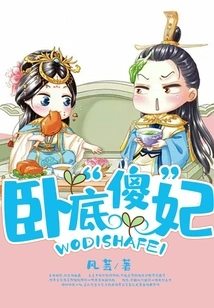
Undercover "silly" Concubine
Ancient Romance卧底“傻”妃
Fengyun
He was the one who saved her, and he was the one who wanted to kill her. His conscience that had not yet been extinguished prevented him from doing it in the end, but it made the two of them hate each other even more deeply. From then on, they tortured each other and took advantage of each other until they died... Why did the only person he regarded as a confidant in this world also lie to him and harm him? Why did he still not believe her even though she was willing to betray her master for him? When all the turmoil comes to an end, will he and her live together forever or will they live and die together?
He was the one who saved her, and he was the one who wanted to kill her. His conscience that had not yet been extinguished prevented him from doing it in the end, but it made the two of them hate each other even more deeply. From then on, they tortured each other and took advantage of each other until they died... Why did the only person he regarded as a confidant in this world also lie to him and harm him? Why did he still not believe her even though she was willing to betray her master for him? When all the turmoil comes to an end, will he and her live together forever or will they live and die together?
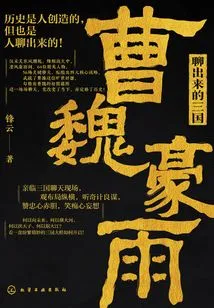
聊出来的三国:曹魏豪雨
Fengyun
This is a historical fact that changed the history of the Three Kingdoms in the late Han Dynasty through chatting. Through detailed descriptions and in-depth analysis of each chat, this book gives a panoramic view of how Cao Cao changed from a capable minister to a hero, and from a hero to a traitor, as well as how Cao Wei rose and fell. The sentence "A capable minister in times of trouble is a traitor in troubled times" fixed the fate of Cao Cao's life; the sentence "Let the world's intelligence be used to control it" clarified Cao Cao's entrepreneurial route; the sentence "Guard the south of the river and wait for it to change" established the foundation of Cao Cao's life. The foundation of Cao Wei's career; the sentence "Serving the emperor with orders but not serving as ministers" recreated the lonely emperor Han Xiandi; the sentence "today's heroes are only envoys and cao'er" revealed Cao Cao's deep-seated knot; the sentence "it is appropriate to repair the five levels of ancient feudalism" made Cao Cao Cao Cao found a way to break out of his shell; the sentence "Dunhuang offers a large diameter pearl, but it can be returned to the market for profit", exposed Cao Pi's endless greed; the sentence "it is appropriate to call Sima Yi and Xiang Shen" caused Cao Wei to fall into an irreversible disaster... Cao Wei The rise and fall of the company are closely related to these conversations - the entrepreneurial direction is discussed, the talent team is also discussed, military decision-making is discussed, the change of dynasties is even more discussed, and the power is changed through chatting. During the chat, Cao Cao showed his true face, Xun Yu showed his true character, Guo Jia showed his true ability, and Cao Pi showed his true temperament. So, in this complicated history, what did these crucial chats change, and how did they contribute to the change intentionally or unintentionally? The author analyzes it piece by piece, one by one.
This is a historical fact that changed the history of the Three Kingdoms in the late Han Dynasty through chatting. Through detailed descriptions and in-depth analysis of each chat, this book gives a panoramic view of how Cao Cao changed from a capable minister to a hero, and from a hero to a traitor, as well as how Cao Wei rose and fell. The sentence "A capable minister in times of trouble is a traitor in troubled times" fixed the fate of Cao Cao's life; the sentence "Let the world's intelligence be used to control it" clarified Cao Cao's entrepreneurial route; the sentence "Guard the south of the river and wait for it to change" established the foundation of Cao Cao's life. The foundation of Cao Wei's career; the sentence "Serving the emperor with orders but not serving as ministers" recreated the lonely emperor Han Xiandi; the sentence "today's heroes are only envoys and cao'er" revealed Cao Cao's deep-seated knot; the sentence "it is appropriate to repair the five levels of ancient feudalism" made Cao Cao Cao Cao found a way to break out of his shell; the sentence "Dunhuang offers a large diameter pearl, but it can be returned to the market for profit", exposed Cao Pi's endless greed; the sentence "it is appropriate to call Sima Yi and Xiang Shen" caused Cao Wei to fall into an irreversible disaster... Cao Wei The rise and fall of the company are closely related to these conversations - the entrepreneurial direction is discussed, the talent team is also discussed, military decision-making is discussed, the change of dynasties is even more discussed, and the power is changed through chatting. During the chat, Cao Cao showed his true face, Xun Yu showed his true character, Guo Jia showed his true ability, and Cao Pi showed his true temperament. So, in this complicated history, what did these crucial chats change, and how did they contribute to the change intentionally or unintentionally? The author analyzes it piece by piece, one by one.