Library
Browse and search books
5 novels found
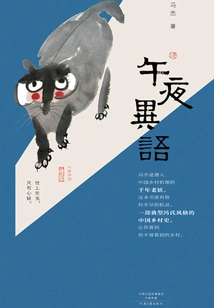
Midnight Language
Literature午夜异语
Feng Jie
This is a unique collection of prose, with rich texts and illustrations, all written by Feng Jie. Some experts call it "the most bizarre new type of fuzzy prose book". The author writes freely, and his imagination can reach far beyond the sky, but is always rooted in the land of the Central Plains, showing the mottled world of the times and salvaging the interest of rural life. There is history hidden in his hometown, and fairy tales embedded in his culture. Feng Jie reproduces the charm of Chinese characters with his superb paper skills, and even the period is an atmosphere. What Feng Jie writes about is the countryside we have lived in and the countryside we have never seen. This is Feng Jie's narrative charm.
This is a unique collection of prose, with rich texts and illustrations, all written by Feng Jie. Some experts call it "the most bizarre new type of fuzzy prose book". The author writes freely, and his imagination can reach far beyond the sky, but is always rooted in the land of the Central Plains, showing the mottled world of the times and salvaging the interest of rural life. There is history hidden in his hometown, and fairy tales embedded in his culture. Feng Jie reproduces the charm of Chinese characters with his superb paper skills, and even the period is an atmosphere. What Feng Jie writes about is the countryside we have lived in and the countryside we have never seen. This is Feng Jie's narrative charm.
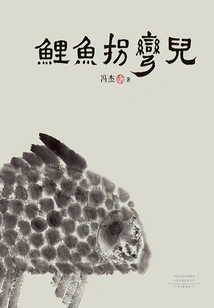
Carp Turn Around
Literature鲤鱼拐弯儿
Feng Jie
From the North Central Plains to both sides of the Yellow River. In this literary geographical space constructed by the writer Feng Jie with words, with the themes of "customs", "world conditions" and "region", all the people, plants, animals, utensils and things that live on both sides of the Yellow River are collected, and in the writer's vivid description In it, the flowing river, the murmuring of local accents, the whirling of grass and trees, the exchange of human relationships, the changing of festivals and customs, the mixture of sorrow and joy, highlight the customs and the diverse aspects of the Central Plains culture in daily life, and are filled with lingering affection and nostalgia. From it, we seem to see a Yellow River child who is both elegant and vulgar, solemn and humorous, and true and interesting in the complicated world.
From the North Central Plains to both sides of the Yellow River. In this literary geographical space constructed by the writer Feng Jie with words, with the themes of "customs", "world conditions" and "region", all the people, plants, animals, utensils and things that live on both sides of the Yellow River are collected, and in the writer's vivid description In it, the flowing river, the murmuring of local accents, the whirling of grass and trees, the exchange of human relationships, the changing of festivals and customs, the mixture of sorrow and joy, highlight the customs and the diverse aspects of the Central Plains culture in daily life, and are filled with lingering affection and nostalgia. From it, we seem to see a Yellow River child who is both elegant and vulgar, solemn and humorous, and true and interesting in the complicated world.
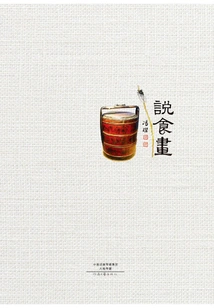
Talking About Food Painting
Literature说食画
Feng Jie
This is a book about eating, but it is not a pure eating book, nor is it a practical recipe. It is an alternative collection of prose with a unique style and unique structure, which belongs to the poet Feng Jie's "eating alone". There are no luxurious state banquets, but ordinary folk meals.
This is a book about eating, but it is not a pure eating book, nor is it a practical recipe. It is an alternative collection of prose with a unique style and unique structure, which belongs to the poet Feng Jie's "eating alone". There are no luxurious state banquets, but ordinary folk meals.
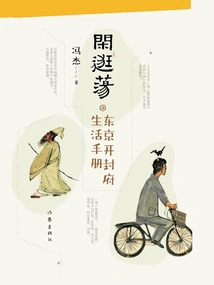
闲逛荡:东京开封府生活手册
Feng Jie
"Walking Around: A Handbook of Life in Kaifeng Mansion, Tokyo" begins with a nonsensical interpretation of "Along the River During the Qingming Festival". Feng Jie, a geek from the Central Plains, calculated carefully, responded to each other, opened up time, and traced the world. There is unexpected humor, unreasonable emotions, bizarre expressions, teasing with a hint of Zen, abruptness and far-fetchedness, unjust words, ridicule that does not harm others but only benefits oneself, and helplessness and compromise with life. It is not all good, but there is partial happiness. Although there is a lot of nonsense, there is occasional wisdom. Open this book, and the imaginative text and pictures will lead you into the fireworks world of the Song Dynasty. The ringing of bells and hooves of camels and donkeys is heard slowly, the shouts of traders and foot soldiers come one after another, the delicious smell of food in the shops along the street is steaming, and the fragrance of women's powder in the Song Dynasty floats. During the tour, the humorous pictures and texts take you back and forth in different time and space. The various scenes of the city, the warmth and warmth of the people, and the folk customs are different from each other but reflect each other's past and present.
"Walking Around: A Handbook of Life in Kaifeng Mansion, Tokyo" begins with a nonsensical interpretation of "Along the River During the Qingming Festival". Feng Jie, a geek from the Central Plains, calculated carefully, responded to each other, opened up time, and traced the world. There is unexpected humor, unreasonable emotions, bizarre expressions, teasing with a hint of Zen, abruptness and far-fetchedness, unjust words, ridicule that does not harm others but only benefits oneself, and helplessness and compromise with life. It is not all good, but there is partial happiness. Although there is a lot of nonsense, there is occasional wisdom. Open this book, and the imaginative text and pictures will lead you into the fireworks world of the Song Dynasty. The ringing of bells and hooves of camels and donkeys is heard slowly, the shouts of traders and foot soldiers come one after another, the delicious smell of food in the shops along the street is steaming, and the fragrance of women's powder in the Song Dynasty floats. During the tour, the humorous pictures and texts take you back and forth in different time and space. The various scenes of the city, the warmth and warmth of the people, and the folk customs are different from each other but reflect each other's past and present.
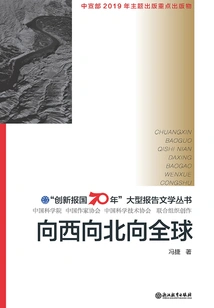
向西向北向全球(“创新报国70年”大型报告文学丛书)
Feng Jie
Over the past 2.6 Million years, the climate has been warm and dry, the grassland vegetation has evolved alternately, and the migration of human ancestors; for thousands of years, the fire of Chinese civilization has been passed down from generation to generation, the prosperity of the Chinese nation, and the changes in China and the world: all can be found in the "Book of Heaven" of loess. An Zhisheng and his team hold the "key" to understand the formation mechanism, growth and changes of loess, and then study the changes and evolution of the earth's environment. This book records the moving story of An Zhisheng and his team based on the Loess Plateau, using the monsoon dynamics theory to tightly "pin" the scale of time, and in turn using the loess sequence to record the changes in the monsoon, the changes in the arid areas of the west, the uplift of the Tibetan Plateau and the changes in the global environment.
Over the past 2.6 Million years, the climate has been warm and dry, the grassland vegetation has evolved alternately, and the migration of human ancestors; for thousands of years, the fire of Chinese civilization has been passed down from generation to generation, the prosperity of the Chinese nation, and the changes in China and the world: all can be found in the "Book of Heaven" of loess. An Zhisheng and his team hold the "key" to understand the formation mechanism, growth and changes of loess, and then study the changes and evolution of the earth's environment. This book records the moving story of An Zhisheng and his team based on the Loess Plateau, using the monsoon dynamics theory to tightly "pin" the scale of time, and in turn using the loess sequence to record the changes in the monsoon, the changes in the arid areas of the west, the uplift of the Tibetan Plateau and the changes in the global environment.