Library
Browse and search books
11 novels found
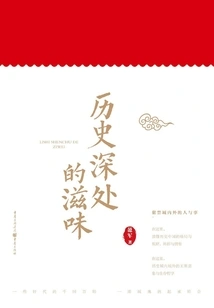
A Taste of History
History历史深处的滋味
Fan Jun
This is a collection of historical essays and a popular historical book. With the Forbidden City as the center, the book tells some political history, culture and systems, people and events during the Ming and Qing Dynasties, discusses the rise and fall of history, analyzes the gains and losses of the government, explores the evolution and development trend of the current situation, and studies the possibilities and limitations.
This is a collection of historical essays and a popular historical book. With the Forbidden City as the center, the book tells some political history, culture and systems, people and events during the Ming and Qing Dynasties, discusses the rise and fall of history, analyzes the gains and losses of the government, explores the evolution and development trend of the current situation, and studies the possibilities and limitations.
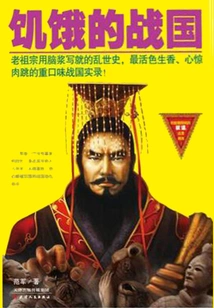
Hungry Warring States Period
History饥饿的战国
Fan Jun
The Warring States Period was a special era. It inherited the turbulent times of the Spring and Autumn Period, started with Emperor Qin, and continued the cultural trend of a hundred schools of thought contending. It cannot even be called a dynasty, but it has become a strange microcosm of Chinese history. The Warring States Period is chaotic, but the Warring States Period is very interesting. Its beauty lies precisely in its remoteness and chaos. Our vigorous ancestors who have not been enlightened by Confucianism wrote this vivid and thrilling history with their brains and blood.
The Warring States Period was a special era. It inherited the turbulent times of the Spring and Autumn Period, started with Emperor Qin, and continued the cultural trend of a hundred schools of thought contending. It cannot even be called a dynasty, but it has become a strange microcosm of Chinese history. The Warring States Period is chaotic, but the Warring States Period is very interesting. Its beauty lies precisely in its remoteness and chaos. Our vigorous ancestors who have not been enlightened by Confucianism wrote this vivid and thrilling history with their brains and blood.
Ming Dynasty: the End of the Curtain
General Fiction明朝:谢幕之门
Fan Jun
If we return to the Ming Dynasty, how should we find the crisis roadmap for this dynasty? In other words, since when did the end of the Ming Dynasty quietly close? Perhaps we can start from the Wanli Year. What happened during the Wanli Year is really difficult to describe in one sentence. When Matteo Ricci, an observer of the national conditions of the late Ming Dynasty, came from Nanjing to Beijing along the Grand Canal, he sincerely marveled at the outward beauty and nobility of a dynasty. But Matteo Ricci would never have imagined that in the Forbidden City, a man named Zhang Juzheng was panting and carrying out reforms to turn the tide. This reform was so thrilling that in the end he became the victim of the grudges between two men, Zhang Juzheng and Emperor Wanli. The reform failed, the reformers suffered a reckoning, and vigorous palace battles continued for decades, until Emperor Wanli threatened a long strike - he would no longer go to court.
If we return to the Ming Dynasty, how should we find the crisis roadmap for this dynasty? In other words, since when did the end of the Ming Dynasty quietly close? Perhaps we can start from the Wanli Year. What happened during the Wanli Year is really difficult to describe in one sentence. When Matteo Ricci, an observer of the national conditions of the late Ming Dynasty, came from Nanjing to Beijing along the Grand Canal, he sincerely marveled at the outward beauty and nobility of a dynasty. But Matteo Ricci would never have imagined that in the Forbidden City, a man named Zhang Juzheng was panting and carrying out reforms to turn the tide. This reform was so thrilling that in the end he became the victim of the grudges between two men, Zhang Juzheng and Emperor Wanli. The reform failed, the reformers suffered a reckoning, and vigorous palace battles continued for decades, until Emperor Wanli threatened a long strike - he would no longer go to court.
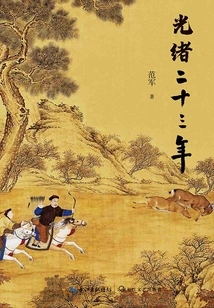
Guangxu Twenty-three Years
History光绪二十三年
Fan Jun
"Twenty-Three Years of Guangxu" is a new historical prose work by the well-known writer Fan Jun. Guangxu twenty-three years, 1897 AD. Those fireworks in the world and the changes in world affairs are the key words of this book. This book tells the story of the Grand Canal, Huai'an City, the scholar Hu Tingqing, the Chen family of Zhuyuan Kengkou in Anhui who compiled the genealogy, the county magistrates Li Chaoqiong, Li Hongzhang, Weng Tonghe and other personnel in the 23rd year of Guangxu. Their experiences in this year, the hopelessness and hope, the mediocre and the ideal; at the same time, it also tells the beauty of heaven and earth, people and customs in the ancient mountain towns in the changing times. In addition, this book also looks back and looks forward to the changes in the world from the perspective of the succession and transition of the dynasty, with the twenty-third year of Guangxu as the background.
"Twenty-Three Years of Guangxu" is a new historical prose work by the well-known writer Fan Jun. Guangxu twenty-three years, 1897 AD. Those fireworks in the world and the changes in world affairs are the key words of this book. This book tells the story of the Grand Canal, Huai'an City, the scholar Hu Tingqing, the Chen family of Zhuyuan Kengkou in Anhui who compiled the genealogy, the county magistrates Li Chaoqiong, Li Hongzhang, Weng Tonghe and other personnel in the 23rd year of Guangxu. Their experiences in this year, the hopelessness and hope, the mediocre and the ideal; at the same time, it also tells the beauty of heaven and earth, people and customs in the ancient mountain towns in the changing times. In addition, this book also looks back and looks forward to the changes in the world from the perspective of the succession and transition of the dynasty, with the twenty-third year of Guangxu as the background.
Tang Dynasty: There Was No Tang Dynasty after Xuanzong
General Fiction唐朝:玄宗之后无大唐
Fan Jun
In 685 AD, the Tang Dynasty, the most famous dynasty in Chinese history, had gone through 68 years of glorious history, and there was no evidence that it would no longer be glorious. Everything looks so vibrant - if we compare the existence of the Han Dynasty to the Tang Dynasty, there is no doubt that in the Tang Dynasty in 685 AD, it was the sun at eight or nine o'clock in the morning, shining brightly and full of vitality and vitality. Li Dan was especially full of life and vitality, because on the eighth day of September this year, his son Li Longji was born. The birth of Li Longji gave birth to another guardian of the Tang Dynasty - Tang Xuanzong. As the son of the sun at eight or nine o'clock in the Tang Dynasty, Xuanzong of the Tang Dynasty not only took the country of the Tang Dynasty into his arms again, but also ushered in a prosperous Kaiyuan era that was comparable to the rule of Zhenguan.
In 685 AD, the Tang Dynasty, the most famous dynasty in Chinese history, had gone through 68 years of glorious history, and there was no evidence that it would no longer be glorious. Everything looks so vibrant - if we compare the existence of the Han Dynasty to the Tang Dynasty, there is no doubt that in the Tang Dynasty in 685 AD, it was the sun at eight or nine o'clock in the morning, shining brightly and full of vitality and vitality. Li Dan was especially full of life and vitality, because on the eighth day of September this year, his son Li Longji was born. The birth of Li Longji gave birth to another guardian of the Tang Dynasty - Tang Xuanzong. As the son of the sun at eight or nine o'clock in the Tang Dynasty, Xuanzong of the Tang Dynasty not only took the country of the Tang Dynasty into his arms again, but also ushered in a prosperous Kaiyuan era that was comparable to the rule of Zhenguan.
The Western Han Dynasty: a Dynasty That Started but Ended
General Fiction西汉:一个王朝的虎头蛇尾
Fan Jun
"Start, inherit, turn and combine" is a stipulated pattern in the eight-legged essay, but for a dynasty, its fate cannot escape these four words. The difference is that each dynasty is different in the form and length of succession. The Qin Dynasty's "rising" and "inheritance" were very brilliant, and those with great strength were sinking, but there was a problem with the "inheritance". Just like a slender neck cannot support a heavy head, Qin Er was soon out of breath, "Qin" was so embarrassed. So the situation then took a turn for the worse, with one dynasty hurriedly ending in the joy of another dynasty's "very busy dividing up the fields" - although the firecrackers and confetti left on the ground when it opened had not yet been cleaned up, the fate of being eliminated was already a living reality.
"Start, inherit, turn and combine" is a stipulated pattern in the eight-legged essay, but for a dynasty, its fate cannot escape these four words. The difference is that each dynasty is different in the form and length of succession. The Qin Dynasty's "rising" and "inheritance" were very brilliant, and those with great strength were sinking, but there was a problem with the "inheritance". Just like a slender neck cannot support a heavy head, Qin Er was soon out of breath, "Qin" was so embarrassed. So the situation then took a turn for the worse, with one dynasty hurriedly ending in the joy of another dynasty's "very busy dividing up the fields" - although the firecrackers and confetti left on the ground when it opened had not yet been cleaned up, the fate of being eliminated was already a living reality.
Yuan Dynasty: Those Intrigues, Those Turmoils
General Fiction元朝:那些钩心斗角,那些风生水起
Fan Jun
In the fourth month of the lunar calendar in 1294 AD, Kublai Khan, one of the most powerful emperors of the Yuan Dynasty, died unwillingly. However, there was a problem with the succession of the throne of the Yuan Dynasty. Because there is no prince - the prince Zhenjin died quietly nine years ago. Fortunately, Zhenjin left behind three sons during his lifetime. After repeated consideration, Kublai Khan decided a year before his death to give the Prince's Seal to Zhenjin's youngest son, Temu'er. One year after Kublai Khan's death, Temu'er became the emperor of the Yuan Dynasty, namely Yuan Chengzong. This man's later behavior was indeed as predicted by Kublai Khan during his lifetime. He was filial to his mother and other elders, and also treated his brother who failed to become emperor favorably. Of course, he also likes to drink some wine in private, and he likes to put on grand scenes to show the grandeur of the Great Yuan Dynasty.
In the fourth month of the lunar calendar in 1294 AD, Kublai Khan, one of the most powerful emperors of the Yuan Dynasty, died unwillingly. However, there was a problem with the succession of the throne of the Yuan Dynasty. Because there is no prince - the prince Zhenjin died quietly nine years ago. Fortunately, Zhenjin left behind three sons during his lifetime. After repeated consideration, Kublai Khan decided a year before his death to give the Prince's Seal to Zhenjin's youngest son, Temu'er. One year after Kublai Khan's death, Temu'er became the emperor of the Yuan Dynasty, namely Yuan Chengzong. This man's later behavior was indeed as predicted by Kublai Khan during his lifetime. He was filial to his mother and other elders, and also treated his brother who failed to become emperor favorably. Of course, he also likes to drink some wine in private, and he likes to put on grand scenes to show the grandeur of the Great Yuan Dynasty.
Qianlong's Melancholy
Literature乾隆的惆怅
Fan Jun
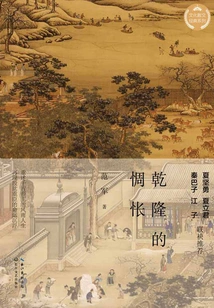
"Qianlong's Melancholy" is one of the "Cultural Prose Classic Series". It is an anthology of cultural prose written by Professor Fan Jun of Zhejiang Lishui University. The book is divided into four series: "Qianlong's Melancholy", "Gentle Millennium", "Pride and Prejudice in 1793" and "Ye Shaoweng's Breakout". It includes "Ye Shaoweng's Breakout", "Zhang Juzheng's Bottleneck" and "Qianlong's Melancholy". Fan Jun's writing is smooth and highly readable. Through the whole book, we can feel the texture, faults and folds of history and humanity, and appreciate the geographical temperature, flavor and cracks of artifacts.
"Qianlong's Melancholy" is one of the "Cultural Prose Classic Series". It is an anthology of cultural prose written by Professor Fan Jun of Zhejiang Lishui University. The book is divided into four series: "Qianlong's Melancholy", "Gentle Millennium", "Pride and Prejudice in 1793" and "Ye Shaoweng's Breakout". It includes "Ye Shaoweng's Breakout", "Zhang Juzheng's Bottleneck" and "Qianlong's Melancholy". Fan Jun's writing is smooth and highly readable. Through the whole book, we can feel the texture, faults and folds of history and humanity, and appreciate the geographical temperature, flavor and cracks of artifacts.
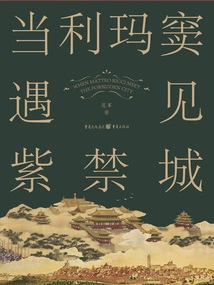
当利玛窦遇见紫禁城
Fan Jun
The book contains a total of more than 20 articles including "Su Shi's Huangzhou", "Under the Peach Blossom Fan", "Under the Sky of the Tang Dynasty", "On the Northeastern Land", "Warm Emotions and Tearful Reunion", "Runaways and Encounters", "Overseas Students", "Confucius and the Hundred Schools of Philosophers", "Confucius: Walking on the Earth", and "Ye Shaoweng's All Things in the World". These articles condense some key fragments and events in history, telling the self-acceptance and self-realization achieved by historical and cultural celebrities during their migrations, the migrations of ordinary people as they traveled through the Guandong, the West, and Southeast Asia, as well as the flows and collisions, integration, and evolution between civilizations in different regions.
The book contains a total of more than 20 articles including "Su Shi's Huangzhou", "Under the Peach Blossom Fan", "Under the Sky of the Tang Dynasty", "On the Northeastern Land", "Warm Emotions and Tearful Reunion", "Runaways and Encounters", "Overseas Students", "Confucius and the Hundred Schools of Philosophers", "Confucius: Walking on the Earth", and "Ye Shaoweng's All Things in the World". These articles condense some key fragments and events in history, telling the self-acceptance and self-realization achieved by historical and cultural celebrities during their migrations, the migrations of ordinary people as they traveled through the Guandong, the West, and Southeast Asia, as well as the flows and collisions, integration, and evolution between civilizations in different regions.
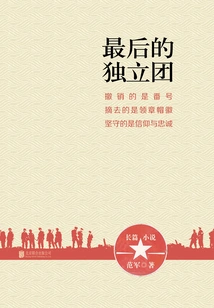
The Last Independent Group
General Fiction最后的独立团
Fan Jun
During the War of Liberation, a victorious independent regiment in the northwest was almost completely wiped out after the last battle, and its number dropped sharply from 2,000 to more than 60. At the beginning of the War to Resist U. S. Aggression and Aid Korea, in order to defend the honor of the soldiers, they were eager to join the war in North Korea and make a comeback on the Korean battlefield to achieve greater glory. However, they suddenly received orders to change jobs on the spot and become petroleum soldiers. The Independence Regiment's ambitions have not yet been fulfilled, and it is difficult to transform. From the regiment leader and political commissar to the trumpeter and flag bearer, everyone starts a war for their own lives.
During the War of Liberation, a victorious independent regiment in the northwest was almost completely wiped out after the last battle, and its number dropped sharply from 2,000 to more than 60. At the beginning of the War to Resist U. S. Aggression and Aid Korea, in order to defend the honor of the soldiers, they were eager to join the war in North Korea and make a comeback on the Korean battlefield to achieve greater glory. However, they suddenly received orders to change jobs on the spot and become petroleum soldiers. The Independence Regiment's ambitions have not yet been fulfilled, and it is difficult to transform. From the regiment leader and political commissar to the trumpeter and flag bearer, everyone starts a war for their own lives.
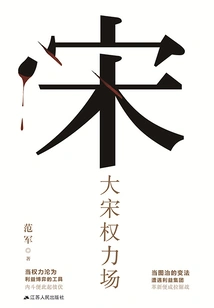
大宋权力场
Fan Jun
During the reign of Zhenzong of the Song Dynasty, the emperor simultaneously appointed Wang Qinruo, Ding Wei, and Kou Zhun, who opposed them, as prime ministers, and party struggles in the power arena took shape. Party contenders competed with each other, and the empire's situation was deteriorating. Afterwards, Wang Anshi's reform was launched in this context. The reform to save the country was entangled with the party struggle to subjugate the country. A reform movement that could have turned the tide had to be aborted halfway, and the country was ruined. "The Power Field of the Song Dynasty" starts from a perspective that has been rarely touched upon by predecessors. It truly and brutally describes the intrigues and intrigues and party unity that defeats differences in the power field of the Northern Song Dynasty. It unfolds the story of all living beings, thereby profoundly revealing the causes and consequences of the imperial tragedy. It is a thought-provoking read.
During the reign of Zhenzong of the Song Dynasty, the emperor simultaneously appointed Wang Qinruo, Ding Wei, and Kou Zhun, who opposed them, as prime ministers, and party struggles in the power arena took shape. Party contenders competed with each other, and the empire's situation was deteriorating. Afterwards, Wang Anshi's reform was launched in this context. The reform to save the country was entangled with the party struggle to subjugate the country. A reform movement that could have turned the tide had to be aborted halfway, and the country was ruined. "The Power Field of the Song Dynasty" starts from a perspective that has been rarely touched upon by predecessors. It truly and brutally describes the intrigues and intrigues and party unity that defeats differences in the power field of the Northern Song Dynasty. It unfolds the story of all living beings, thereby profoundly revealing the causes and consequences of the imperial tragedy. It is a thought-provoking read.