Library
Browse and search books
2 novels found
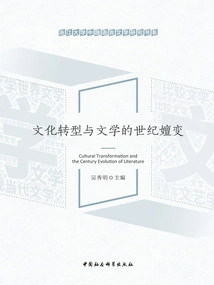
文化转型与文学的世纪嬗变
Editor-in-chief Wu Xiuming
This book is a compilation of research papers by teachers from the Institute of Modern and Contemporary Chinese Literature, Department of Chinese, Zhejiang University. The collected time ranges from 1982 to 2018. It is divided into six parts: "Issues and Methods", "Ideological Trends and Phenomenon", "Writers and Works", "Writers and Works (Zhejiang)", "Film, Television and Literature" and "Publishing and Culture", with a total of 58 articles. Its main content is Chinese modern and contemporary literature, but also includes film and television, editing and publishing, etc. The "Preface" comprehensively summarizes and sorts out the development of the modern and contemporary Chinese literature discipline at Zhejiang University (including the original Hangzhou University) as well as its academic personality and characteristics.
This book is a compilation of research papers by teachers from the Institute of Modern and Contemporary Chinese Literature, Department of Chinese, Zhejiang University. The collected time ranges from 1982 to 2018. It is divided into six parts: "Issues and Methods", "Ideological Trends and Phenomenon", "Writers and Works", "Writers and Works (Zhejiang)", "Film, Television and Literature" and "Publishing and Culture", with a total of 58 articles. Its main content is Chinese modern and contemporary literature, but also includes film and television, editing and publishing, etc. The "Preface" comprehensively summarizes and sorts out the development of the modern and contemporary Chinese literature discipline at Zhejiang University (including the original Hangzhou University) as well as its academic personality and characteristics.
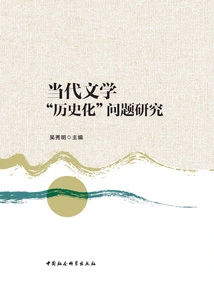
当代文学“历史化”问题研究
Editor-in-chief Wu Xiuming
This book treats contemporary literature with a history of more than 70 years as a whole, divided into three parts: upper, middle and lower, to conduct a comprehensive and systematic discussion of the "historicization" of its research. The first part, "The ontological composition and knowledge genealogy of historicization", mainly examines "what is" the historicization of contemporary literature, and organizes the ontological composition and knowledge genealogy of its "triad" (i. E., Mainstream ideological literature, elite literature, and popular literature), and then explains the relevant evaluation mechanisms and criteria from the perspective of time and space expansion. The middle volume "Main Paths and Research Methods of Historicization" analyzes "how to historicize", including the narrative paradigm, canonization selection, literary history compilation, as well as the collection and arrangement, screening and analysis of historical materials. The next part, "Discussions on Historicization-Related Topics," mainly conducts a sample analysis of relevant important issues from the perspectives of historicization and politics, revolution, literature, criticism, old-style poetry, and knowledge and education. Each section has both relative independence and internal logical connections. This is closely linked to the "ontology" and "practice" of historicization, and revolves around the two dimensions and directions of "what is historicization" and "how to historicize".
This book treats contemporary literature with a history of more than 70 years as a whole, divided into three parts: upper, middle and lower, to conduct a comprehensive and systematic discussion of the "historicization" of its research. The first part, "The ontological composition and knowledge genealogy of historicization", mainly examines "what is" the historicization of contemporary literature, and organizes the ontological composition and knowledge genealogy of its "triad" (i. E., Mainstream ideological literature, elite literature, and popular literature), and then explains the relevant evaluation mechanisms and criteria from the perspective of time and space expansion. The middle volume "Main Paths and Research Methods of Historicization" analyzes "how to historicize", including the narrative paradigm, canonization selection, literary history compilation, as well as the collection and arrangement, screening and analysis of historical materials. The next part, "Discussions on Historicization-Related Topics," mainly conducts a sample analysis of relevant important issues from the perspectives of historicization and politics, revolution, literature, criticism, old-style poetry, and knowledge and education. Each section has both relative independence and internal logical connections. This is closely linked to the "ontology" and "practice" of historicization, and revolves around the two dimensions and directions of "what is historicization" and "how to historicize".