Library
Browse and search books
1 novel found
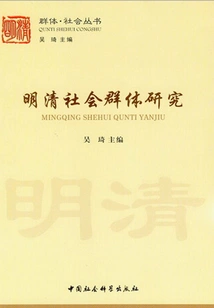
明清社会群体研究
Editor-in-chief Wu Qi
"Research on Social Groups in the Ming and Qing Dynasties" contains 10 papers, which generally include three aspects of content: first, group studies of emperors and court officials. For a long time, academic circles have long discussed these research objects from the perspective of institutional or political history, and rarely paid attention to them from the perspective of groups; second, scholar groups, trying to reveal the group characteristics of scholar groups from different perspectives; third, group interaction and the relationship between groups and social development and changes in the current situation. Although most of the selected groups are middle and upper class, they are all implemented at the social level and take into account the society as a whole. The rise of social history has an obvious impact on traditional political history and institutional history. How can the research on traditional political history and institutional history, which has moved from the center to the periphery, regain its footing? How can it gain a new perspective and establish new academic significance? Drawing on the research methods and academic concepts of social history, examining the content of traditional political history and institutional history from the perspective of social history, or directly connecting political history with social history should be effective ways to try and explore. This collection is the result of this thinking and exploration. In fact, this achievement is also intended to correct the downward bias of social history.
"Research on Social Groups in the Ming and Qing Dynasties" contains 10 papers, which generally include three aspects of content: first, group studies of emperors and court officials. For a long time, academic circles have long discussed these research objects from the perspective of institutional or political history, and rarely paid attention to them from the perspective of groups; second, scholar groups, trying to reveal the group characteristics of scholar groups from different perspectives; third, group interaction and the relationship between groups and social development and changes in the current situation. Although most of the selected groups are middle and upper class, they are all implemented at the social level and take into account the society as a whole. The rise of social history has an obvious impact on traditional political history and institutional history. How can the research on traditional political history and institutional history, which has moved from the center to the periphery, regain its footing? How can it gain a new perspective and establish new academic significance? Drawing on the research methods and academic concepts of social history, examining the content of traditional political history and institutional history from the perspective of social history, or directly connecting political history with social history should be effective ways to try and explore. This collection is the result of this thinking and exploration. In fact, this achievement is also intended to correct the downward bias of social history.