Library
Browse and search books
2 novels found
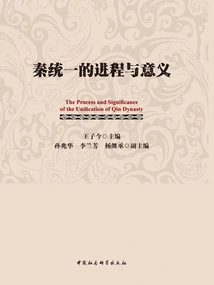
秦统一的进程与意义
Editor-in-chief Wang Zijin
Qin was an important turning point in the history of unifying China, and the subsequent historical evolution had a profound impact on Chinese society. As a phased result of the National Social Science Foundation's major project "Re-Study of Qin Unification and Its Historical Significance", this book contains 34 academic papers on the process and significance of Qin Unification. All discussions are based on the academic frontier, using the latest unearthed literature and materials to explore academic hot and difficult issues. The paper discusses the political structure, economic process, cultural trend, and social landscape of the Qin unification era, and puts forward some new insights. Several academic gains may advance the study of Qin history and help deepen the understanding of the historical significance of Qin's unification.
Qin was an important turning point in the history of unifying China, and the subsequent historical evolution had a profound impact on Chinese society. As a phased result of the National Social Science Foundation's major project "Re-Study of Qin Unification and Its Historical Significance", this book contains 34 academic papers on the process and significance of Qin Unification. All discussions are based on the academic frontier, using the latest unearthed literature and materials to explore academic hot and difficult issues. The paper discusses the political structure, economic process, cultural trend, and social landscape of the Qin unification era, and puts forward some new insights. Several academic gains may advance the study of Qin history and help deepen the understanding of the historical significance of Qin's unification.
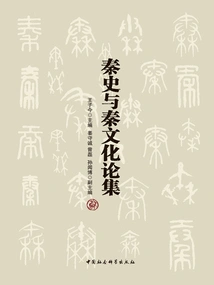
秦史与秦文化论集
Editor-in-chief Wang Zijin
The study of Qin history and Qin culture is a hot issue in today's historical circles. Related research has made great progress and achieved many excellent results. This book contains a total of 28 papers, divided into four topics: politics and economy, central and local governments, beliefs and folk customs, and handed down documents and unearthed slips. Some papers combine handed down documents and classics, archaeological unearthed materials and image materials to analyze the characteristics of each stage of Qin history, summarize the positive significance of Qin culture, and conduct a microscopic examination of the material life and spiritual belief world of the Qin people; some papers analyze the aspects of politics, military, and It analyzes the reasons for Qin's unification from several aspects such as culture and system, and conducts case studies on Qin's economic life and production methods, achieving some breakthrough insights; some papers use unearthed slip materials and handed down documents to discuss Qin's political structure, administrative system, bureaucracy and grassroots management, and discuss Qin's social structure, class relations and the impact of Qin's politics on later generations. The authors discussed from different angles, clarified some difficult academic issues, and put forward many constructive new insights.
The study of Qin history and Qin culture is a hot issue in today's historical circles. Related research has made great progress and achieved many excellent results. This book contains a total of 28 papers, divided into four topics: politics and economy, central and local governments, beliefs and folk customs, and handed down documents and unearthed slips. Some papers combine handed down documents and classics, archaeological unearthed materials and image materials to analyze the characteristics of each stage of Qin history, summarize the positive significance of Qin culture, and conduct a microscopic examination of the material life and spiritual belief world of the Qin people; some papers analyze the aspects of politics, military, and It analyzes the reasons for Qin's unification from several aspects such as culture and system, and conducts case studies on Qin's economic life and production methods, achieving some breakthrough insights; some papers use unearthed slip materials and handed down documents to discuss Qin's political structure, administrative system, bureaucracy and grassroots management, and discuss Qin's social structure, class relations and the impact of Qin's politics on later generations. The authors discussed from different angles, clarified some difficult academic issues, and put forward many constructive new insights.