Library
Browse and search books
1 novel found
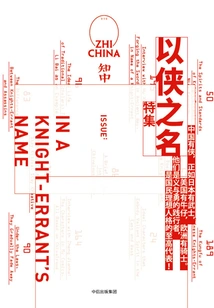
知中10·以侠之名
Editor-in-chief Rowell
Special episode of "Knowing the Middle: In the Name of a Hero", roaming the rivers and lakes! Understand the definition of chivalry in one volume: sort out the origin and development of chivalry, restore the true image of chivalry, interpret the image of chivalry in China from multiple angles, and explore the cultural form of chivalry in ancient and modern times. Chivalry is a practitioner of righteousness and courage, and the supreme representative of the national ideal personality! Film and television, literature, ACG! Xia is an ideal character that is constantly being recreated. Who is your martial arts dream? The book will present to you: Chivalry, warriors, knights, and cowboys: an interpretation of the martial spirit in Eastern and Western cultures; Jianghu and chivalry: why are the two meanings closely connected? The difference between knights and assassins: Why did Sima Qian write separate biographies for the two? The spirit and code of conduct of chivalry: use nine keywords to understand chivalry! Ranger Daily: How did the rangers who roamed the rivers and lakes in ancient times make money? Take a peek into a day in the life of a ranger! A bonus volume is included with the book: a young wanderer, a middle-aged wandering eunuch, and an old wandering immortal, following the footsteps of the representative literati Li Bai and traveling through China! Exciting interviews in the book include: Peking University tutor Chen Pingyuan interprets the definition of chivalry and the chivalrous complex of Chinese literati; Peking University tutor Dai Jinhua comments on Chinese martial arts movies; senior film scorer Chen Xunqi takes you back to the charming and treacherous world of Jianghu in "Ashes of Time"; Hong Kong cartoonist Zheng Jianhe How to build a world of rivers and lakes under the brush; how ancient Chinese costumes and music and dance teams restore ancient warrior costumes; Anhui University instructor Hao Jing took Li Bai as an example to explain in detail the traditional ideal life of Chinese literati, starting from the historical records of sword culture, and then looking at how contemporary swordsmith Hu Xiaojun forged magical weapons.
Special episode of "Knowing the Middle: In the Name of a Hero", roaming the rivers and lakes! Understand the definition of chivalry in one volume: sort out the origin and development of chivalry, restore the true image of chivalry, interpret the image of chivalry in China from multiple angles, and explore the cultural form of chivalry in ancient and modern times. Chivalry is a practitioner of righteousness and courage, and the supreme representative of the national ideal personality! Film and television, literature, ACG! Xia is an ideal character that is constantly being recreated. Who is your martial arts dream? The book will present to you: Chivalry, warriors, knights, and cowboys: an interpretation of the martial spirit in Eastern and Western cultures; Jianghu and chivalry: why are the two meanings closely connected? The difference between knights and assassins: Why did Sima Qian write separate biographies for the two? The spirit and code of conduct of chivalry: use nine keywords to understand chivalry! Ranger Daily: How did the rangers who roamed the rivers and lakes in ancient times make money? Take a peek into a day in the life of a ranger! A bonus volume is included with the book: a young wanderer, a middle-aged wandering eunuch, and an old wandering immortal, following the footsteps of the representative literati Li Bai and traveling through China! Exciting interviews in the book include: Peking University tutor Chen Pingyuan interprets the definition of chivalry and the chivalrous complex of Chinese literati; Peking University tutor Dai Jinhua comments on Chinese martial arts movies; senior film scorer Chen Xunqi takes you back to the charming and treacherous world of Jianghu in "Ashes of Time"; Hong Kong cartoonist Zheng Jianhe How to build a world of rivers and lakes under the brush; how ancient Chinese costumes and music and dance teams restore ancient warrior costumes; Anhui University instructor Hao Jing took Li Bai as an example to explain in detail the traditional ideal life of Chinese literati, starting from the historical records of sword culture, and then looking at how contemporary swordsmith Hu Xiaojun forged magical weapons.