Library
Browse and search books
2 novels found
欧洲历史上的世俗化之争(“经典与解释”第64期)
Editor-in-chief Liu Xiaofeng
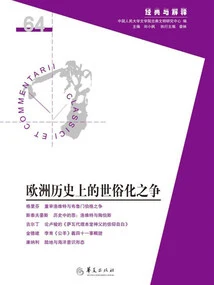
This book is the 64th issue of "Classics and Interpretation". The topic of this issue is "The Controversy over Secularization in European History". The formation of modern Europe is often said to be the process of so-called "secularization". Regarding this process, the famous intellectual historian Lovett believes that the progressive doctrine of modernization secularizes and practices the mythical historical realization model, but this is a deviation and a dangerous and unprecedented illusion. This judgment had a huge impact and also aroused Blumenberg's opposition. Blumenberg tried his best to prove in "Modern Legitimacy" that the modern concept of progress is not the modern version of Lovett's eschatology, but presents a movement process that is immanent in history. It is a gradually emerging concept of "overall progress" and is not a transcendent transcendence. This is where the "legitimacy" of modernity lies. The thematic articles selected in this volume focus on the debates between the two, either deepening the understanding of their respective concepts, or providing new entry points for this debate, which are all helpful for us to understand the secularization process in modern Europe.
This book is the 64th issue of "Classics and Interpretation". The topic of this issue is "The Controversy over Secularization in European History". The formation of modern Europe is often said to be the process of so-called "secularization". Regarding this process, the famous intellectual historian Lovett believes that the progressive doctrine of modernization secularizes and practices the mythical historical realization model, but this is a deviation and a dangerous and unprecedented illusion. This judgment had a huge impact and also aroused Blumenberg's opposition. Blumenberg tried his best to prove in "Modern Legitimacy" that the modern concept of progress is not the modern version of Lovett's eschatology, but presents a movement process that is immanent in history. It is a gradually emerging concept of "overall progress" and is not a transcendent transcendence. This is where the "legitimacy" of modernity lies. The thematic articles selected in this volume focus on the debates between the two, either deepening the understanding of their respective concepts, or providing new entry points for this debate, which are all helpful for us to understand the secularization process in modern Europe.
西方古代的天下观
Editor-in-chief Liu Xiaofeng
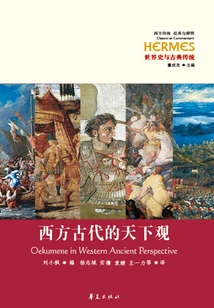
This collection of translations collects some basic documents used by Western academic circles to study the early historical stories of "world history": from the Hellenistic period, through the Roman Empire to the late Middle Ages. It is equivalent to continuing the book "From Universal History to Historicism" just published in December last year, continuing to trace the historical story of the concept of "universal history". The book is divided into two units. The first unit starts with two original texts from the Hellenistic period, followed by papers on ancient Western history books by two authoritative contemporary scholars of ancient Western history, which helps us understand the style and nature of ancient Western history writing. The following five papers focus on the following questions: What is the historical relationship between the emergence of "common history" (also called "universal history" or "world history" today) and the empire dreamed of Alexander the Great and the subsequent rise of the Roman Empire? What kind of "common history" view did the Western intellectuals and emperors at that time reflect on the "world"? From the perspective of Latin Christianity, the "world" view of ancient Greek and Roman intellectuals took on a new meaning. The second unit starts with Eusebius during the establishment of the Second Roman Empire, the Christian Empire, and ends with Joachim in the 12th century, just before the imperial power of the Holy See was about to reach its peak. According to Spengler and Voegelin, the masters of historical philosophy in the 20th century, Joachim decisively influenced the "universal history" view of modern Europeans. In recent years, Mr. Liu Xiaofeng, driven by his awareness of China's problems, has devoted himself to studying world history and the history of its formation.
This collection of translations collects some basic documents used by Western academic circles to study the early historical stories of "world history": from the Hellenistic period, through the Roman Empire to the late Middle Ages. It is equivalent to continuing the book "From Universal History to Historicism" just published in December last year, continuing to trace the historical story of the concept of "universal history". The book is divided into two units. The first unit starts with two original texts from the Hellenistic period, followed by papers on ancient Western history books by two authoritative contemporary scholars of ancient Western history, which helps us understand the style and nature of ancient Western history writing. The following five papers focus on the following questions: What is the historical relationship between the emergence of "common history" (also called "universal history" or "world history" today) and the empire dreamed of Alexander the Great and the subsequent rise of the Roman Empire? What kind of "common history" view did the Western intellectuals and emperors at that time reflect on the "world"? From the perspective of Latin Christianity, the "world" view of ancient Greek and Roman intellectuals took on a new meaning. The second unit starts with Eusebius during the establishment of the Second Roman Empire, the Christian Empire, and ends with Joachim in the 12th century, just before the imperial power of the Holy See was about to reach its peak. According to Spengler and Voegelin, the masters of historical philosophy in the 20th century, Joachim decisively influenced the "universal history" view of modern Europeans. In recent years, Mr. Liu Xiaofeng, driven by his awareness of China's problems, has devoted himself to studying world history and the history of its formation.