Library
Browse and search books
1 novel found
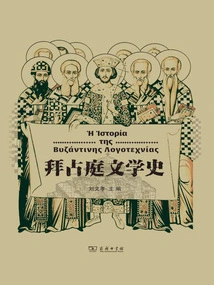
Byzantine Literary History
History拜占庭文学史
Editor-in-chief Liu Wenxiao
The Byzantine Empire is probably the longest-existing state entity in the world, spanning Europe, Asia, and Africa. From the time when Constantinople was established as its capital in 330 AD, it lasted 1,123 years until Constantinople fell into the hands of the Ottoman Empire in 1453. The Byzantine Empire was a typical medieval feudal state in the era of human religious culture. The main branch of Christianity, "Oriental Orthodoxy," was its state religion. Because it has a beginning and an end, it is the most complete example of a medieval country. Its literature of more than 1,300 years (including more than 200 years after the fall of the country) is a complete model of medieval literature. Although its main body is literature shrouded in Christian doctrine, its literary thoughts are extremely complex and contain almost all literary thoughts of later generations; in terms of themes, it also contains almost all kinds of literary motifs of later generations; in terms of literary forms, it has created all literary genres except "film and television literature".
The Byzantine Empire is probably the longest-existing state entity in the world, spanning Europe, Asia, and Africa. From the time when Constantinople was established as its capital in 330 AD, it lasted 1,123 years until Constantinople fell into the hands of the Ottoman Empire in 1453. The Byzantine Empire was a typical medieval feudal state in the era of human religious culture. The main branch of Christianity, "Oriental Orthodoxy," was its state religion. Because it has a beginning and an end, it is the most complete example of a medieval country. Its literature of more than 1,300 years (including more than 200 years after the fall of the country) is a complete model of medieval literature. Although its main body is literature shrouded in Christian doctrine, its literary thoughts are extremely complex and contain almost all literary thoughts of later generations; in terms of themes, it also contains almost all kinds of literary motifs of later generations; in terms of literary forms, it has created all literary genres except "film and television literature".