Library
Browse and search books
2 novels found

海上丝绸之路:8港口志
Editor-in-chief Li Yiming
This book narrates the formation and development of eight ports on the ancient "Maritime Silk Road" in history. It also introduces the people and culture related to the ports, as well as the historical stories related to them. Since the 1930s, Guangzhou Huangpu Port has become the main port of the "Maritime Silk Road"; Quanzhou Port, as the eastern support point of the East-West international trade network, was once known as the "largest port in the East"; Ningbo Port is one of China's famous international trade ports; Fuzhou Port can be called one of the important starting points of the "Maritime Silk Road" in ancient China; Yangzhou Port relies on its unique position standing on the bank of the Grand Canal It is located and has become the connection point between the "Land Silk Road" and the "Maritime Silk Road"; Lianyungang has a rich cultural history and is an indispensable and important link in the busiest maritime transportation line in Chinese history; Dengzhou Port is the link connecting Northeast Asia in ancient times; Hepu Port, as the hub of external maritime trade in the South China Sea in many historical periods, is an important node of the ancient "Maritime Silk Road". This book reveals the long history of the "Maritime Silk Road" and demonstrates new ideas and prospects with Eastern wisdom in order to build the "21st Century Maritime Silk Road" and achieve common prosperity and development for all countries along the route.
This book narrates the formation and development of eight ports on the ancient "Maritime Silk Road" in history. It also introduces the people and culture related to the ports, as well as the historical stories related to them. Since the 1930s, Guangzhou Huangpu Port has become the main port of the "Maritime Silk Road"; Quanzhou Port, as the eastern support point of the East-West international trade network, was once known as the "largest port in the East"; Ningbo Port is one of China's famous international trade ports; Fuzhou Port can be called one of the important starting points of the "Maritime Silk Road" in ancient China; Yangzhou Port relies on its unique position standing on the bank of the Grand Canal It is located and has become the connection point between the "Land Silk Road" and the "Maritime Silk Road"; Lianyungang has a rich cultural history and is an indispensable and important link in the busiest maritime transportation line in Chinese history; Dengzhou Port is the link connecting Northeast Asia in ancient times; Hepu Port, as the hub of external maritime trade in the South China Sea in many historical periods, is an important node of the ancient "Maritime Silk Road". This book reveals the long history of the "Maritime Silk Road" and demonstrates new ideas and prospects with Eastern wisdom in order to build the "21st Century Maritime Silk Road" and achieve common prosperity and development for all countries along the route.
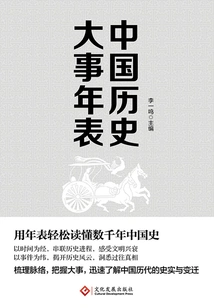
中国历史大事年表
Editor-in-chief Li Yiming
"Chronology of Major Events in Chinese History" focuses on combing major events in various historical periods of China, follows the chronological order, and intuitively connects the development and changes of Chinese history in the form of a chronology. It uniquely compares the chronology with historical events to read at a glance, making it easier for readers to refer to and remember. The content starts from the pre-Qin era and ends with the abdication of the Qing emperor. It vividly and vividly tells the life experiences of the famous and important figures in history. It interprets the important events in history that triggered the changes of the times in an easy-to-understand way, helping readers to comprehensively and accurately understand the historical changes of various dynasties in China. They can easily and quickly grasp important historical allusions, thereby deepening their understanding of Chinese history. It is a simple and easy-to-read popular Chinese history book.
"Chronology of Major Events in Chinese History" focuses on combing major events in various historical periods of China, follows the chronological order, and intuitively connects the development and changes of Chinese history in the form of a chronology. It uniquely compares the chronology with historical events to read at a glance, making it easier for readers to refer to and remember. The content starts from the pre-Qin era and ends with the abdication of the Qing emperor. It vividly and vividly tells the life experiences of the famous and important figures in history. It interprets the important events in history that triggered the changes of the times in an easy-to-understand way, helping readers to comprehensively and accurately understand the historical changes of various dynasties in China. They can easily and quickly grasp important historical allusions, thereby deepening their understanding of Chinese history. It is a simple and easy-to-read popular Chinese history book.