Library
Browse and search books
3 novels found
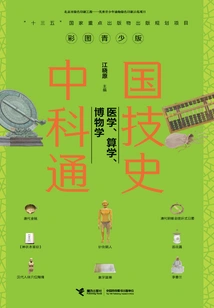
中国科技通史:医学、算学、博物学
Editor-in-chief Jiang Xiaoyuan
Chinese medicine first emerged from witch doctors. During the Spring and Autumn Period and the Warring States Period, witch doctors and doctors were separated, and a systematic medical knowledge system was gradually formed. Medical classics represented by the Huangdi Neijing and Treatise on Febrile Diseases and Miscellaneous Diseases were produced. The development of medicine is inseparable from drugs. "The Study of Materia Medica" is the traditional Chinese pharmacology, among which the "Compendium of Materia Medica" written by Li Shizhen in the Ming Dynasty is the most well-known to the public. In addition to being used in astronomy and calendars, ancient Chinese arithmetic is also related to practical matters such as land measurement, map surveying, tax calculation, and water conservancy project construction. The "Ten Books on Arithmetic" represented by "Nine Chapters on Arithmetic" are the great crystallization of ancient Chinese mathematical thought from the Han Dynasty to the Tang Dynasty. During the Song, Jin and Yuan dynasties, outstanding mathematicians such as Qin Jiushao, Li Ye, Yang Hui and Zhu Shijie pushed traditional Chinese arithmetic theory to a climax.
Chinese medicine first emerged from witch doctors. During the Spring and Autumn Period and the Warring States Period, witch doctors and doctors were separated, and a systematic medical knowledge system was gradually formed. Medical classics represented by the Huangdi Neijing and Treatise on Febrile Diseases and Miscellaneous Diseases were produced. The development of medicine is inseparable from drugs. "The Study of Materia Medica" is the traditional Chinese pharmacology, among which the "Compendium of Materia Medica" written by Li Shizhen in the Ming Dynasty is the most well-known to the public. In addition to being used in astronomy and calendars, ancient Chinese arithmetic is also related to practical matters such as land measurement, map surveying, tax calculation, and water conservancy project construction. The "Ten Books on Arithmetic" represented by "Nine Chapters on Arithmetic" are the great crystallization of ancient Chinese mathematical thought from the Han Dynasty to the Tang Dynasty. During the Song, Jin and Yuan dynasties, outstanding mathematicians such as Qin Jiushao, Li Ye, Yang Hui and Zhu Shijie pushed traditional Chinese arithmetic theory to a climax.
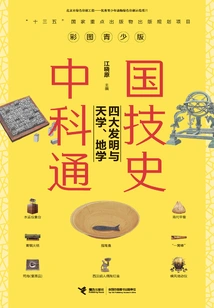
中国科技通史:四大发明与天学、地学
Editor-in-chief Jiang Xiaoyuan
Astronomy is the earliest science in human history. Ancient Chinese astronomy is often called Tianxue. There are three main theories about "Heaven": Gaitian theory, Huntian theory and Xuanye theory. The main purpose of astronomy is to "observe and tell time", that is, to determine the seasons through astronomical observations and guide people in production and ritual activities. Therefore, China has retained the longest and most detailed astronomical records in the world. The "round sky and square place" view of the earth and the "Great Kyushu" world view are two ways of understanding world geography in ancient China. From the "round sky and square place" view of the earth, an extremely important concept of "earth" is derived. It had a significant impact on the location of the ancient capital, the formation of certain mentality of the Chinese people, and even the name of the country.
Astronomy is the earliest science in human history. Ancient Chinese astronomy is often called Tianxue. There are three main theories about "Heaven": Gaitian theory, Huntian theory and Xuanye theory. The main purpose of astronomy is to "observe and tell time", that is, to determine the seasons through astronomical observations and guide people in production and ritual activities. Therefore, China has retained the longest and most detailed astronomical records in the world. The "round sky and square place" view of the earth and the "Great Kyushu" world view are two ways of understanding world geography in ancient China. From the "round sky and square place" view of the earth, an extremely important concept of "earth" is derived. It had a significant impact on the location of the ancient capital, the formation of certain mentality of the Chinese people, and even the name of the country.
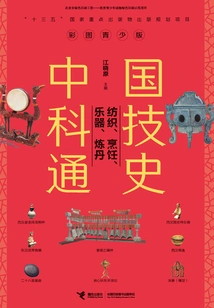
General History of Chinese Science and Technology: Textiles, Cooking, Musical Instruments, Alchemy
History中国科技通史:纺织、烹饪、乐器、炼丹
Editor-in-chief Jiang Xiaoyuan
Sericulture is an important skill created by the working people in ancient China. Silk fiber is China's most distinctive textile raw material. The names of fabrics such as silk, satin, brocade, and silk are distinguished by their silk weave structure. Ancient Chinese astronomical instruments can be divided into four categories: measuring instruments, such as equatorial mounts, armillary spheres, simplified spheres, etc.; Timing instruments, such as chronometers, sundials, cleats, etc.; Demonstration instruments, such as armillary spheres, sky-covering spheres, etc.; Comprehensive astronomical instruments, such as armillary spheres, water-operated telescopes, etc. Alchemy first originated in China, sprouted in the Warring States Period, and occurred in the Qin and Han Dynasties. It later developed increasingly with the support of Taoism and the tolerance of the imperial court, and reached its peak in the Tang Dynasty.
Sericulture is an important skill created by the working people in ancient China. Silk fiber is China's most distinctive textile raw material. The names of fabrics such as silk, satin, brocade, and silk are distinguished by their silk weave structure. Ancient Chinese astronomical instruments can be divided into four categories: measuring instruments, such as equatorial mounts, armillary spheres, simplified spheres, etc.; Timing instruments, such as chronometers, sundials, cleats, etc.; Demonstration instruments, such as armillary spheres, sky-covering spheres, etc.; Comprehensive astronomical instruments, such as armillary spheres, water-operated telescopes, etc. Alchemy first originated in China, sprouted in the Warring States Period, and occurred in the Qin and Han Dynasties. It later developed increasingly with the support of Taoism and the tolerance of the imperial court, and reached its peak in the Tang Dynasty.