Library
Browse and search books
7 novels found
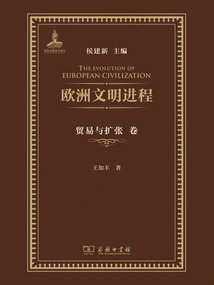
欧洲文明进程(贸易与扩张卷)
Editor-in-chief Hou Jianxin
This book discusses European trade and expansion since the Middle Ages from the perspective of cultural tradition, covering a time range from approximately the 9th century AD to the present day. The Europe mentioned here mainly refers to what is generally known as Western Europe, including Scandinavia in northern Europe through Germany and Austria to Italy in southern Europe and Europe to the west. It is the area where Catholicism and Protestantism are popular today, but it does not include Poland, Hungary and other Eastern European countries where Catholicism is popular. In addition to the "Preface", this book is divided into four parts. Part One discusses the expansion of Western Europe in the medieval period. The second part tells the story of Europe's initial establishment of a world market centered on Western Europe through the Great Geographical Discovery (or "opening of new shipping routes"), which was the beginning of world conquests. The third part discusses the process of Europe's struggle for hegemony in early modern times to export commodities. Its content follows the second part and belongs to the era of commercial capitalism. Part Four discusses trade and expansion in Western Europe since the Industrial Revolution.
This book discusses European trade and expansion since the Middle Ages from the perspective of cultural tradition, covering a time range from approximately the 9th century AD to the present day. The Europe mentioned here mainly refers to what is generally known as Western Europe, including Scandinavia in northern Europe through Germany and Austria to Italy in southern Europe and Europe to the west. It is the area where Catholicism and Protestantism are popular today, but it does not include Poland, Hungary and other Eastern European countries where Catholicism is popular. In addition to the "Preface", this book is divided into four parts. Part One discusses the expansion of Western Europe in the medieval period. The second part tells the story of Europe's initial establishment of a world market centered on Western Europe through the Great Geographical Discovery (or "opening of new shipping routes"), which was the beginning of world conquests. The third part discusses the process of Europe's struggle for hegemony in early modern times to export commodities. Its content follows the second part and belongs to the era of commercial capitalism. Part Four discusses trade and expansion in Western Europe since the Industrial Revolution.
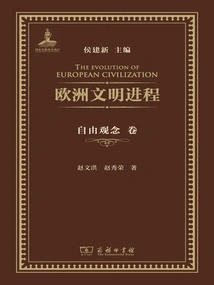
欧洲文明进程(自由观念卷)
Editor-in-chief Hou Jianxin
"The Process of European Civilization·History of the Concept of Freedom" mainly introduces the Western concept of freedom since the Middle Ages, and sorts out Westerners' interpretation of the concept of freedom from the perspectives of philosophy and ethics. The Western concept of freedom has a long historical origin, which can be traced back to the ancient Greek city-states. After the development in the Middle Ages and modern times, it has gained richer connotations, constantly promoting the process of European civilization, and especially having an important influence on the development of modern capitalism in Western Europe. This volume focuses on the development and practice of Western concepts of political freedom and economic freedom. The author believes that political freedom and economic freedom are the premise and foundation of freedom in other aspects. Therefore, a discussion that links the concept of freedom with Western social practice and combines the history of thought with political and economic history is conducive to a comprehensive understanding of the development of the concept of freedom from the perspective of social and historical practice, and then deepens and systematizes the understanding of the history of Western political thought. In addition, the author also recognizes the limitations of freedom, and further examines the concepts and practices of intervening, opposing and restricting freedom in modern times in the West, in order to gain a more comprehensive understanding of the Western concept of freedom.
"The Process of European Civilization·History of the Concept of Freedom" mainly introduces the Western concept of freedom since the Middle Ages, and sorts out Westerners' interpretation of the concept of freedom from the perspectives of philosophy and ethics. The Western concept of freedom has a long historical origin, which can be traced back to the ancient Greek city-states. After the development in the Middle Ages and modern times, it has gained richer connotations, constantly promoting the process of European civilization, and especially having an important influence on the development of modern capitalism in Western Europe. This volume focuses on the development and practice of Western concepts of political freedom and economic freedom. The author believes that political freedom and economic freedom are the premise and foundation of freedom in other aspects. Therefore, a discussion that links the concept of freedom with Western social practice and combines the history of thought with political and economic history is conducive to a comprehensive understanding of the development of the concept of freedom from the perspective of social and historical practice, and then deepens and systematizes the understanding of the history of Western political thought. In addition, the author also recognizes the limitations of freedom, and further examines the concepts and practices of intervening, opposing and restricting freedom in modern times in the West, in order to gain a more comprehensive understanding of the Western concept of freedom.
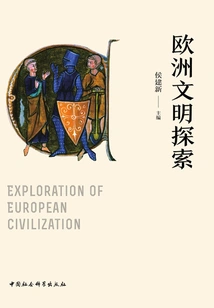
欧洲文明探索
Editor-in-chief Hou Jianxin
From the perspective of the discipline of economic and social history, this book collects special research papers on the history of European civilization, covering the origins and concepts of European civilization, development and rights, life and customs, conflicts and peace, and has both theoretical exploration and empirical analysis. Western civilization, that is, European civilization in history, is a different civilization from classical civilization. It is true that it drew "inspiration" from classical civilization, but the Germanic-dominated Western European nations, as well as Germanic culture and Christianity filtered through the Middle Ages, undoubtedly played a more important role. Western civilization was born in the Middle Ages, and Europe modernized a few centuries later. However, the basic rules of its civilization were already established in the middle ages.
From the perspective of the discipline of economic and social history, this book collects special research papers on the history of European civilization, covering the origins and concepts of European civilization, development and rights, life and customs, conflicts and peace, and has both theoretical exploration and empirical analysis. Western civilization, that is, European civilization in history, is a different civilization from classical civilization. It is true that it drew "inspiration" from classical civilization, but the Germanic-dominated Western European nations, as well as Germanic culture and Christianity filtered through the Middle Ages, undoubtedly played a more important role. Western civilization was born in the Middle Ages, and Europe modernized a few centuries later. However, the basic rules of its civilization were already established in the middle ages.
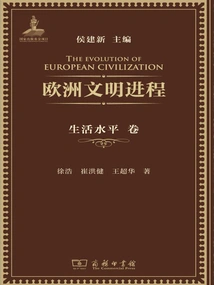
欧洲文明进程(生活水平卷)
Editor-in-chief Hou Jianxin
"The Process of European Civilization? Living Standards Volume" is divided into three parts: the Middle Ages (5th to 15th centuries), the transition period (16th to 18th centuries), and the modern era (19th to 20th centuries). Each part has five chapters, and the whole volume has fifteen chapters in total. This volume is guided by Marxism and based on empirical research. Based on a comprehensive analysis of the influencing factors such as the level of productivity development and income distribution, this volume selects ordinary people such as low-income earners, the elderly, and the middle class as samples, and attempts to examine the definition, composition, income sources, consumption content, and consumption patterns of the samples, etc. Conduct in-depth and systematic special research on the long-term trend of Europeans' living standards from the Middle Ages to modern times to clarify the economic and political reasons, main nodes, universal benefits and differences in the improvement of ordinary people's living standards in the process of European civilization over the past thousand years, and to analyze the long-term deviations in the understanding of related issues in Western population theory and traditional economic history.
"The Process of European Civilization? Living Standards Volume" is divided into three parts: the Middle Ages (5th to 15th centuries), the transition period (16th to 18th centuries), and the modern era (19th to 20th centuries). Each part has five chapters, and the whole volume has fifteen chapters in total. This volume is guided by Marxism and based on empirical research. Based on a comprehensive analysis of the influencing factors such as the level of productivity development and income distribution, this volume selects ordinary people such as low-income earners, the elderly, and the middle class as samples, and attempts to examine the definition, composition, income sources, consumption content, and consumption patterns of the samples, etc. Conduct in-depth and systematic special research on the long-term trend of Europeans' living standards from the Middle Ages to modern times to clarify the economic and political reasons, main nodes, universal benefits and differences in the improvement of ordinary people's living standards in the process of European civilization over the past thousand years, and to analyze the long-term deviations in the understanding of related issues in Western population theory and traditional economic history.
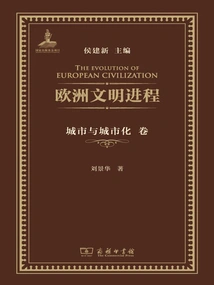
欧洲文明进程(城市与城市化卷)
Editor-in-chief Hou Jianxin
"European Civilization Process·Cities and Urbanization Volume" mainly places the history of European urban development and urbanization since the 11th century within the broad historical framework of the European Civilization Process. It focuses on the inner connection between urban development and urbanization and the European civilization process and characteristics. It explores the development laws of cities and urbanization, the difficulties and problems encountered, and analyzes their causes, in order to provide some reference for my country's urbanization. In this volume, the author points out that among the many characteristics and advantages of European civilization, the development of cities and the urbanization process of society are one of its most prominent features and advantages. Urban civilization is one of the most important manifestations of European civilization. Therefore, examining the development of cities and the urbanization process is an important part of studying the process of European civilization. European urbanization can be roughly divided into three stages: the 11th to 15th centuries were the era of "community" in cities. The general rise of cities, cities forming communities and striving for autonomy were the main characteristics of this period; the 15th to 18th centuries were the "transformation" period of cities, that is, cities were reborn from traditional forms to modern forms. This was a period The degeneration process of individuality; after the start of the British Industrial Revolution in the mid-18th century, cities experienced great expansion both geographically and in terms of population. Urbanization became the main trend in the development of European cities. The urbanization process is the process of universalizing urban lifestyles. The quality of cities has been greatly improved, and the rural areas have also completed the urbanization process.
"European Civilization Process·Cities and Urbanization Volume" mainly places the history of European urban development and urbanization since the 11th century within the broad historical framework of the European Civilization Process. It focuses on the inner connection between urban development and urbanization and the European civilization process and characteristics. It explores the development laws of cities and urbanization, the difficulties and problems encountered, and analyzes their causes, in order to provide some reference for my country's urbanization. In this volume, the author points out that among the many characteristics and advantages of European civilization, the development of cities and the urbanization process of society are one of its most prominent features and advantages. Urban civilization is one of the most important manifestations of European civilization. Therefore, examining the development of cities and the urbanization process is an important part of studying the process of European civilization. European urbanization can be roughly divided into three stages: the 11th to 15th centuries were the era of "community" in cities. The general rise of cities, cities forming communities and striving for autonomy were the main characteristics of this period; the 15th to 18th centuries were the "transformation" period of cities, that is, cities were reborn from traditional forms to modern forms. This was a period The degeneration process of individuality; after the start of the British Industrial Revolution in the mid-18th century, cities experienced great expansion both geographically and in terms of population. Urbanization became the main trend in the development of European cities. The urbanization process is the process of universalizing urban lifestyles. The quality of cities has been greatly improved, and the rural areas have also completed the urbanization process.
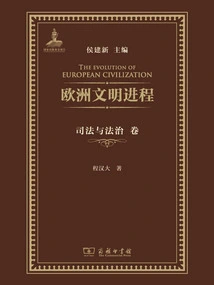
欧洲文明进程(司法与法治卷)
Editor-in-chief Hou Jianxin
In the history of human civilization under the rule of law, Europe has always been at the forefront of the world. An important reason for achieving this leading position is that Europe established and maintained an excellent and advanced judicial civilization earlier. According to the context of historical development, this book systematically introduces the origin of the European rule of law, the establishment of the rule of law in the Middle Ages, the development of justice and the rule of law in modern society, and the successful exploration of justice in the process of European integration in recent years. From the perspective of justice, the author conducted in-depth discussions and research on the origins of the advanced nature of European legal civilization.
In the history of human civilization under the rule of law, Europe has always been at the forefront of the world. An important reason for achieving this leading position is that Europe established and maintained an excellent and advanced judicial civilization earlier. According to the context of historical development, this book systematically introduces the origin of the European rule of law, the establishment of the rule of law in the Middle Ages, the development of justice and the rule of law in modern society, and the successful exploration of justice in the process of European integration in recent years. From the perspective of justice, the author conducted in-depth discussions and research on the origins of the advanced nature of European legal civilization.
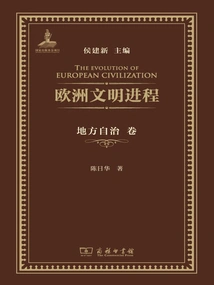
欧洲文明进程(地方自治卷)
Editor-in-chief Hou Jianxin
This volume is "The Process of European Civilization·Local Self-Government Volume", which mainly examines the development and characteristics of the local self-government system and its role in the development of civilization in Europe from the Middle Ages to the modern political and social process. In different historical periods, the relationship between central and local governments in major European countries has shown its own content and characteristics, which are closely related to factors such as historical traditions, feudal systems, nation-states, industrialization and democratization, and the formation of welfare states. On the basis of each having its own characteristics, the central-local relations in major European countries also show some commonalities, reflecting the general laws of the development of European civilization. We roughly divide it into three stages: the first stage is the central and local relations in the feudal era; the second stage is the central and local relations in the nation-state period; and the third stage is the relationship between the central and local governments since the 19th century. This division is based on different stages of European historical development and has a certain degree of ambiguity and extensibility. This division helps readers understand the characteristics of the relationship between the central and local governments during the development of European civilization. In essence, this relationship also embodies the connotation of European civilization. What needs to be pointed out in particular is that European countries have successful experiences and practical lessons in governance, which we need to understand objectively and comprehensively.
This volume is "The Process of European Civilization·Local Self-Government Volume", which mainly examines the development and characteristics of the local self-government system and its role in the development of civilization in Europe from the Middle Ages to the modern political and social process. In different historical periods, the relationship between central and local governments in major European countries has shown its own content and characteristics, which are closely related to factors such as historical traditions, feudal systems, nation-states, industrialization and democratization, and the formation of welfare states. On the basis of each having its own characteristics, the central-local relations in major European countries also show some commonalities, reflecting the general laws of the development of European civilization. We roughly divide it into three stages: the first stage is the central and local relations in the feudal era; the second stage is the central and local relations in the nation-state period; and the third stage is the relationship between the central and local governments since the 19th century. This division is based on different stages of European historical development and has a certain degree of ambiguity and extensibility. This division helps readers understand the characteristics of the relationship between the central and local governments during the development of European civilization. In essence, this relationship also embodies the connotation of European civilization. What needs to be pointed out in particular is that European countries have successful experiences and practical lessons in governance, which we need to understand objectively and comprehensively.