Library
Browse and search books
2 novels found
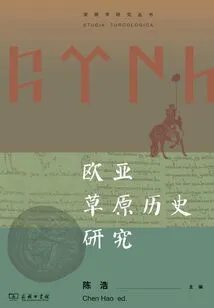
欧亚草原历史研究
Editor-in-chief Chen Hao
This book is the Chinese translation of the proceedings of the "Seventh International Academic Symposium on Medieval Eurasian Steppe" held in Shanghai in 2018. Because most of the authors of this collection are internationally famous experts in the study of the Eurasian steppe, even young scholars are the first choice. Their articles are representative and authoritative to a certain extent, so the Chinese version of the book is titled "The History of the Eurasian Steppe". Compared with the English version of the conference proceedings, except for the title, the structure of the book has been adjusted. The English version of the collection contains a total of 27 articles, arranged directly in order of the first letter of the author's surname. The Chinese version includes one more article. The whole book is divided into six major sections, namely archeology, history, literature, geography, religion, and culture. The length of each section varies between 4 and 5 articles. In addition, in order to reflect the standardization of the reader, an index is compiled at the end of the Chinese version, and the original text is marked on the proper names.
This book is the Chinese translation of the proceedings of the "Seventh International Academic Symposium on Medieval Eurasian Steppe" held in Shanghai in 2018. Because most of the authors of this collection are internationally famous experts in the study of the Eurasian steppe, even young scholars are the first choice. Their articles are representative and authoritative to a certain extent, so the Chinese version of the book is titled "The History of the Eurasian Steppe". Compared with the English version of the conference proceedings, except for the title, the structure of the book has been adjusted. The English version of the collection contains a total of 27 articles, arranged directly in order of the first letter of the author's surname. The Chinese version includes one more article. The whole book is divided into six major sections, namely archeology, history, literature, geography, religion, and culture. The length of each section varies between 4 and 5 articles. In addition, in order to reflect the standardization of the reader, an index is compiled at the end of the Chinese version, and the original text is marked on the proper names.
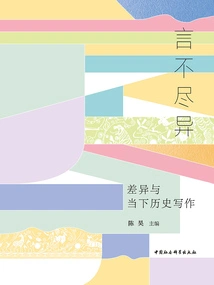
言不尽异:差异与当下历史写作
Editor-in-chief Chen Hao
Differences are ubiquitous in current historical research. Differences diversify our research objects and themes. Differences are changing our questioning methods. More importantly, the connection between differences and identity makes us have a more complex relationship with the research objects. This book is a collection of the results of the discussion on "Difference and Current Historical Writing", the second of the series of conferences "Writing History: Reflections in Practice" held in 2016. It shows the possibility of current historical research and also shows that differences emerge at different stages and levels of historical writing. Asking about difference is also asking, in historical writing, what is its antonym, and how do the entanglements of meaning associated with it emerge? The semantic changes of difference are caused by the accumulation of academic history and have penetrated into the daily practice of historians. From encountering "historical materials" to searching for explanations, and even encountering research results with readers, every step is closely related to difference.
Differences are ubiquitous in current historical research. Differences diversify our research objects and themes. Differences are changing our questioning methods. More importantly, the connection between differences and identity makes us have a more complex relationship with the research objects. This book is a collection of the results of the discussion on "Difference and Current Historical Writing", the second of the series of conferences "Writing History: Reflections in Practice" held in 2016. It shows the possibility of current historical research and also shows that differences emerge at different stages and levels of historical writing. Asking about difference is also asking, in historical writing, what is its antonym, and how do the entanglements of meaning associated with it emerge? The semantic changes of difference are caused by the accumulation of academic history and have penetrated into the daily practice of historians. From encountering "historical materials" to searching for explanations, and even encountering research results with readers, every step is closely related to difference.