Library
Browse and search books
2 novels found
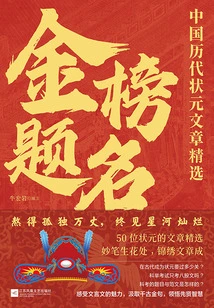
Titles on the Gold List: Selected Articles of China's Number One Scholars in Past Dynasties
Literature金榜题名:中国历代状元文章精选
Editor's Notes By Niu Hongyan
The imperial examination system was a system that used examinations to select officials from the Sui, Tang and Qing Dynasties. From the time when Emperor Yang of the Sui Dynasty established the Jinshi Department to the 31st year of the reign of Emperor Guangxu of the Qing Dynasty (1905) when the imperial examination was abolished, it existed in Chinese history for more than 1,300 years. Many students in the past dynasties have participated in examinations at various levels such as provincial examinations, joint examinations, and palace examinations. Among them, the person who ranks first in high school in the imperial examination is called the number one scholar. Through the imperial examination, the imperial court raised questions about classics, meanings, or political affairs, asked difficult questions in simple terms, and solicited answers, which were used to examine the academic level and understanding of national government affairs of the candidates. This book is a collection of selected imperial examination articles from past dynasties, and has been compiled into a collection. Traditional Chinese characters have been converted into simplified Chinese characters, and variant characters have been changed into popular simplified Chinese characters. The punctuation has been unified according to the usage of modern punctuation marks, making it easier for readers to read these imperial examination articles and gain knowledge.
The imperial examination system was a system that used examinations to select officials from the Sui, Tang and Qing Dynasties. From the time when Emperor Yang of the Sui Dynasty established the Jinshi Department to the 31st year of the reign of Emperor Guangxu of the Qing Dynasty (1905) when the imperial examination was abolished, it existed in Chinese history for more than 1,300 years. Many students in the past dynasties have participated in examinations at various levels such as provincial examinations, joint examinations, and palace examinations. Among them, the person who ranks first in high school in the imperial examination is called the number one scholar. Through the imperial examination, the imperial court raised questions about classics, meanings, or political affairs, asked difficult questions in simple terms, and solicited answers, which were used to examine the academic level and understanding of national government affairs of the candidates. This book is a collection of selected imperial examination articles from past dynasties, and has been compiled into a collection. Traditional Chinese characters have been converted into simplified Chinese characters, and variant characters have been changed into popular simplified Chinese characters. The punctuation has been unified according to the usage of modern punctuation marks, making it easier for readers to read these imperial examination articles and gain knowledge.
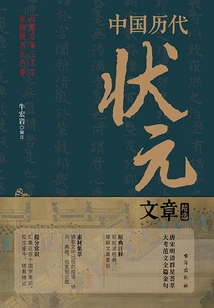
中国历代状元文章精选
Editor's Notes By Niu Hongyan
The imperial examination system was a system that used examinations to select officials from the Sui, Tang and Qing Dynasties. From the time when Emperor Yang of the Sui Dynasty established the Jinshi Department to the 31st year of the reign of Emperor Guangxu of the Qing Dynasty (1905) when the imperial examination was abolished, it existed in Chinese history for more than 1,300 years. Many students in the past dynasties have participated in examinations at various levels such as provincial examinations, joint examinations, and palace examinations. Among them, the person who ranks first in high school in the imperial examination is called the number one scholar. Through the imperial examination, the imperial court raised questions about classics, meanings, or political affairs, asked difficult questions in simple terms, and solicited answers, which were used to examine the academic level and understanding of national government affairs of the candidates. This book is a collection of selected imperial examination articles from past dynasties, and has been compiled into a collection. Traditional Chinese characters have been converted into simplified Chinese characters, and variant characters have been changed into popular simplified Chinese characters. The punctuation has been unified according to the usage of modern punctuation marks, making it easier for readers to read these imperial examination articles and gain knowledge.
The imperial examination system was a system that used examinations to select officials from the Sui, Tang and Qing Dynasties. From the time when Emperor Yang of the Sui Dynasty established the Jinshi Department to the 31st year of the reign of Emperor Guangxu of the Qing Dynasty (1905) when the imperial examination was abolished, it existed in Chinese history for more than 1,300 years. Many students in the past dynasties have participated in examinations at various levels such as provincial examinations, joint examinations, and palace examinations. Among them, the person who ranks first in high school in the imperial examination is called the number one scholar. Through the imperial examination, the imperial court raised questions about classics, meanings, or political affairs, asked difficult questions in simple terms, and solicited answers, which were used to examine the academic level and understanding of national government affairs of the candidates. This book is a collection of selected imperial examination articles from past dynasties, and has been compiled into a collection. Traditional Chinese characters have been converted into simplified Chinese characters, and variant characters have been changed into popular simplified Chinese characters. The punctuation has been unified according to the usage of modern punctuation marks, making it easier for readers to read these imperial examination articles and gain knowledge.