Library
Browse and search books
12 novels found
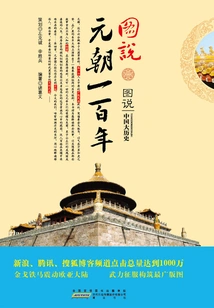
图说元朝一百年
Edited By Zhuge Wen
This book will interpret those stories for you, as well as the unknown secrets and dazzling flesh-and-blood lives hidden behind those stories. In this book, you will see the instant glory and setbacks suffered by the arrogant Yuan emperors. Every succession of the throne seems to be accompanied by bloody family fratricide, and family ties once became a tool to be exploited - Yuan Wuzong died mysteriously in less than four years after he reigned. After his younger brother Aiyuli Balibada inherited the throne, he followed in his brother's footsteps in less than nine years. In this book, you will see the generous tragedies of heroes and legends through the ages, as well as many incredible anecdotes and mysteries. Why could Pasiba become Kublai Khan's imperial master? Why were the Hama brothers killed with a stick at the same time? How sweet is the taste of power that makes family ties fall into pieces? When blood with a fishy and sweet smell spurts out from the seven orifices, will those souls who once fought fiercely for power have some insights? ...
This book will interpret those stories for you, as well as the unknown secrets and dazzling flesh-and-blood lives hidden behind those stories. In this book, you will see the instant glory and setbacks suffered by the arrogant Yuan emperors. Every succession of the throne seems to be accompanied by bloody family fratricide, and family ties once became a tool to be exploited - Yuan Wuzong died mysteriously in less than four years after he reigned. After his younger brother Aiyuli Balibada inherited the throne, he followed in his brother's footsteps in less than nine years. In this book, you will see the generous tragedies of heroes and legends through the ages, as well as many incredible anecdotes and mysteries. Why could Pasiba become Kublai Khan's imperial master? Why were the Hama brothers killed with a stick at the same time? How sweet is the taste of power that makes family ties fall into pieces? When blood with a fishy and sweet smell spurts out from the seven orifices, will those souls who once fought fiercely for power have some insights? ...
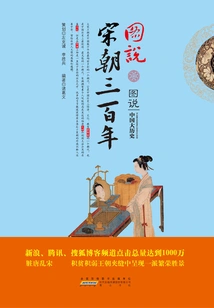
图说宋朝三百年
Edited By Zhuge Wen
The Song Dynasty lasted for more than three hundred years, but it became one of the most controversial dynasties in history. Politically, it is sluggish and has been repeatedly attacked by ethnic minorities in the north; economically, it is prosperous and has created a splendid culture. This book provides a comprehensive introduction to the Song Dynasty from the aspects of politics, economy, military and social life: What was the purpose of Song Taizu's "cup of wine to release military power"? How did Song Huizong "play away" the country? Is "a civet cat for a prince" true or false? Who is the prototype of the "Eight Wise Kings" among the Yang family generals? Is the tattoo on Yue Fei's back "Serving the Country with Loyalty"? What is the relationship between the weakened combat effectiveness of the Song Army and the breed of military horses? Why did Li Qingzhao get divorced again after remarrying? Why did men in the Song Dynasty like to wear a flower on their head? ... Illustrations illustrate a three-hundred-year history of the Song Dynasty, explaining all the truth and tasting the true flavor.
The Song Dynasty lasted for more than three hundred years, but it became one of the most controversial dynasties in history. Politically, it is sluggish and has been repeatedly attacked by ethnic minorities in the north; economically, it is prosperous and has created a splendid culture. This book provides a comprehensive introduction to the Song Dynasty from the aspects of politics, economy, military and social life: What was the purpose of Song Taizu's "cup of wine to release military power"? How did Song Huizong "play away" the country? Is "a civet cat for a prince" true or false? Who is the prototype of the "Eight Wise Kings" among the Yang family generals? Is the tattoo on Yue Fei's back "Serving the Country with Loyalty"? What is the relationship between the weakened combat effectiveness of the Song Army and the breed of military horses? Why did Li Qingzhao get divorced again after remarrying? Why did men in the Song Dynasty like to wear a flower on their head? ... Illustrations illustrate a three-hundred-year history of the Song Dynasty, explaining all the truth and tasting the true flavor.
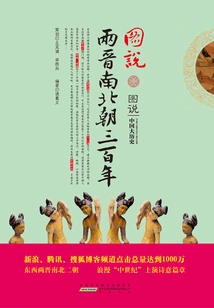
图说两晋南北朝三百年
Edited By Zhuge Wen
Sandwiched between the two glorious and prosperous times, the Jin and Southern and Northern Dynasties were the most romantic "Middle Ages" in China! Here is the exciting history of the Sixteen Kingdoms, the Northern Dynasties that established great martial arts, and even the aristocratic families of the Southern Dynasties. This era seems a bit "atypical", but it is this "atypical" that creates the future appearance of China! Who knows the unknown world imagined by Chinese people before the Qin and Han Dynasties? Buddhism and Taoism gave China a colorful picture. Who can appreciate literary works from the pre-Qin era? After the development and changes in the Jin and Southern and Northern Dynasties, poetry, poetry, and novels gradually adapted to the tastes of modern people.
Sandwiched between the two glorious and prosperous times, the Jin and Southern and Northern Dynasties were the most romantic "Middle Ages" in China! Here is the exciting history of the Sixteen Kingdoms, the Northern Dynasties that established great martial arts, and even the aristocratic families of the Southern Dynasties. This era seems a bit "atypical", but it is this "atypical" that creates the future appearance of China! Who knows the unknown world imagined by Chinese people before the Qin and Han Dynasties? Buddhism and Taoism gave China a colorful picture. Who can appreciate literary works from the pre-Qin era? After the development and changes in the Jin and Southern and Northern Dynasties, poetry, poetry, and novels gradually adapted to the tastes of modern people.
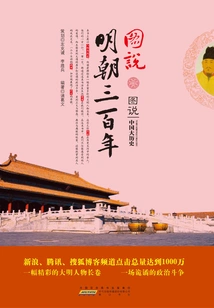
图说明朝三百年
Edited By Zhuge Wen
"Illustrated Three Hundred Years of the Ming Dynasty" mainly uses characters as clues to depict a rich and colorful scroll of Ming Dynasty figures to readers. These ancient people who have disappeared in the long river of history, their every word, deed, and smile are all vividly reappeared in front of us through this book. In this book, we can not only feel the touching love, but also see the ruthless massacre and treacherous political struggles, the battle between justice and evil, integrity and corruption, and appreciate the romantic literary talents of celebrities. Each vivid story truly shows the original appearance of history.
"Illustrated Three Hundred Years of the Ming Dynasty" mainly uses characters as clues to depict a rich and colorful scroll of Ming Dynasty figures to readers. These ancient people who have disappeared in the long river of history, their every word, deed, and smile are all vividly reappeared in front of us through this book. In this book, we can not only feel the touching love, but also see the ruthless massacre and treacherous political struggles, the battle between justice and evil, integrity and corruption, and appreciate the romantic literary talents of celebrities. Each vivid story truly shows the original appearance of history.
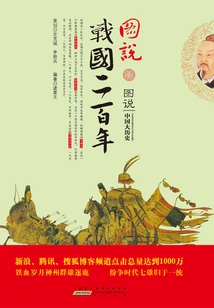
图说战国二百年
Edited By Zhuge Wen
This book strives to clear up the fog of palace secrets of the "Seven Heroes of the Warring States Period" - Qi, Chu, Yan, Han, Zhao, Wei, Qin and other countries. There is a wonderful introduction to the hero King Zhao Wuling who "mounted and shot in Hufu", and there is also a sigh of regret at his tragic death in the Sand Dune Palace; there is endless praise for the ugly but kind-hearted, virtuous queen Zhong Wuyan and the tumor girl; there is also ruthless satire on the concubine Zheng Xiu, who looks like a fairy, is delicious but has a heart like a snake and a scorpion, and is extremely vicious. Readers can also see the true face of the fourth son of the Warring States Period as a royal noble and a nobleman of Tianhuang: Why did Lord Xinling want to "steal the talisman to save Zhao"? Is Mr. Mengchang a "cock-crowding-dog-robber" kind of person? How did Lord Chun Shen "die in the Thorny Gate"? Did Mr. Pingyuan kill his concubine as a sincere apology or a public relations crisis? This book also provides detailed analysis of each historical event and an in-depth and simple interpretation of each historical figure to help you understand the famous generals who showed off their power and majesty on the battlefield in the war-torn era of the Warring States Period. What are the things that are different from ordinary people; what are the unknown secrets of those civil servants who make suggestions in the court and stabilize the country; what are the unique features of those lobbyists who rely on their "sharp teeth and sharp tongue" to preach the art of combining vertical and horizontal lines... Finally, this book also interprets one by one the large number of influential thinkers who emerged in the Warring States period, an era when thought and culture were very prosperous, so that they are no longer indifferent spiritual tablets and idols enshrined in temples, nor cold classics stained with the dust of time and shelved in high cabinets, but wise men and sages with flesh and blood, thoughts and souls.
This book strives to clear up the fog of palace secrets of the "Seven Heroes of the Warring States Period" - Qi, Chu, Yan, Han, Zhao, Wei, Qin and other countries. There is a wonderful introduction to the hero King Zhao Wuling who "mounted and shot in Hufu", and there is also a sigh of regret at his tragic death in the Sand Dune Palace; there is endless praise for the ugly but kind-hearted, virtuous queen Zhong Wuyan and the tumor girl; there is also ruthless satire on the concubine Zheng Xiu, who looks like a fairy, is delicious but has a heart like a snake and a scorpion, and is extremely vicious. Readers can also see the true face of the fourth son of the Warring States Period as a royal noble and a nobleman of Tianhuang: Why did Lord Xinling want to "steal the talisman to save Zhao"? Is Mr. Mengchang a "cock-crowding-dog-robber" kind of person? How did Lord Chun Shen "die in the Thorny Gate"? Did Mr. Pingyuan kill his concubine as a sincere apology or a public relations crisis? This book also provides detailed analysis of each historical event and an in-depth and simple interpretation of each historical figure to help you understand the famous generals who showed off their power and majesty on the battlefield in the war-torn era of the Warring States Period. What are the things that are different from ordinary people; what are the unknown secrets of those civil servants who make suggestions in the court and stabilize the country; what are the unique features of those lobbyists who rely on their "sharp teeth and sharp tongue" to preach the art of combining vertical and horizontal lines... Finally, this book also interprets one by one the large number of influential thinkers who emerged in the Warring States period, an era when thought and culture were very prosperous, so that they are no longer indifferent spiritual tablets and idols enshrined in temples, nor cold classics stained with the dust of time and shelved in high cabinets, but wise men and sages with flesh and blood, thoughts and souls.
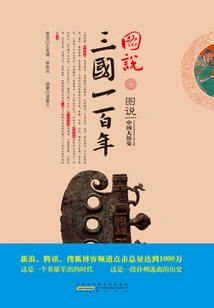
图说三国一百年
Edited By Zhuge Wen
During the Three Kingdoms period, heroes competed with each other and wars broke out frequently. The charisma of the heroes is vivid and vivid. Military generals are good at conquering and fighting, and all of them are outstanding; counselors have unparalleled strategies and can calculate inexhaustible strategies. There are also heroes who are both civil and military. Cao Cao, Liu Bei, and Sun Quan were all heroes, capable of both literary and military skills. The Three Kingdoms was an era of turmoil, great changes, and heroes emerged in large numbers. It was a fascinating era. Countless heroes showed their talents there and dominated the situation. It can be said that the country is picturesque and there are so many heroes at one time. "A Hundred Years of the Three Kingdoms in Illustration" gives a relatively comprehensive and detailed description of this special historical era of the Three Kingdoms from the perspective of exploring and revealing secrets, from the aspects of feudal lords' struggle for hegemony, civil servants and generals, politics and military, ideological and cultural, folk anecdotes, and the missing imperial tombs.
During the Three Kingdoms period, heroes competed with each other and wars broke out frequently. The charisma of the heroes is vivid and vivid. Military generals are good at conquering and fighting, and all of them are outstanding; counselors have unparalleled strategies and can calculate inexhaustible strategies. There are also heroes who are both civil and military. Cao Cao, Liu Bei, and Sun Quan were all heroes, capable of both literary and military skills. The Three Kingdoms was an era of turmoil, great changes, and heroes emerged in large numbers. It was a fascinating era. Countless heroes showed their talents there and dominated the situation. It can be said that the country is picturesque and there are so many heroes at one time. "A Hundred Years of the Three Kingdoms in Illustration" gives a relatively comprehensive and detailed description of this special historical era of the Three Kingdoms from the perspective of exploring and revealing secrets, from the aspects of feudal lords' struggle for hegemony, civil servants and generals, politics and military, ideological and cultural, folk anecdotes, and the missing imperial tombs.
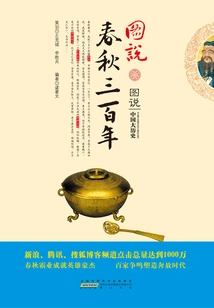
图说春秋三百年
Edited By Zhuge Wen
The Spring and Autumn Period was the most prosperous and colorful period in Chinese history. Here, from the tolerance of Duke Zhuang of Zheng to the perseverance of King Gou Jian of Yue, you can see the preciousness of imperial style; from Bo Ji's death in the sea of fire to Xia Ji's youthfulness, you can see the virtuousness and charm of women in the Spring and Autumn Period; from Guan Zhong assisting Duke Huan of Qi to dominate to Fan Li helping Yue When the country destroyed Wu, you can see the governance skills of our ancestors; from Laozi's "Tao Te Ching" to Confucius's "Four Books and Five Classics", you can see how brilliant the ancients' attitude towards life and scholarship was; from Sun Tzu's Art of War to Shang Yang's reforms, you can also see the different paths of national prosperity. You can also see how complicated the intrigues between countries were during the Spring and Autumn Period. The annexation of princes by the weak and the strong was full of shamelessness and violence. The treachery behind the good relationship between Qin and Jin. The magnificent war scenes when Jin and Chu fought for hegemony in the Central Plains were no less than any other era since then.
The Spring and Autumn Period was the most prosperous and colorful period in Chinese history. Here, from the tolerance of Duke Zhuang of Zheng to the perseverance of King Gou Jian of Yue, you can see the preciousness of imperial style; from Bo Ji's death in the sea of fire to Xia Ji's youthfulness, you can see the virtuousness and charm of women in the Spring and Autumn Period; from Guan Zhong assisting Duke Huan of Qi to dominate to Fan Li helping Yue When the country destroyed Wu, you can see the governance skills of our ancestors; from Laozi's "Tao Te Ching" to Confucius's "Four Books and Five Classics", you can see how brilliant the ancients' attitude towards life and scholarship was; from Sun Tzu's Art of War to Shang Yang's reforms, you can also see the different paths of national prosperity. You can also see how complicated the intrigues between countries were during the Spring and Autumn Period. The annexation of princes by the weak and the strong was full of shamelessness and violence. The treachery behind the good relationship between Qin and Jin. The magnificent war scenes when Jin and Chu fought for hegemony in the Central Plains were no less than any other era since then.
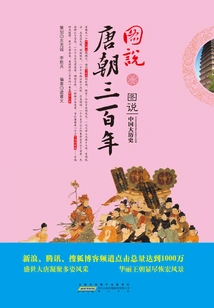
图说唐朝三百年
Edited By Zhuge Wen
During the dirty Tang Dynasty and the Song Dynasty, while the Tang Empire created a magnificent era, it also handed down a wealth of palace anecdotes: Why was Emperor Taizong of the Tang Dynasty so extravagant and corrupt in his later years? Why did Emperor Gaozong of the Tang Dynasty marry his queen with her limbs amputated? Why did the princesses of the Tang Dynasty become Taoist priests? What happened to the Tang Dynasty palace woman who became a queen? What is the "Shang Fang Sword" that Wei Zheng committed repeatedly? Are Li Bai and Yang Guifei involved in a relationship? The inside story of the Qianling Mausoleum, which has remained intact for thousands of years... The legendary glorious temple has long been covered with cobwebs and knee-deep in weeds, leaving us with both pride and regret. Sweeping away the dust of history and discarding the distant noise, let us travel through the mists of time, unfold the scrolls of the Tang Dynasty, and relive those historical stories.
During the dirty Tang Dynasty and the Song Dynasty, while the Tang Empire created a magnificent era, it also handed down a wealth of palace anecdotes: Why was Emperor Taizong of the Tang Dynasty so extravagant and corrupt in his later years? Why did Emperor Gaozong of the Tang Dynasty marry his queen with her limbs amputated? Why did the princesses of the Tang Dynasty become Taoist priests? What happened to the Tang Dynasty palace woman who became a queen? What is the "Shang Fang Sword" that Wei Zheng committed repeatedly? Are Li Bai and Yang Guifei involved in a relationship? The inside story of the Qianling Mausoleum, which has remained intact for thousands of years... The legendary glorious temple has long been covered with cobwebs and knee-deep in weeds, leaving us with both pride and regret. Sweeping away the dust of history and discarding the distant noise, let us travel through the mists of time, unfold the scrolls of the Tang Dynasty, and relive those historical stories.
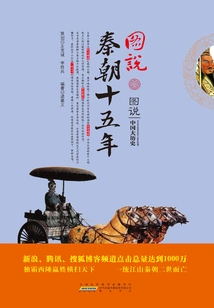
图说秦朝十五年
Edited By Zhuge Wen
Through detailed analysis of each historical event and in-depth and simple interpretation of each historical figure, this book helps readers understand the Qin Dynasty, an era when the war had just been extinguished and the smoke was about to be ignited again. Those who showed off their power and majesty on the battlefield What are the differences between Lin's famous generals and ordinary people? What are the unknown secrets of those civil servants who made suggestions in the court and stabilized the country? What are the magical anecdotes and poignant experiences of the leaders of the peasant uprising army...
Through detailed analysis of each historical event and in-depth and simple interpretation of each historical figure, this book helps readers understand the Qin Dynasty, an era when the war had just been extinguished and the smoke was about to be ignited again. Those who showed off their power and majesty on the battlefield What are the differences between Lin's famous generals and ordinary people? What are the unknown secrets of those civil servants who made suggestions in the court and stabilized the country? What are the magical anecdotes and poignant experiences of the leaders of the peasant uprising army...
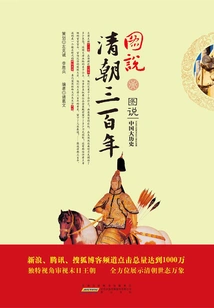
图说清朝三百年
Edited By Zhuge Wen
The three hundred years of Qing Dynasty history have left us with many confusing mysteries: Why was Nurhaci's eldest son Chu Ying killed? Is the married Qing princess happy? How did Xuan Ye become emperor? Will the palace maid stay in the palace for the rest of her life? Can a eunuch and a palace maid "get married"? How did Andhay die? How did Li Lianying die? How was beauty pageant conducted in the Qing Dynasty? Is it true that Manchus and Han cannot intermarry? How did Obai die? Is Zeng Guofan really the reincarnation of the leprous? How did Yuan Shikai die? Did Xiaozhuang marry her brother-in-law Dorgon? Why didn't she enter the Qing imperial mausoleum after her death? Why is Daoguang's mausoleum in the west? There are so many mysteries that attract future generations to uncover the mysterious veil and see its true face!
The three hundred years of Qing Dynasty history have left us with many confusing mysteries: Why was Nurhaci's eldest son Chu Ying killed? Is the married Qing princess happy? How did Xuan Ye become emperor? Will the palace maid stay in the palace for the rest of her life? Can a eunuch and a palace maid "get married"? How did Andhay die? How did Li Lianying die? How was beauty pageant conducted in the Qing Dynasty? Is it true that Manchus and Han cannot intermarry? How did Obai die? Is Zeng Guofan really the reincarnation of the leprous? How did Yuan Shikai die? Did Xiaozhuang marry her brother-in-law Dorgon? Why didn't she enter the Qing imperial mausoleum after her death? Why is Daoguang's mausoleum in the west? There are so many mysteries that attract future generations to uncover the mysterious veil and see its true face!
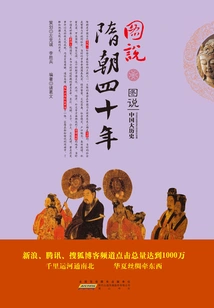
图说隋朝四十年
Edited By Zhuge Wen
The Sui Dynasty was also one of the short-lived dynasties under the unification situation in ancient China. The prosperous age of the Sui Dynasty was unprecedented in the history of China and the world. The society at that time was a prosperous and open society. The Chinese Empire at that time had a peaceful country and a peaceful people, a prosperous economy, a prosperous culture, a stable society, a long and sharp army, a rapid increase in cultivated land, abundant savings, strong armor and soldiers, and a vast territory. This period was a golden period when Chinese culture, politics, economy, and diplomacy reached their peak. At that time, China was the most powerful country in the world. "Forty Years of the Sui Dynasty in Pictures" tells the story of the Sui Dynasty's famous emperors, queens, concubines, princes, princesses, civil servants and generals, famous historical events, and technological and cultural achievements. The content of this book is concise and easy to understand. It integrates knowledge and storytelling, allowing you to understand and grasp the history of the Sui Dynasty in a relaxed and enjoyable reading.
The Sui Dynasty was also one of the short-lived dynasties under the unification situation in ancient China. The prosperous age of the Sui Dynasty was unprecedented in the history of China and the world. The society at that time was a prosperous and open society. The Chinese Empire at that time had a peaceful country and a peaceful people, a prosperous economy, a prosperous culture, a stable society, a long and sharp army, a rapid increase in cultivated land, abundant savings, strong armor and soldiers, and a vast territory. This period was a golden period when Chinese culture, politics, economy, and diplomacy reached their peak. At that time, China was the most powerful country in the world. "Forty Years of the Sui Dynasty in Pictures" tells the story of the Sui Dynasty's famous emperors, queens, concubines, princes, princesses, civil servants and generals, famous historical events, and technological and cultural achievements. The content of this book is concise and easy to understand. It integrates knowledge and storytelling, allowing you to understand and grasp the history of the Sui Dynasty in a relaxed and enjoyable reading.
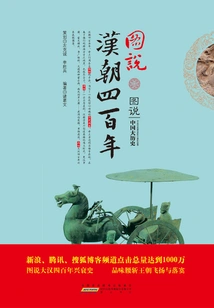
图说汉朝四百年
Edited By Zhuge Wen
On the 400-year-old stage of the Han Dynasty, the stars twinkled, emperors and concubines, famous ministers and generals, eunuchs and maids performed thrilling historical scenes: Did Liu Bang's son become a son to Empress Lu's daughter? Why did a game of chess by Emperor Jing of the Han Dynasty trigger the "Rebellion of the Seven Kingdoms"? Who was the virgin queen known as the Flower Goddess? Why did Wang Mang kill his biological son? Why is it said that Han Xin is "a confidant in success or failure, and a woman in life and death"? Why was it popular for women in the Han Dynasty to wear crotchless pants? Why did the emperor of the Western Han Dynasty like Chu Ge so much? Are the silk paintings in Mawangdui used to summon spirits? ... History is actually such a thing. It doesn't have to be bloody, it doesn't have to praise right and wrong, it doesn't have to punish the evil and praise the good, and it doesn't have to praise the good. It can completely create another feeling, which is humorous, allowing people to understand the profound meaning in a relaxed way, and feel that the business is still unfinished.
On the 400-year-old stage of the Han Dynasty, the stars twinkled, emperors and concubines, famous ministers and generals, eunuchs and maids performed thrilling historical scenes: Did Liu Bang's son become a son to Empress Lu's daughter? Why did a game of chess by Emperor Jing of the Han Dynasty trigger the "Rebellion of the Seven Kingdoms"? Who was the virgin queen known as the Flower Goddess? Why did Wang Mang kill his biological son? Why is it said that Han Xin is "a confidant in success or failure, and a woman in life and death"? Why was it popular for women in the Han Dynasty to wear crotchless pants? Why did the emperor of the Western Han Dynasty like Chu Ge so much? Are the silk paintings in Mawangdui used to summon spirits? ... History is actually such a thing. It doesn't have to be bloody, it doesn't have to praise right and wrong, it doesn't have to punish the evil and praise the good, and it doesn't have to praise the good. It can completely create another feeling, which is humorous, allowing people to understand the profound meaning in a relaxed way, and feel that the business is still unfinished.