Library
Browse and search books
1 novel found
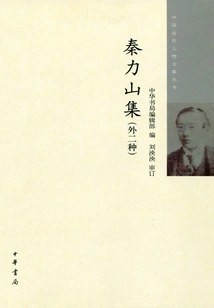
秦力山集·外二种(中国近代人物文集丛书)
Edited By The Editorial Department Of Zhonghua Book Company And Edited By Liu Yangyang
Qin Lishan (1877-1906) was originally named Dingyi, with the courtesy name Lishan. Originally from Wuxian County, Jiangsu Province, he was a native of Shanhua (now part of Changsha). In 1897, he entered the Changsha Current Affairs School and joined the Nanxue Society the following year. After the 1898 Coup, he went into exile in Japan and served as the chief writer of "Qing Yi Bao". In 1900, he went to Wuhan and Tang Caichang organized an independent army and served as the commander of the former army. After the incident failed, he fled to Japan again. In 1901, he founded the National Daily, which was the first newspaper to promote the revolution among students studying in Japan. Later, he founded the monthly magazine "Mainland" and tried his best to refute Kang and Liang's royalist remarks. In 1905, he entered Yunnan to engage in anti-Qing activities. He became ill from overwork and died of illness the next year. This book collects all the extant writings of Qin's family. It is completely collected and reasonably arranged. It focuses on showing the important role of this revolutionary who died young in modern history and has considerable historical value.
Qin Lishan (1877-1906) was originally named Dingyi, with the courtesy name Lishan. Originally from Wuxian County, Jiangsu Province, he was a native of Shanhua (now part of Changsha). In 1897, he entered the Changsha Current Affairs School and joined the Nanxue Society the following year. After the 1898 Coup, he went into exile in Japan and served as the chief writer of "Qing Yi Bao". In 1900, he went to Wuhan and Tang Caichang organized an independent army and served as the commander of the former army. After the incident failed, he fled to Japan again. In 1901, he founded the National Daily, which was the first newspaper to promote the revolution among students studying in Japan. Later, he founded the monthly magazine "Mainland" and tried his best to refute Kang and Liang's royalist remarks. In 1905, he entered Yunnan to engage in anti-Qing activities. He became ill from overwork and died of illness the next year. This book collects all the extant writings of Qin's family. It is completely collected and reasonably arranged. It focuses on showing the important role of this revolutionary who died young in modern history and has considerable historical value.