Library
Browse and search books
1 novel found
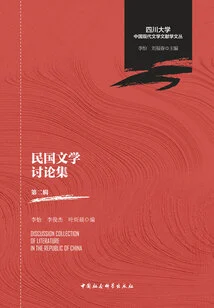
中国现代文献学文丛:民国文学讨论集(第二辑)
Edited By Li Yi, Li Junjie And Ye Xinchen
"Republic of China literature" was a phenomenon that took place in more than 10 years from 1997 to 2013, from the time it was conceptualized to attracting attention from all sides. In 2013, "Republic of China Literature Discussion Collection" was published by China Social Sciences Press, which brought together the main documents of this discussion. Since 2013, this academic concept has gradually deepened. This book is the second volume. It is a collection of historical materials after the first volume, retaining representative views for academic research reference. The so-called "representative principle" refers to no longer simply repeating the views of the previous topic proposers, or repeating the ideological propositions that have been repeatedly stated in the previous period. It has its own independent opinions, and does not repeat its own views in other articles. Due to the limitation of space, a total of 29 papers were selected and 55 were included in the list. They were initially classified according to the four major sections of "continuous exploration", "in-depth reflection", "relentless development" and "rich implications".
"Republic of China literature" was a phenomenon that took place in more than 10 years from 1997 to 2013, from the time it was conceptualized to attracting attention from all sides. In 2013, "Republic of China Literature Discussion Collection" was published by China Social Sciences Press, which brought together the main documents of this discussion. Since 2013, this academic concept has gradually deepened. This book is the second volume. It is a collection of historical materials after the first volume, retaining representative views for academic research reference. The so-called "representative principle" refers to no longer simply repeating the views of the previous topic proposers, or repeating the ideological propositions that have been repeatedly stated in the previous period. It has its own independent opinions, and does not repeat its own views in other articles. Due to the limitation of space, a total of 29 papers were selected and 55 were included in the list. They were initially classified according to the four major sections of "continuous exploration", "in-depth reflection", "relentless development" and "rich implications".