Library
Browse and search books
12 novels found
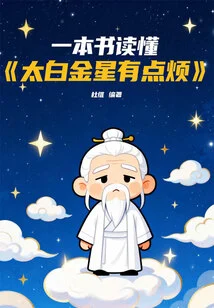
一本书读懂《太白金星有点烦》
Edited By Du Wei
This book interprets the book "Taibaijinxing is a bit annoying", telling a story set in the heavenly workplace. Through the perspective of Taibaijinxing Li Changgeng, it humorously shows the complexity and absurdity of the bureaucracy, cleverly integrates modern workplace dilemmas into mythical stories, and satirizes formalism, power struggles and other phenomena. By analyzing Ma Boyong's "allegorical realism" technique, the principle of "big things are true and small things are not unrealistic", dual-line narrative structure and character relationships, the author believes that Ma Boyong carried out a very subversive and logical "reconstruction of the current perspective" on the classic Journey to the West, making the book a "hit".
This book interprets the book "Taibaijinxing is a bit annoying", telling a story set in the heavenly workplace. Through the perspective of Taibaijinxing Li Changgeng, it humorously shows the complexity and absurdity of the bureaucracy, cleverly integrates modern workplace dilemmas into mythical stories, and satirizes formalism, power struggles and other phenomena. By analyzing Ma Boyong's "allegorical realism" technique, the principle of "big things are true and small things are not unrealistic", dual-line narrative structure and character relationships, the author believes that Ma Boyong carried out a very subversive and logical "reconstruction of the current perspective" on the classic Journey to the West, making the book a "hit".
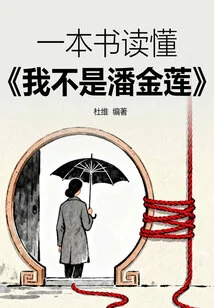
Read "i'm Not Pan Jinlian" in One Book
Literature一本书读懂《我不是潘金莲》
Edited By Du Wei
This book takes Liu Zhenyun's novel "I'm Not Pan Jinlian" as the research object, revealing how this masterpiece of absurd realism uses a "fake divorce" as a prism to reflect the dilemma of the rule of law and the paradox of human nature in the transformation period of Chinese society. Focusing on the fierce collision between "procedural justice" and "local justice," the book provides an in-depth analysis of Li Xuelian's twenty-year history of struggle from marriage disputes to honor battles, as well as the collective anxiety and power alienation of officials at all levels under the logic of maintaining stability. Special attention is paid to Liu Zhenyun's iconic narrative art of the word "" - through layers of nested officialdom rhetoric and a cyclical complaint track, individual tragedies are sublimated into a profound allegory of bureaucracy and cultural violence. The book also explores the symbolic oppression of women by the "Pan Jinlian" stigma, the metaphorical adaptation of the film's circular format, and the changes in women's struggle narratives from Qiu Ju to Li Xuelian. It finally penetrates the absurd appearance and presents the thousand-year-old knot of a nation between a human society and a civilization ruled by law, making Li Xuelian's "One Sentence Lawsuit" an eternal echo of questioning social justice.
This book takes Liu Zhenyun's novel "I'm Not Pan Jinlian" as the research object, revealing how this masterpiece of absurd realism uses a "fake divorce" as a prism to reflect the dilemma of the rule of law and the paradox of human nature in the transformation period of Chinese society. Focusing on the fierce collision between "procedural justice" and "local justice," the book provides an in-depth analysis of Li Xuelian's twenty-year history of struggle from marriage disputes to honor battles, as well as the collective anxiety and power alienation of officials at all levels under the logic of maintaining stability. Special attention is paid to Liu Zhenyun's iconic narrative art of the word "" - through layers of nested officialdom rhetoric and a cyclical complaint track, individual tragedies are sublimated into a profound allegory of bureaucracy and cultural violence. The book also explores the symbolic oppression of women by the "Pan Jinlian" stigma, the metaphorical adaptation of the film's circular format, and the changes in women's struggle narratives from Qiu Ju to Li Xuelian. It finally penetrates the absurd appearance and presents the thousand-year-old knot of a nation between a human society and a civilization ruled by law, making Li Xuelian's "One Sentence Lawsuit" an eternal echo of questioning social justice.
一本书读懂《一句顶一万句》
Edited By Du Wei
This book uses Liu Zhenyun's "One Sentence is Worth Ten Thousand Sentences" as the interpretation object, revealing how this Mao Dun Literature Prize work uses the simple philosophical thinking of "can't say" and "unspeakable" to attack the common dilemma of contemporary people's spiritual loneliness. Focusing on the dual narratives of Yang Baishun and Niu Aiguo spanning hundreds of years, the book analyzes the desire for communication that "one sentence is worth ten thousand" in Chinese interpersonal relationships. Through the micro-China stage of Yanjin, it shows the formidable survival rules in a society of acquaintances; through the fate of small people such as barbers, missionaries, and cheaters, it interprets the compassion for the silent majority behind Liu Zhenyun's "circling" language. It is not only a structured interpretation of classic literature, but also a profound discussion on how to place loneliness in this noisy world.
This book uses Liu Zhenyun's "One Sentence is Worth Ten Thousand Sentences" as the interpretation object, revealing how this Mao Dun Literature Prize work uses the simple philosophical thinking of "can't say" and "unspeakable" to attack the common dilemma of contemporary people's spiritual loneliness. Focusing on the dual narratives of Yang Baishun and Niu Aiguo spanning hundreds of years, the book analyzes the desire for communication that "one sentence is worth ten thousand" in Chinese interpersonal relationships. Through the micro-China stage of Yanjin, it shows the formidable survival rules in a society of acquaintances; through the fate of small people such as barbers, missionaries, and cheaters, it interprets the compassion for the silent majority behind Liu Zhenyun's "circling" language. It is not only a structured interpretation of classic literature, but also a profound discussion on how to place loneliness in this noisy world.
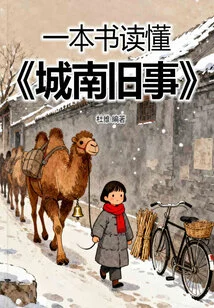
一本书读懂《城南旧事》
Edited By Du Wei
This book takes Lin Haiyin's classic work "Old Things in the South of the City" as the core, and deeply dissects the literary charm and spiritual core of this childhood memoir. Following the perspective of the protagonist Yingzi, the book relives the fireworks in the south of Beijing in the 1920s, and connects the encounters and partings with characters such as the crazy girl Xiuzhen, the "thief" on the lawn, Aunt Lan, and Song Ma. Through a detailed interpretation of Yingzi's growth trajectory, and the analysis of vivid characters such as the father's majesty and love, the mother's forbearance and tenderness, it shows the joys and sorrows of the fate of women in the old era. At the same time, this book analyzes the unique tone of the work "a touch of sadness, a deep sense of lovesickness", explains artistic techniques such as children's perspective, detailed description, and beaded structure, and explores the eternal themes of growth, separation, memory, and human nature. It leads readers to appreciate the style of old Beijing and feel the emotional resonance and literary poetry that spans the ages.
This book takes Lin Haiyin's classic work "Old Things in the South of the City" as the core, and deeply dissects the literary charm and spiritual core of this childhood memoir. Following the perspective of the protagonist Yingzi, the book relives the fireworks in the south of Beijing in the 1920s, and connects the encounters and partings with characters such as the crazy girl Xiuzhen, the "thief" on the lawn, Aunt Lan, and Song Ma. Through a detailed interpretation of Yingzi's growth trajectory, and the analysis of vivid characters such as the father's majesty and love, the mother's forbearance and tenderness, it shows the joys and sorrows of the fate of women in the old era. At the same time, this book analyzes the unique tone of the work "a touch of sadness, a deep sense of lovesickness", explains artistic techniques such as children's perspective, detailed description, and beaded structure, and explores the eternal themes of growth, separation, memory, and human nature. It leads readers to appreciate the style of old Beijing and feel the emotional resonance and literary poetry that spans the ages.
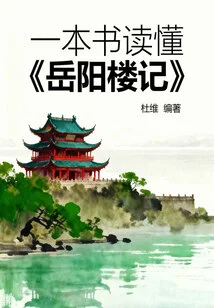
One Book to Understand "yueyang Tower
Literature一本书读懂《岳阳楼记》
Edited By Du Wei
This book takes Fan Zhongyan's eternally famous "Yueyang Tower" as the research object, revealing how this short text of only 368 words transcended the category of literature and became the spiritual totem of the Chinese nation. Focusing on the author's creative background of "having written all about the world without ever climbing the building", the book analyzes the philosophical core of "not to be happy with things, not to be sad with oneself", with special emphasis on the modern inspiration of the text: when contemporary people with abundant material but anxious spirits re-read this article, the proposition of "the heart of ancient benevolent people" provides an anchoring value coordinate system for the fragmented era, and the responsible spirit of "worry first and rejoice later" is still the code of civilization that spans thousands of years. This is not only a structural deconstruction of classic literature, but also an eternal dialogue on how to calm the impetuous mind.
This book takes Fan Zhongyan's eternally famous "Yueyang Tower" as the research object, revealing how this short text of only 368 words transcended the category of literature and became the spiritual totem of the Chinese nation. Focusing on the author's creative background of "having written all about the world without ever climbing the building", the book analyzes the philosophical core of "not to be happy with things, not to be sad with oneself", with special emphasis on the modern inspiration of the text: when contemporary people with abundant material but anxious spirits re-read this article, the proposition of "the heart of ancient benevolent people" provides an anchoring value coordinate system for the fragmented era, and the responsible spirit of "worry first and rejoice later" is still the code of civilization that spans thousands of years. This is not only a structural deconstruction of classic literature, but also an eternal dialogue on how to calm the impetuous mind.
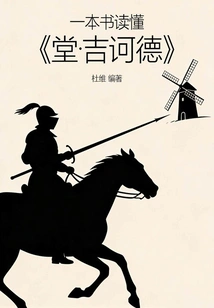
A Book to Understand "don Quixote
Literature一本书读懂《堂·吉诃德》
Edited By Du Wei
"Don Quixote" is a masterpiece handed down from generation to generation by Cervantes. This book provides an in-depth interpretation of this well-known work, showing the collision of idealism and realism. This book analyzes Cervantes's exquisite narrative techniques such as the narrative art of "meta-fiction", the character creation of Don Quixote and Sancho Panza, the recording method of social customs in seventeenth-century Spain, and the creation of a story atmosphere intertwined with tragedy and comedy. At the same time, the interpretation shows that the protagonist Don Quixote pursues the spirit of chivalry through crazy behavior, and perseveres despite repeated setbacks, which embodies mankind's persistent pursuit of beautiful ideals.
"Don Quixote" is a masterpiece handed down from generation to generation by Cervantes. This book provides an in-depth interpretation of this well-known work, showing the collision of idealism and realism. This book analyzes Cervantes's exquisite narrative techniques such as the narrative art of "meta-fiction", the character creation of Don Quixote and Sancho Panza, the recording method of social customs in seventeenth-century Spain, and the creation of a story atmosphere intertwined with tragedy and comedy. At the same time, the interpretation shows that the protagonist Don Quixote pursues the spirit of chivalry through crazy behavior, and perseveres despite repeated setbacks, which embodies mankind's persistent pursuit of beautiful ideals.
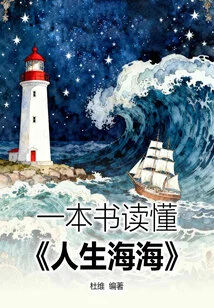
A Book to Understand "the Sea of life
Literature一本书读懂《人生海海》
Edited By Du Wei
This book takes Mai's novel "Life in the Sea" as the research object. Through interpretation, it reveals how this work, which combines legendary narrative and historical reflection, uses the ups and downs of the "Colonel's" life as a prism to reflect the trauma of the times and the texture of human nature in twentieth-century China. Focusing on the core narrative driving force of "secret", the book provides an in-depth analysis of the transformation of tattoo symbols from military codes to personality imprints, the disenchantment of the adult world from the perspective of childhood, and the deconstruction of historical truth by multi-voice narratives. Pay special attention to the dissolution and reconstruction of the concept of "hero" in the text, and explore how the Mai family transformed the suspense techniques of spy novels into an exploration of human nature in rural China, providing contemporary readers with a spiritual path to understand historical scars and place traumatic memories.
This book takes Mai's novel "Life in the Sea" as the research object. Through interpretation, it reveals how this work, which combines legendary narrative and historical reflection, uses the ups and downs of the "Colonel's" life as a prism to reflect the trauma of the times and the texture of human nature in twentieth-century China. Focusing on the core narrative driving force of "secret", the book provides an in-depth analysis of the transformation of tattoo symbols from military codes to personality imprints, the disenchantment of the adult world from the perspective of childhood, and the deconstruction of historical truth by multi-voice narratives. Pay special attention to the dissolution and reconstruction of the concept of "hero" in the text, and explore how the Mai family transformed the suspense techniques of spy novels into an exploration of human nature in rural China, providing contemporary readers with a spiritual path to understand historical scars and place traumatic memories.
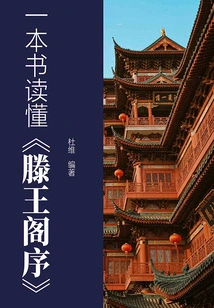
一本书读懂《滕王阁序》
Edited By Du Wei
How can a preface make a pavilion famous through the ages? How could Wang Bo, this ill-fated genius, improvise the eternal masterpiece of "falling clouds and solitary owl flying together"? This book will explain to you the immortal masterpiece "Preface to Prince Teng's Pavilion". We will return to the legendary Double Ninth Festival feast, explore Wang Bo's tragic life, provide detailed original text, annotations and beautiful translations, and appreciate his "three-story" artistic structure paragraph by paragraph... This is an in-depth guide to help you overcome text barriers, appreciate the frustration and pride behind the article, and feel the endless charm of Chinese culture.
How can a preface make a pavilion famous through the ages? How could Wang Bo, this ill-fated genius, improvise the eternal masterpiece of "falling clouds and solitary owl flying together"? This book will explain to you the immortal masterpiece "Preface to Prince Teng's Pavilion". We will return to the legendary Double Ninth Festival feast, explore Wang Bo's tragic life, provide detailed original text, annotations and beautiful translations, and appreciate his "three-story" artistic structure paragraph by paragraph... This is an in-depth guide to help you overcome text barriers, appreciate the frustration and pride behind the article, and feel the endless charm of Chinese culture.
半小时快速了解《额尔古纳河右岸》
Edited By Du Wei
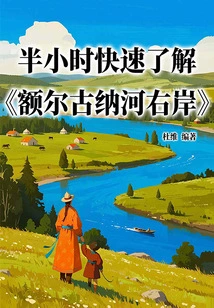
Why did "Right Bank of the Ergun River", the winner of the Mao Dun Literature Award, become a soul-stirring national epic? This book is a quick introduction tailored for readers who are eager to understand this masterpiece in depth. We will follow the memory of the last female chief and enter the mysterious primeval forest... Analyze the love, hate and fate of Ewenki men and women, explore the ancient beliefs of the shaman world, and feel the life community of people, reindeer and the forest. In half an hour, you will not only understand a story, but also touch the disappearing soul and back of a nation.
Why did "Right Bank of the Ergun River", the winner of the Mao Dun Literature Award, become a soul-stirring national epic? This book is a quick introduction tailored for readers who are eager to understand this masterpiece in depth. We will follow the memory of the last female chief and enter the mysterious primeval forest... Analyze the love, hate and fate of Ewenki men and women, explore the ancient beliefs of the shaman world, and feel the life community of people, reindeer and the forest. In half an hour, you will not only understand a story, but also touch the disappearing soul and back of a nation.

Read "steppenwolf" in One Book
Literature一本书读懂《荒原狼》
Edited By Du Wei
Have you ever felt like a lonely "Steppenwolf" wandering in modern cities, torn painfully between spirit and instinct, "man" and "wolf"? This book will give you an in-depth analysis of Hermann Hesse's soul-shaking masterpiece. This book will accompany you into the heart of Harry Haller, experience his adventures with Hermina and Pablo, break into the magic theater "only for madmen", and jointly explore the mystery of the multiplexes of human nature and the path of integration beyond binary opposition. Use elegant and clear writing to interpret the contemporary echo and eternal theme of self-pursuit of this century-old classic.
Have you ever felt like a lonely "Steppenwolf" wandering in modern cities, torn painfully between spirit and instinct, "man" and "wolf"? This book will give you an in-depth analysis of Hermann Hesse's soul-shaking masterpiece. This book will accompany you into the heart of Harry Haller, experience his adventures with Hermina and Pablo, break into the magic theater "only for madmen", and jointly explore the mystery of the multiplexes of human nature and the path of integration beyond binary opposition. Use elegant and clear writing to interpret the contemporary echo and eternal theme of self-pursuit of this century-old classic.
一本书读懂《艾青诗选》
Edited By Du Wei
This book takes Ai Qing's poetry creation process as the main line and analyzes how this "son of Dayanhe" sang the eternal tragedy of the land and nation with his hoarse throat. From the affectionate blood that tears apart class identity in "Dayan River - My Nanny", to the poignant gaze on the national suffering in "North" and "Snow Falls on the Land of China"; from the burning belief in light in "Toward the Sun" and "Torch", to the condensed philosophy of life in "Fish Fossils" in his later years, it shows how the poet melted his personal destiny, the land, the people and the times into poetry. The book not only analyzes the symbolic system of the core image of "land-sun", but also reveals its artistic innovation of free verse and colloquialism. Through the double tempering of the flames of the Anti-Japanese War and the bumpy years, it presents the image of a poet who always stands with the people - he is both a melancholic land singer and a persistent pursuit of light, and ultimately stands as an immortal spiritual coordinate in the history of new Chinese poetry.
This book takes Ai Qing's poetry creation process as the main line and analyzes how this "son of Dayanhe" sang the eternal tragedy of the land and nation with his hoarse throat. From the affectionate blood that tears apart class identity in "Dayan River - My Nanny", to the poignant gaze on the national suffering in "North" and "Snow Falls on the Land of China"; from the burning belief in light in "Toward the Sun" and "Torch", to the condensed philosophy of life in "Fish Fossils" in his later years, it shows how the poet melted his personal destiny, the land, the people and the times into poetry. The book not only analyzes the symbolic system of the core image of "land-sun", but also reveals its artistic innovation of free verse and colloquialism. Through the double tempering of the flames of the Anti-Japanese War and the bumpy years, it presents the image of a poet who always stands with the people - he is both a melancholic land singer and a persistent pursuit of light, and ultimately stands as an immortal spiritual coordinate in the history of new Chinese poetry.
A Brief History of Song Poetry
Literature宋词简史
Edited By Du Wei
This book shows the development of Song Ci over three hundred years, from the prototype of "Ququ Ci" nurtured by Yan Le in the Tang Dynasty, to the beauty and elegance of the Huajian School in the Five Dynasties, to the glory and prosperity of the two Song Dynasties. The manuscript provides an in-depth analysis of the turning point of Li Yu's "transforming the lyrics of Ling Gong into the lyrics of scholar-bureaucrats", the double revolution of Liu Yongman's innovation of poetry and Su Shi's "poetry as lyrics", the artistic perfection of Zhou Bangyan's metrical precision and Li Qingzhao's blood-and-tears writing, and Xin Qiji's patriotic pride. It completely presents the magnificent history of Song poetry from folk tunes to literati's elegant music, and finally became the carrier of the spirit of the times.
This book shows the development of Song Ci over three hundred years, from the prototype of "Ququ Ci" nurtured by Yan Le in the Tang Dynasty, to the beauty and elegance of the Huajian School in the Five Dynasties, to the glory and prosperity of the two Song Dynasties. The manuscript provides an in-depth analysis of the turning point of Li Yu's "transforming the lyrics of Ling Gong into the lyrics of scholar-bureaucrats", the double revolution of Liu Yongman's innovation of poetry and Su Shi's "poetry as lyrics", the artistic perfection of Zhou Bangyan's metrical precision and Li Qingzhao's blood-and-tears writing, and Xin Qiji's patriotic pride. It completely presents the magnificent history of Song poetry from folk tunes to literati's elegant music, and finally became the carrier of the spirit of the times.