Library
Browse and search books
5 novels found
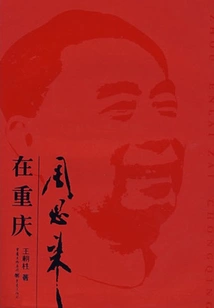
Zhou Enlai in Chongqing
Literature周恩来在重庆
Dynasty Pillar
Zhou Enlai stayed in Chongqing for nine years. During this period, his contributions to the party and the people were multifaceted. At the same time, since Zhou Enlai's death more than thirty years ago, different types of artistic works - especially film and television works have reflected it. Just like when I wrote the TV series "The Long March", almost every stage and every key battle of the Long March was reflected, but there was no TV series that reflected the Long March in all aspects. After consultation with Jin Chongji, Feng Hui, Liao Xinwen, Huang Yunsheng, Li Zhun, Zhong Chengxiang, Li Shuoru, etc.: 1. Reflect Zhou Enlai's combat life in Chongqing in an all-round way. In other words, during these nine years, Zhou Enlai's activities in Yan'an and other places are briefly described or not described; 2. The core of the whole play is Zhou Enlai's personality charm. For this reason, the alertness, flexibility and courage he showed during his time in Chongqing in guiding the party's underground work and fighting against the Central Unification and the Military Unification were omitted.
Zhou Enlai stayed in Chongqing for nine years. During this period, his contributions to the party and the people were multifaceted. At the same time, since Zhou Enlai's death more than thirty years ago, different types of artistic works - especially film and television works have reflected it. Just like when I wrote the TV series "The Long March", almost every stage and every key battle of the Long March was reflected, but there was no TV series that reflected the Long March in all aspects. After consultation with Jin Chongji, Feng Hui, Liao Xinwen, Huang Yunsheng, Li Zhun, Zhong Chengxiang, Li Shuoru, etc.: 1. Reflect Zhou Enlai's combat life in Chongqing in an all-round way. In other words, during these nine years, Zhou Enlai's activities in Yan'an and other places are briefly described or not described; 2. The core of the whole play is Zhou Enlai's personality charm. For this reason, the alertness, flexibility and courage he showed during his time in Chongqing in guiding the party's underground work and fighting against the Central Unification and the Military Unification were omitted.
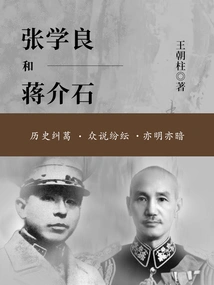
Zhang Xueliang and Chiang Kai-shek
General Fiction张学良和蒋介石
Dynasty Pillar
Zhang Xueliang and Chiang Kai-shek are famous figures in the history of China's modern times. They intersected during the most turbulent era of Chinese society, and participated in almost all major historical events together. Their historical entanglements have always been controversial, both overt and covert. "Selected Essays of Dynasty Pillar: Zhang Xueliang and Chiang Kai-shek" uses authoritative historical materials to record in detail the ups and downs and the special relationship between Zhang Xueliang and Chiang Kai-shek. It writes about whether they are close or distant, whether they are separated or combined, whether they are consistent or contradictory, all of which have had a great impact on Chinese history...
Zhang Xueliang and Chiang Kai-shek are famous figures in the history of China's modern times. They intersected during the most turbulent era of Chinese society, and participated in almost all major historical events together. Their historical entanglements have always been controversial, both overt and covert. "Selected Essays of Dynasty Pillar: Zhang Xueliang and Chiang Kai-shek" uses authoritative historical materials to record in detail the ups and downs and the special relationship between Zhang Xueliang and Chiang Kai-shek. It writes about whether they are close or distant, whether they are separated or combined, whether they are consistent or contradictory, all of which have had a great impact on Chinese history...
Revolution of 1911
General Fiction辛亥革命
Dynasty Pillar
The panoramic view shows the entire process of the Revolution of 1911 that overthrew the Qing government, ended the autocratic monarchy that had ruled China for thousands of years, and established a democratic republic. Taking Sun Yat-sen's revolutionary journey as the main line, and focusing on major historical events such as the founding of the China Alliance, the Wuchang Uprising, the founding of the Republic of China, the Second Revolution after the revolutionary achievements were stolen by Yuan Shikai, the War to Protect the Country, and the abolition of the imperial system, it truly shows the difficulties and twists of China's modern democratic revolution. It vividly reproduces the struggle of the great forerunner Sun Yat-sen who "first raised the banner of thorough anti-feudalism" and "started a republic and ended up with a monarchy" and never regretted it. It eulogizes the unyielding will of the national elite and people with lofty ideals who pursue democracy and freedom under the dark night, and the sacrificial spirit of the lower class people and new officers and soldiers who bravely join the revolution. The whole play respects historical truth and revolutionary practice, and paints a colorful picture of the turmoil in modern Chinese history. It can be called a vivid textbook of the Revolution of 1911.
The panoramic view shows the entire process of the Revolution of 1911 that overthrew the Qing government, ended the autocratic monarchy that had ruled China for thousands of years, and established a democratic republic. Taking Sun Yat-sen's revolutionary journey as the main line, and focusing on major historical events such as the founding of the China Alliance, the Wuchang Uprising, the founding of the Republic of China, the Second Revolution after the revolutionary achievements were stolen by Yuan Shikai, the War to Protect the Country, and the abolition of the imperial system, it truly shows the difficulties and twists of China's modern democratic revolution. It vividly reproduces the struggle of the great forerunner Sun Yat-sen who "first raised the banner of thorough anti-feudalism" and "started a republic and ended up with a monarchy" and never regretted it. It eulogizes the unyielding will of the national elite and people with lofty ideals who pursue democracy and freedom under the dark night, and the sacrificial spirit of the lower class people and new officers and soldiers who bravely join the revolution. The whole play respects historical truth and revolutionary practice, and paints a colorful picture of the turmoil in modern Chinese history. It can be called a vivid textbook of the Revolution of 1911.
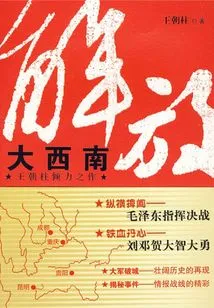
Liberate Southwest
General Fiction解放大西南
Dynasty Pillar
This book shows the historical picture of Liu Bocheng, Deng Xiaoping, and He Long resolutely implementing Mao Zedong's strategic thinking and commanding the final battle of the Liberation War.
This book shows the historical picture of Liu Bocheng, Deng Xiaoping, and He Long resolutely implementing Mao Zedong's strategic thinking and commanding the final battle of the Liberation War.
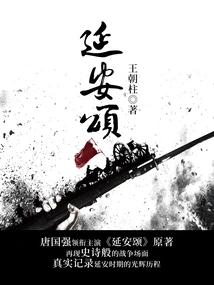
Ode to Yan'an
General Fiction延安颂
Dynasty Pillar
In October 1935, the Red Army, under the leadership of Mao Zedong, successfully concluded its 25,000-mile Long March and reached northern Shaanxi. Chiang Kai-shek obstructed in every possible way, and wanted to freeze and starve the Red Army to death in northern Shaanxi with the policy of one trap, two suppression, and three annihilation. The Red Army fired shots at Zhiluo Town at dawn on the 21st. Under the leadership of Mao Zedong, they annihilated all the enemy forces led by Niu Yuanfeng on the 23rd. The battle of Zhiluo Town was a complete victory. The victory in the Battle of Zhiluo Town not only shattered the enemy's third "encirclement and suppression" campaign against the Shaanxi-Gansu Soviet Area, but also held a foundation laying ceremony for the Party Central Committee to place the national revolutionary base camp in the northwest...
In October 1935, the Red Army, under the leadership of Mao Zedong, successfully concluded its 25,000-mile Long March and reached northern Shaanxi. Chiang Kai-shek obstructed in every possible way, and wanted to freeze and starve the Red Army to death in northern Shaanxi with the policy of one trap, two suppression, and three annihilation. The Red Army fired shots at Zhiluo Town at dawn on the 21st. Under the leadership of Mao Zedong, they annihilated all the enemy forces led by Niu Yuanfeng on the 23rd. The battle of Zhiluo Town was a complete victory. The victory in the Battle of Zhiluo Town not only shattered the enemy's third "encirclement and suppression" campaign against the Shaanxi-Gansu Soviet Area, but also held a foundation laying ceremony for the Party Central Committee to place the national revolutionary base camp in the northwest...