Library
Browse and search books
1 novel found
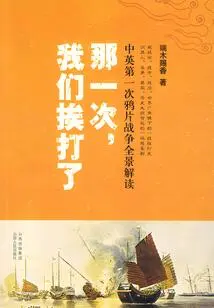
那一次,我们挨打了:中英第一次鸦片战争全景解读
Duanmu Gives Fragrance
This book is a panoramic interpretation of the Opium War between China and Britain from 1840 to 1842. The whole book places the Sub-Opium War in the international context, showing the world's power pattern under a wide-angle lens in the mid-19th century. It describes in detail the comparison of the comprehensive strength of China and Britain, pre-war preparations, war processes, post-war results and impacts, etc., Giving readers a comprehensive and multi-level understanding of the Sub-Opium War. The author hopes to use this panoramic interpretation to show the situation when Western countries were accelerating towards modern civilization, while China was stumbling in autocracy and ignorance. Through this comparison, the author hopes to clarify the fundamental reasons why the Qing Dynasty suffered a complete defeat and was repeatedly beaten during the Opium War: It does not depend on the ability of an emperor, the loyalty of several ministers, or the support of the people. The rotten autocratic system is the main reason for the backwardness and beatings of modern China. The text in this book continues the distinctive style of the author's previous works, with sharp humor and a touch of Internet language ridicule, making it a hearty read. Her knowledge background as a history major makes her writing pay great attention to the authenticity and accuracy of historical facts. Coupled with the author's strong social responsibility, the book is thought-provoking and has endless aftertaste. It is a historical work worthy of the market's expectations.
This book is a panoramic interpretation of the Opium War between China and Britain from 1840 to 1842. The whole book places the Sub-Opium War in the international context, showing the world's power pattern under a wide-angle lens in the mid-19th century. It describes in detail the comparison of the comprehensive strength of China and Britain, pre-war preparations, war processes, post-war results and impacts, etc., Giving readers a comprehensive and multi-level understanding of the Sub-Opium War. The author hopes to use this panoramic interpretation to show the situation when Western countries were accelerating towards modern civilization, while China was stumbling in autocracy and ignorance. Through this comparison, the author hopes to clarify the fundamental reasons why the Qing Dynasty suffered a complete defeat and was repeatedly beaten during the Opium War: It does not depend on the ability of an emperor, the loyalty of several ministers, or the support of the people. The rotten autocratic system is the main reason for the backwardness and beatings of modern China. The text in this book continues the distinctive style of the author's previous works, with sharp humor and a touch of Internet language ridicule, making it a hearty read. Her knowledge background as a history major makes her writing pay great attention to the authenticity and accuracy of historical facts. Coupled with the author's strong social responsibility, the book is thought-provoking and has endless aftertaste. It is a historical work worthy of the market's expectations.