Library
Browse and search books
5 novels found
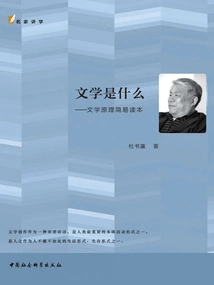
文学是什么:文学原理简易读本
Du Shuying
This book is a literary theory textbook written for graduate students, but it is highly academic. It grasps a series of basic theoretical issues that are controversial in academic circles, such as whether literature can be defined, how literature occurs, whether literature has "progressed" (can "progress" be used to measure the process of literary history), whether literature will die, whether literature needs to be "created", how literature exists, what are the similarities and differences between Chinese and Western literary theory, how to transform our criticism, etc., And conducts bold explorations and puts forward its own new insights. The original intention is to arouse thinking and discussion in the academic world. The author advocates refraining from statements, speaking his own words, not echoing what others say, and writing new ideas that are different from previous works; neither repeating others nor repeating himself.
This book is a literary theory textbook written for graduate students, but it is highly academic. It grasps a series of basic theoretical issues that are controversial in academic circles, such as whether literature can be defined, how literature occurs, whether literature has "progressed" (can "progress" be used to measure the process of literary history), whether literature will die, whether literature needs to be "created", how literature exists, what are the similarities and differences between Chinese and Western literary theory, how to transform our criticism, etc., And conducts bold explorations and puts forward its own new insights. The original intention is to arouse thinking and discussion in the academic world. The author advocates refraining from statements, speaking his own words, not echoing what others say, and writing new ideas that are different from previous works; neither repeating others nor repeating himself.
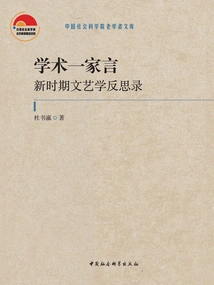
学术一家言:新时期文艺学反思录
Du Shuying
This book is the author's analysis of a series of major academic issues since the reform and opening up, such as the development trajectory of literature and art in the new era, what changes have taken place in art philosophy, what is the basic connotation of human ontology and art philosophy, whether literature can be defined and how to define it, what form of existence literature has, how literary aesthetics emerged and developed in China, and the world's common What is the evolutionary trajectory of Communist aesthetics? How do we view the great achievements and lessons learned in literary theory in the 40 years of reform and opening up? How does "poetry and literature criticism" transform into "literary studies"? What are the characteristics of the global era and what impact it has on literature and literary theory? We conducted a relatively in-depth investigation and thinking, and put forward our own opinions. The author strives not to use clichés or empty words, but to speak his own words. The author believes that "one family speaks" means that scholars are encouraged to speak their own words. This should be a trend of the times and a social fashion, so the title of the book is "Academic Family Words".
This book is the author's analysis of a series of major academic issues since the reform and opening up, such as the development trajectory of literature and art in the new era, what changes have taken place in art philosophy, what is the basic connotation of human ontology and art philosophy, whether literature can be defined and how to define it, what form of existence literature has, how literary aesthetics emerged and developed in China, and the world's common What is the evolutionary trajectory of Communist aesthetics? How do we view the great achievements and lessons learned in literary theory in the 40 years of reform and opening up? How does "poetry and literature criticism" transform into "literary studies"? What are the characteristics of the global era and what impact it has on literature and literary theory? We conducted a relatively in-depth investigation and thinking, and put forward our own opinions. The author strives not to use clichés or empty words, but to speak his own words. The author believes that "one family speaks" means that scholars are encouraged to speak their own words. This should be a trend of the times and a social fashion, so the title of the book is "Academic Family Words".
文学会消亡吗:学术前沿沉思录
Du Shuying
This book is the result of thinking and researching on issues that are of keen concern to the aesthetics, philosophy, and literature and art circles on the basis of paying attention to and studying these (and other related) cutting-edge issues. This book is divided into three parts: upper, middle and lower parts. The above chapter is titled "Literature in the Electronic Media Era". This is a hot issue currently discussed in the literary and art circles. It asks whether literature will disappear in the current electronic media era. The middle edition is "Considering the Academic History of Literature and Art", which mainly focuses on and conducts in-depth research on cutting-edge issues such as the academic history of literature and art and the academic history of aesthetics in China in the 20th century. The next chapter is "Contemplation of Aesthetics", which is actually the abbreviation of a century-old academic history of aesthetics. It proposes the concept of value aesthetics based on summarizing the historical experience and lessons of previous aesthetic research.
This book is the result of thinking and researching on issues that are of keen concern to the aesthetics, philosophy, and literature and art circles on the basis of paying attention to and studying these (and other related) cutting-edge issues. This book is divided into three parts: upper, middle and lower parts. The above chapter is titled "Literature in the Electronic Media Era". This is a hot issue currently discussed in the literary and art circles. It asks whether literature will disappear in the current electronic media era. The middle edition is "Considering the Academic History of Literature and Art", which mainly focuses on and conducts in-depth research on cutting-edge issues such as the academic history of literature and art and the academic history of aesthetics in China in the 20th century. The next chapter is "Contemplation of Aesthetics", which is actually the abbreviation of a century-old academic history of aesthetics. It proposes the concept of value aesthetics based on summarizing the historical experience and lessons of previous aesthetic research.
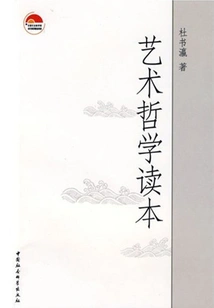
Reader in Art Philosophy
Literature艺术哲学读本
Du Shuying
This book is an academic monograph written by the author over a period of 20 years. It is a theoretical summary of the author's years of research on art philosophy issues. It discusses the position, nature, and characteristics of art relatively comprehensively and systematically from a philosophical perspective, showing the author's unique insights and experiences, proposing new theoretical viewpoints, and also proposing new ideas for the theoretical transformation of art philosophy. It is full of exploratory spirit and has considerable academic value. The publication of this book can promote and promote the current academic research on the philosophy of art in the academic world. At the same time, this book can also be used as a valuable reference book for theoretical workers, doctoral and master's students, and college students.
This book is an academic monograph written by the author over a period of 20 years. It is a theoretical summary of the author's years of research on art philosophy issues. It discusses the position, nature, and characteristics of art relatively comprehensively and systematically from a philosophical perspective, showing the author's unique insights and experiences, proposing new theoretical viewpoints, and also proposing new ideas for the theoretical transformation of art philosophy. It is full of exploratory spirit and has considerable academic value. The publication of this book can promote and promote the current academic research on the philosophy of art in the academic world. At the same time, this book can also be used as a valuable reference book for theoretical workers, doctoral and master's students, and college students.
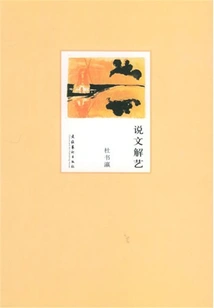
Interpretation of Literature and Art
Literature说文解艺
Du Shuying
Brother Du Shuying gave me the preface. I read the table of contents first, and found that a large part of it was something I had not read, so I read the manuscript again. Some of the articles that are highly academic and rational have not yet been digested, or I still vaguely understand them, but I think I should write this short preface. Book prefaces can be written in various ways. Some famous prefaces supplement the central content or a certain argument of the book in the preface, expand on it, or even use the topic to form a paper in itself. I am limited by academic ability, which is something I cannot do. In recent years, people have often criticized the prefaces written by some people, saying that some are "friendly appearances", some are for "promotion", and some are just "reflections"... In short, they should be listed as taboos in writing prefaces - what I want to write now does not fall within this scope.
Brother Du Shuying gave me the preface. I read the table of contents first, and found that a large part of it was something I had not read, so I read the manuscript again. Some of the articles that are highly academic and rational have not yet been digested, or I still vaguely understand them, but I think I should write this short preface. Book prefaces can be written in various ways. Some famous prefaces supplement the central content or a certain argument of the book in the preface, expand on it, or even use the topic to form a paper in itself. I am limited by academic ability, which is something I cannot do. In recent years, people have often criticized the prefaces written by some people, saying that some are "friendly appearances", some are for "promotion", and some are just "reflections"... In short, they should be listed as taboos in writing prefaces - what I want to write now does not fall within this scope.